


Wind performance is not determined by the fence material alone. For an Orange County property, the layout, panel style, post support, soil, gates, and exposure all affect how the finished fence handles local conditions.
Request a project estimate from A G Vinyl Fencing
For vinyl fence wind resistance Orange County homeowners should evaluate the complete system and the installation site, not rely on a universal wind-speed promise. A professional assessment can account for fence length, terrain, openings, corners, gates, and property requirements before materials are selected.
That approach is especially useful in Anaheim and nearby communities, where a privacy fence beside an open yard may face different conditions than a shorter picket layout in a sheltered area. The first step is understanding what wind resistance means in practical project terms and which factors should be discussed during an estimate.
What Does Vinyl Fence Wind Resistance Mean in Orange County?
For a homeowner, vinyl fence wind resistance Orange County planning is less about finding one universal product promise and more about evaluating the complete fence system. The panel style is only one part of the equation. Posts, rails, connections, post-hole conditions, gates, soil, terrain, and the way wind reaches the property can all affect how the finished fence performs.
That distinction matters across Anaheim and nearby Orange County communities. A fence in a sheltered neighborhood lot may face different exposure than one beside an open field, broad roadway, hillside, or channel. Corners and gate openings can also create different load conditions than a straight run. The right question is not simply whether vinyl is “windproof,” but whether the selected design and installation approach fit the actual site.
A G Vinyl Fencing is based in Anaheim and serves Orange County and Southern California. Its vinyl fencing is used for residential and commercial applications, including privacy, pet containment, pool enclosures, and property boundaries. The company describes vinyl as a low-maintenance material that does not require painting or staining, but that maintenance advantage should not be confused with a tested wind-load rating.
The available customer guidance does not provide a universal maximum wind speed or guarantee against wind damage. Instead, wind performance should be discussed in terms of design, exposure, installation, and site conditions. Common residential heights are 4 to 6 feet, but height alone does not determine performance. During an estimate, measurements and terrain evaluation help identify the practical questions before materials are finalized.
That site-specific approach gives homeowners a clearer basis for comparing privacy, picket, and other configurations. It also helps ensure the proposal identifies the posts, gates, layout, and installation details that belong to the project rather than relying on a generic rating that may not apply to the property.
Which Fence Features Matter Most in Windy Conditions?
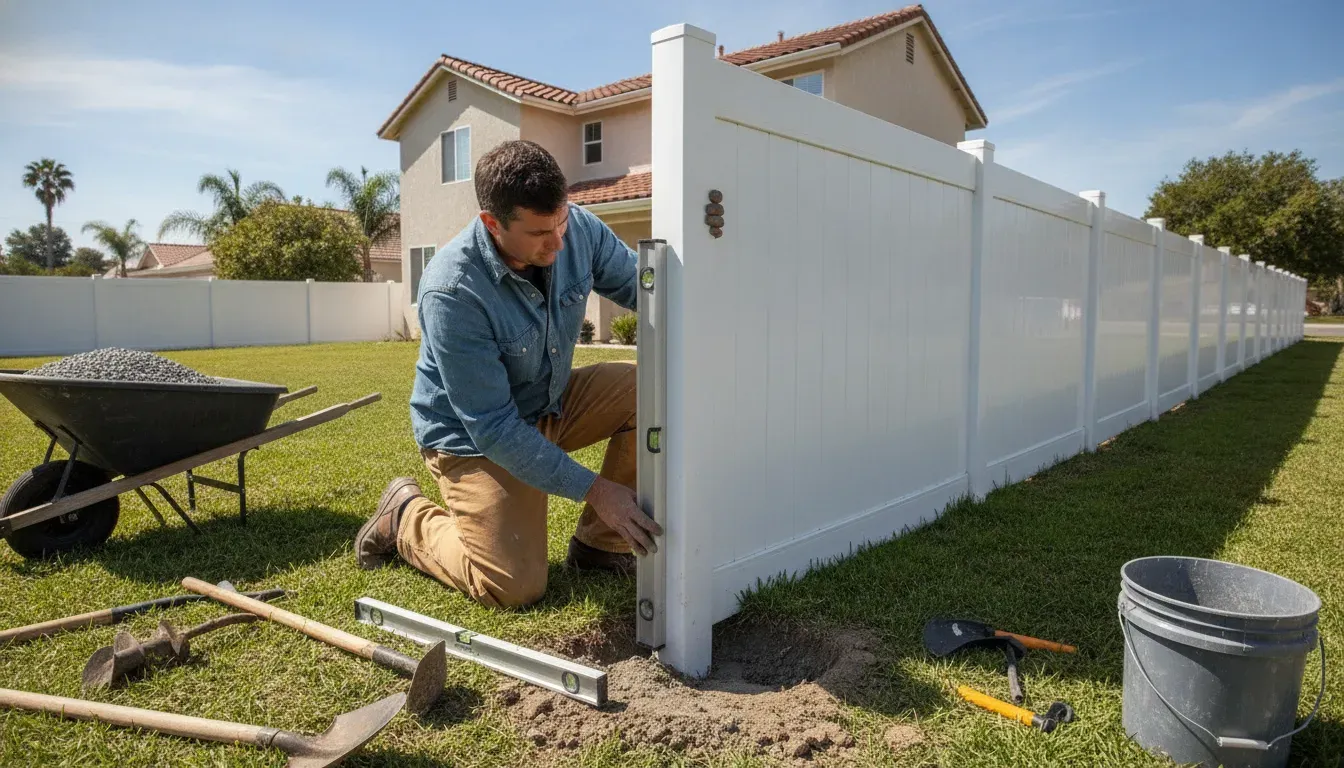
Wind performance is a system question rather than a single product feature. Posts, rails, panels, hardware, soil, and the layout all work together, so a site assessment matters before selecting a configuration. As a practical installer-planning example, a taller solid privacy run with a wide gate and an exposed, uninterrupted line may call for closer review of post spacing, footing support, and gate posts than a shorter open section in a sheltered yard. This is general planning guidance, not a tested wind-speed rating for every vinyl fence, so the selected product’s own installation instructions and site conditions should control.
| Feature | Why it matters | What to discuss |
|---|---|---|
| Posts and embedment | Posts transfer forces into the ground. Depth, spacing, reinforcement, and hole conditions affect how the fence is supported. | Review the post layout, soil, concrete, and any unusual ground conditions. |
| Rails and panel connections | Rails and connections keep panels aligned and distribute movement through each section. | Confirm how rails, panels, fasteners, and reinforced components are assembled. |
| Openings and panel design | A more open fence and a more solid privacy fence present different exposure questions. | Balance privacy, appearance, height, and the property’s wind exposure instead of assuming one style is best. |
| Corners and end posts | Changes in direction and termination points require different hardware and post arrangements than a straight run. | Include every corner, end, transition, and connection in the layout. |
| Gates | Gates add moving hardware and concentrated loads to the fence plan. | Review gate width, hinges, latches, posts, and how often the gate will be used. |
| Soil, terrain, and maintenance | Loose soil, slopes, retaining walls, nearby structures, and neglected hardware can change site conditions over time. | Evaluate drainage and terrain, then inspect connections and clean the low-maintenance vinyl as recommended. |
For a closer look at the components involved, review this guide to vinyl fence posts and rails. During planning, measurements, terrain, exposure, property lines, gates, permits, HOA requirements, and utility marking may all need attention. A careful layout makes the final recommendation more useful than relying on a generic wind claim.
How Do Privacy and Picket Styles Compare for Wind Exposure?
Privacy, picket, and split-rail fences can all serve different Orange County properties, but their open areas create different design questions when wind exposure matters. A privacy fence presents a more continuous surface, while picket and split-rail configurations allow more air to pass through. That does not make one style the universal choice. Performance still depends on the complete system, including posts, connections, soil, layout, installation, and the conditions around the property.
A taller, more solid section generally deserves closer review than a shorter, more open configuration. Height and density affect how wind meets the fence, but height alone does not determine the outcome. A long uninterrupted run, a corner, a gate, a slope, nearby structures, or an exposed yard can change the site-specific assessment. A professional review should consider where prevailing winds reach the fence and how the selected configuration will be installed.
Privacy fences
Privacy fencing is often selected for backyards, pool areas, pets, and defined property boundaries. If you prefer this style, discuss the panel height, post spacing, reinforcement details, and gate layout before finalizing the design. The Orange County privacy fence planning guide can help organize those decisions, while the vinyl fence panel height options guide provides additional context on taller panels and installation planning.
Picket and split-rail styles
Picket and split-rail designs provide a more open appearance and may suit front yards, landscaped boundaries, or properties where visibility is important. Their openness changes the wind-exposure conversation, but it does not eliminate the need to review posts, rails, corners, gates, and soil conditions. The right selection should balance privacy, appearance, pet or boundary needs, and the actual exposure of your site.
During an estimate, compare the styles against your fence length, terrain, and planned height rather than choosing based on a general wind claim. A site-specific recommendation is more useful than a universal rating that may not apply to your property or installation.
How Should Anaheim and Orange County Homeowners Plan Installation?
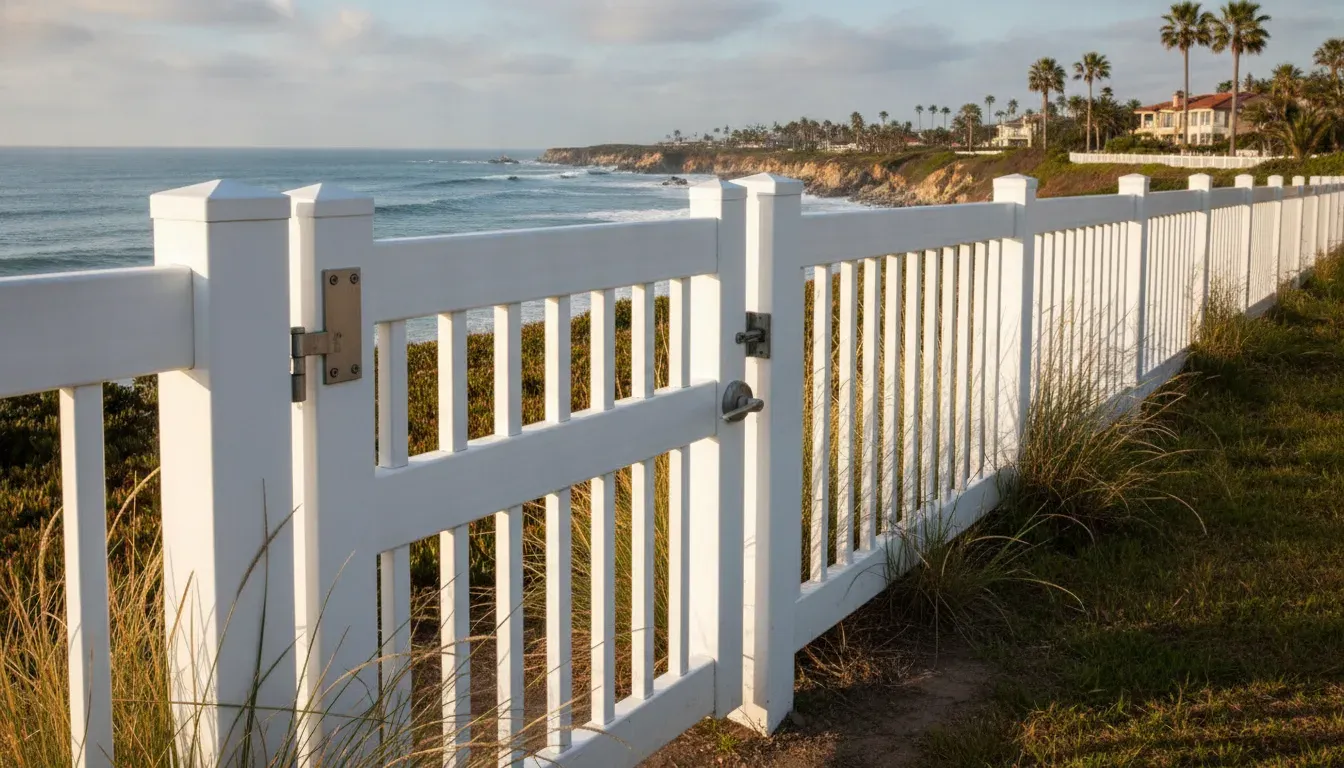
A thoughtful site plan helps an installer address wind exposure before materials arrive. It also reduces surprises involving access, property lines, drainage, gates, and approvals. Use these steps to prepare for a useful conversation and a more complete proposal:
- Start with an on-site assessment. Walk the proposed fence line with the installer. Note the property’s orientation, open exposure, nearby walls or buildings, existing fence removal, landscaping, and any areas that receive stronger or more direct wind. Wind performance depends on the design, exposure, installation, and site conditions, so a generic rating is not a substitute for reviewing the actual property.
- Measure the fence length and layout. Identify straight runs, ends, corners, changes in direction, and transitions. Mark the intended height and style, then account for the posts, rails, panels, and hardware that make up the system. Common residential heights are often 4 to 6 feet, but height alone does not determine how a fence will perform. Review your vinyl fence panel height options with the installer rather than assuming the tallest option is best.
- Evaluate terrain and soil conditions. Slopes, uneven grades, compacted areas, and changes in ground level can affect post-hole planning and the finished line. If the fence will sit beside a drainage feature or retaining wall, review vinyl fence retaining-wall planning early. Wall attachment, drainage, and approvals may require a different approach from a freestanding installation.
- Confirm property lines and utilities. Check the intended location against a survey, recorded boundary information, or other reliable property records. Do not rely only on an old fence line. Utility marking and site preparation may be part of the project, so identify underground service concerns before digging begins.
- List gates and access needs. Show where people, pets, vehicles, and maintenance equipment need to pass. Gates introduce additional hardware and movement into the layout, and their location can affect both usability and the way the fence is supported at corners or openings.
- Check permits and HOA requirements. Ask which approvals may apply to your specific city, property, fence location, and design. Permit rules are not universal across Orange County. If an HOA governs the property, submit the required style, height, color, and layout information for review before scheduling installation.
- Review the proposal line by line. A preliminary estimate should become a formal proposal that identifies material specifications and itemized costs. Confirm the fence length, height, style, posts, gates, preparation, removal, drainage work, and any assumptions. The vinyl fence posts and rails should be clearly understood before you approve the work.
What Should You Ask a Fence Installer About Wind Performance?
A useful installation conversation should produce more than a product name or a general statement that vinyl is weather-resistant. Ask the installer to explain how the proposed fence will be evaluated for your property. Wind performance depends on design, exposure, installation, and site conditions rather than one universal wind-speed rating.
Questions about the fence system
- What product documentation is available? Ask for the manufacturer’s installation instructions and material specifications. If the system has tested wind-load information, request the actual documentation and clarify what configuration, height, spacing, and installation conditions it covers.
- How will the site exposure affect the design? Discuss open areas, corners, long uninterrupted runs, nearby buildings, slopes, and other conditions that may change how wind reaches the fence. Height and appearance should be considered alongside exposure, not in isolation.
- How will posts be reinforced and embedded? Ask what post-hole depth, footing approach, reinforcement, and concrete details are planned. The answer should account for soil conditions, layout, corners, ends, and gate posts instead of assuming every location is identical.
- How are rails, panels, and connections secured? Confirm how panels connect to posts, how rails are supported, and which hardware is used at corners, ends, and transitions. A complete layout should identify posts, runs, gates, and hardware before installation begins.
Questions about gates, upkeep, and approvals
- Are gates designed separately? Ask about gate width, hinges, latches, support posts, and the clearance needed for movement. Gates can require different planning from a standard fence run.
- What maintenance should I expect? Confirm how to wash the fence, inspect connections, and identify movement or damage after severe weather. Vinyl is generally positioned as low maintenance, but upkeep does not replace sound installation.
- What does the warranty actually cover? Request the warranty in writing. Ask whether it covers materials, workmanship, installation conditions, wind damage, or specific exclusions. Do not treat a general warranty as a guaranteed wind-performance statement.
- Who verifies local requirements? Ask whether property lines, utility marking, permits where required, and HOA review are included in planning. For a project in Anaheim or elsewhere in Orange County, an on-site assessment and written proposal should identify the assumptions behind the recommendation. Review Orange County fence estimate planning before requesting an estimate.
Bring your fence length, preferred layout, gate locations, terrain concerns, and any existing-fence or approval information to the consultation. Clear answers help you compare proposals on construction details, not just appearance or an unsupported rating.
When Is Vinyl a Practical Choice for an Orange County Fence?
Vinyl can be a practical choice when you want a defined boundary, privacy, or pet containment without the recurring painting or staining associated with some other fence materials. A simple wash can help keep the surface looking tidy, which suits busy homeowners, families, property managers, and commercial owners who want manageable upkeep.
The right configuration depends on how the fence will be used. Privacy panels can create a more screened outdoor area, while picket styles define a yard without the same visual enclosure. Split-rail designs may fit properties where an open boundary is more appropriate. Vinyl can also support residential and commercial applications, including pool enclosures and property boundaries, subject to the project’s requirements.
Appearance and function can be adjusted through style, color, layout, height, and gate placement. For example, reviewing Orange County privacy fence planning can help clarify whether a more solid design fits the property’s privacy goals. However, a preferred look should not be treated as a wind-performance rating. Solid and open configurations present different exposure questions, and height is only one part of the assessment.
Vinyl may not be the best answer for every location or boundary. Unusual terrain, retaining walls, concentrated exposure, demanding security requirements, or a layout with substantial gates may call for a different configuration or a comparison with another material. An on-site review of measurements, soil and terrain, property lines, exposure, connections, and local requirements can identify the practical option before installation. That assessment helps align the fence’s appearance and purpose with the conditions at the property, rather than relying on a universal wind claim.
Discuss your Orange County fence plan and request an estimate
Frequently Asked Questions
Is vinyl fencing a practical choice for windy areas in Orange County?
It can be, but performance depends on the complete fence system and the property. Exposure, terrain, fence openness, post installation, connections, soil, corners, and gates should be reviewed rather than relying on a universal wind rating. An on-site assessment can identify the right configuration for an Anaheim or Orange County property.
Are privacy fences or picket fences better for wind exposure?
Neither style is automatically right for every property. A privacy fence presents a different wind-load question than a more open picket design, while height, layout, posts, and local exposure also matter. Your installer should compare the appearance and privacy you want with the site conditions before recommending a configuration.
What should be included in a wind-conscious fence installation plan?
Discuss the fence length, layout, terrain, soil, property lines, post-hole conditions, corners, gates, existing structures, and any retaining-wall or drainage concerns. Permits, utility marking, and HOA review may also be part of planning where required. These details help shape the materials and installation approach.
What information do I need to request a fence estimate?
Prepare the approximate fence length, preferred style and height, gate locations, property address, access details, and any known slope, retaining wall, HOA, or permit considerations. A site assessment and measurements allow the installer to evaluate exposure and terrain, then prepare a proposal with material specifications and itemized costs.
Ready to Plan Your Vinyl Fence Project?
Wind performance depends on your fence layout, site exposure, gates, terrain, and installation details. A project discussion can help connect those factors to a practical design for your Anaheim or Orange County property. To request a project estimate and discuss vinyl fence wind planning, contact us through the project estimate form.

Gary Andreasyan is at the forefront of A G Vinyl Fencing, setting the standard for high-quality fencing solutions. His expertise in vinyl fencing has positioned the company as a go-to for durable, low-maintenance fencing options that enhance property value and security. Gary’s commitment to customer satisfaction and innovative fencing solutions drives A G Vinyl Fencing’s success, providing clients with a range of styles and designs that meet their specific needs and preferences.


0 Comments