


Homeowners in Orange County often want the warmth of a wood-look fence without adding painting and staining to the maintenance list. Cedar-look vinyl can be a practical option, but the right choice depends on your property’s style, privacy needs, terrain, and local requirements.
Request a free project estimate
Cedar vinyl fencing is a style of vinyl fence selected for its cedar-inspired appearance and everyday practicality. It can offer a wood-like design direction with routine care that is generally simpler than natural cedar, while still requiring thoughtful choices about color, layout, gates, grading, and installation. The best fit depends on your priorities, budget, and the character of your property.
Before comparing finishes or planning posts, it helps to clarify what homeowners mean by cedar-look vinyl and how it differs from natural cedar in appearance, upkeep, and customization.
What Is Cedar Vinyl Fencing?
Cedar vinyl fencing is a vinyl fence selected for a cedar-inspired appearance. The term usually describes the visual direction, such as a warm wood tone, a wood-grain surface, or a fence profile that complements the look of natural cedar. It does not mean the fence is made from cedar. The underlying material is vinyl, so the design should be evaluated as a vinyl fencing project with a wood-look aesthetic.
Homeowners often consider this option when they want a softer, more natural-looking boundary than a plain white fence, while still looking for a material that does not require routine painting or staining. Available profiles can include privacy, picket, or other layouts, depending on the property and the products selected for the project. The University of Minnesota Extension’s Horse fencing considerations guide also advises evaluating function, material and maintenance needs, and site conditions rather than choosing a fence by appearance alone.
The decision is not simply about choosing the right shade of brown. Fence selection should reflect the priorities, budget, and character of the property. Consider how much privacy you need, how the fence will relate to the home and landscaping, and whether the selected profile works with gates, pets, pool areas, or a neighboring property.
Cedar-look vinyl should also be described carefully. It is an aesthetic category, not a guarantee that every product will reproduce natural cedar exactly. Color availability, surface texture, performance features, lifespan, warranty terms, and code requirements depend on the specific product and site. Those details should be confirmed before approval rather than assumed from the word cedar. For broader guidance on wood-grain appearance and color direction, see our wood-grain vinyl fence colors guide.
Cedar Vinyl Fencing vs. Natural Cedar: Which Fits Your Home?
The better material depends on what you want the fence to do after installation, not only how it looks on day one. Cedar-look vinyl gives a wood-inspired appearance with a maintenance routine that generally does not include painting or staining. Natural cedar offers the character and flexibility of real wood, but it also calls for a different approach to upkeep, repairs, and finish changes.
Cedar-look vinyl and natural cedar comparison
| Consideration | Cedar-look vinyl | Natural cedar |
|---|---|---|
| Appearance | Provides a cedar-inspired look through selected color and texture options. The result is an aesthetic choice, so review actual samples before selecting a finish. | Offers the natural grain, variation, and character of real wood. Boards can differ in tone and visual texture. |
| Maintenance | Routine cleaning is typically handled with soap and water. It does not require routine painting or staining. | May require periodic attention to its surface finish, including decisions about staining, sealing, or weathering. |
| Customization | Available styles and colors can support privacy, picket, and other layouts, but the available range may be more defined. | Can be cut, arranged, stained, and adjusted in many ways, which may help with unusual designs or a highly specific look. |
| Budget categories | Consider the initial material and installation work, followed by routine cleaning and possible repair needs over time. | Consider the initial material and installation work, plus finish maintenance, replacement boards, and future repairs. |
| Repairs | Repairs may involve replacing a damaged component, matching the existing style, and checking posts, rails, or gates. | Individual boards can often be replaced or refinished, although matching the surrounding weathered wood may take care. |
The University of Minnesota Extension guide cited above emphasizes that a fence decision should account for function, material, maintenance, and site conditions. That is why the most useful comparison includes installation, maintenance, and repair categories rather than focusing only on the initial material choice. Consider your priorities, budget, and the character of the property before choosing a cedar-look finish.
For a deeper look at the planning categories behind this decision, review vinyl versus wood fencing costs and compare vinyl with wood fencing. Then evaluate the home itself. A natural cedar fence may suit a homeowner who values changing the finish, while cedar-look vinyl may suit someone who wants a consistent wood-inspired appearance with simpler routine cleaning.
How to Choose Cedar Vinyl Fencing for an Orange County Home
Start with the job the fence needs to do, then choose a cedar-look design that supports the character of your property. Cedar vinyl fencing can be planned for several applications, but the right layout for a private backyard may not suit a front yard, pool area, pet run, or commercial perimeter.
Match the style to the use
Privacy fencing is a practical direction when the goal is to block sightlines around a patio, side yard, or pool. Decorative picket fencing can define a front boundary while keeping the space more open. Split-rail styling may fit a larger lot or a landscape where full screening is not necessary. For pets, focus on containment, gate placement, and the areas where a dog could push through or escape. Commercial properties and managed communities may need a consistent perimeter appearance, controlled access, and a design that works across longer runs.
Pool and pet applications deserve extra planning rather than a one-size-fits-all selection. Review the site, gate locations, neighboring conditions, and any applicable requirements before choosing the final height and configuration.
Evaluate the cedar-look finish in context
Cedar-look vinyl is an appearance choice, so compare the available color and texture samples with your home exterior, roof, masonry, hardscape, and existing landscape. Look at the fence in direct sun and shade. A warm brown finish may support a traditional property, while a deeper tone can create stronger contrast against light stucco. Availability and the exact visual effect depend on the selected product, so confirm samples before approving the design.
For more detail on wood-look options, review these guides on brown wood-look vinyl fence panels and wood-grain vinyl fence colors. If your home calls for a stronger, darker contrast, compare dark brown vinyl fence finishes while keeping the cedar-specific goal in mind.
Plan for gates, property character, and HOA review
Gates should be considered with the fence, not added at the end. Identify everyday walking routes, driveway access, equipment clearance, and pet movement. Then check property lines, grading, neighborhood character, and HOA rules. Some Orange County communities may require design approval or limit visible changes from the street. A site-specific design discussion can help balance privacy, access, and the cedar-look appearance before installation begins.
How Is Cedar Vinyl Fencing Installed?
Installing cedar-look vinyl fencing starts with planning the property, not setting posts. The appearance may be the reason you chose it, but the finished result depends on accurate layout, terrain, access, and a clear understanding of site requirements. A professional assessment helps identify decisions that are easy to overlook when a fence line crosses a slope, changes direction, or meets an existing structure.
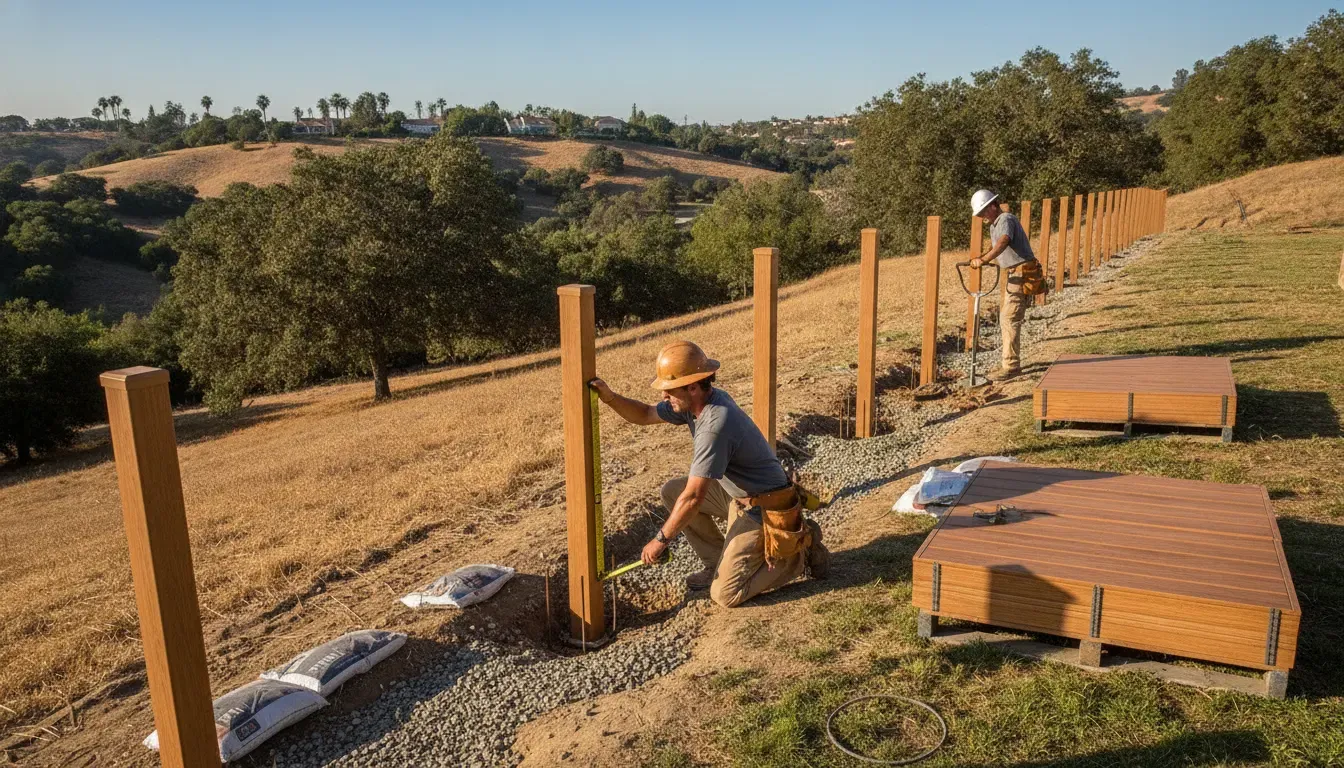
- Assess the property. The installer reviews the proposed fence line, access points, existing structures, landscaping, terrain, and the function of each section. This is also the time to discuss privacy, boundary definition, pets, gates, and the cedar-look style you want.
- Verify property lines. Do not assume an old fence marks the legal boundary. Property-line information should be reviewed before the layout is finalized, especially where neighboring fences, walls, easements, or irregular lot lines are involved.
- Measure and plan the layout. Measurements determine the run, corners, transitions, gate locations, and post locations. The plan should account for where the fence starts and ends, how it meets other structures, and how the selected style will look from both sides.
- Evaluate grading and drainage. Slopes can affect how sections align and how the fence meets the ground. A stepped or otherwise site-appropriate layout may be considered after reviewing the lot. See this guide to vinyl fence installation on slopes for related planning considerations.
- Confirm permits and HOA requirements. Local rules, neighborhood standards, and approval processes can affect fence placement, style, and timing. Confirm these requirements before materials are ordered or work begins.
- Mark utilities and prepare the site. Utility marking should happen before digging. The official 811 Before You Dig service provides a starting point for locating underground utilities. Preparation may include clearing the fence path, protecting retained landscaping, and addressing obstacles identified during the assessment. If mature trees are near the work area, early protection planning can help avoid unnecessary root or landscape damage.
- Install the fence. With the layout established, the crew sets posts and installs the selected panels, rails, gates, and hardware according to the approved plan. Careful alignment at corners, transitions, and gates is important to the final appearance and everyday operation.
- Review the finished work. The handoff should cover gate operation, basic cleaning, visible site conditions, and any maintenance or repair questions. For homeowners in Anaheim and nearby communities, learn more about local vinyl fence installation and the planning support available for a site-specific project.
How Do You Maintain Cedar-Look Vinyl Fencing?
A practical maintenance routine keeps cedar-look vinyl fencing clean, visible, and easier to inspect. Start with a gentle wash using household soap and water, a soft brush or cloth, and a hose. Work in manageable sections, rinse away residue, and pay attention to dirt collected near the bottom rail or around gate hardware. Use the selected product’s care instructions when they call for a different cleaning method.
Pressure washing can be useful when appropriate, but it deserves more care than simply aiming a powerful spray at the fence. Use a conservative setting, keep the nozzle moving, and hold it far enough away to avoid forcing water into hardware or damaging a surface. If you are unsure how a particular fence section or gate should be cleaned, use soap and water instead or ask an installer for guidance.
Inspect after storms and seasonal changes
Walk the fence line after strong wind or heavy rain. Look for leaning posts, shifted sections, loose rails, cracked components, or gates that no longer close and latch smoothly. Storm checks are especially useful before a small issue becomes a larger repair. If you find movement or damage, arrange a repair assessment promptly rather than waiting for the problem to spread.
Keep plants clear and watch the gates
Trim vines, branches, and dense growth that press against the fence or hide its base. Vegetation clearance reduces the chance of damage and keeps the fence accessible for inspection. Also observe hinges, latches, and gate alignment during routine walks. A gate that drags, sags, or stops latching correctly may need adjustment or a professional repair assessment rather than repeated force.
There is no need to paint or stain vinyl as part of routine care. If cleaning does not resolve a problem, or if a storm has displaced a post or section, document the area and arrange an assessment. Professional design, maintenance, and repair support can help determine whether a component should be adjusted, repaired, or replaced.
Request a free project estimate
Is Cedar-Look Vinyl a Good Fit for Southern California?
For many Southern California properties, cedar-look vinyl is worth considering when the goal is a warm, wood-inspired appearance with a practical fence material. The right choice depends less on the name of the finish and more on how it supports the property. Start with the purpose of the fence: privacy, boundary definition, pool-area separation, pet containment, or improved curb appeal. Privacy panels can help block sightlines, while a more open style may preserve light and visibility.
Orange County properties can vary significantly in lot shape, grading, drainage, landscaping, and surrounding architecture. During planning, review how the fence will meet existing walls, gates, walkways, trees, and changes in elevation. A site assessment can also help determine whether the selected style and layout fit the property rather than assuming a standard design will work everywhere. If a yard is sloped or has drainage concerns, those conditions should be addressed before finalizing the fence plan.
HOA rules and local permit requirements deserve attention before materials are ordered. An association may regulate height, placement, color, visibility, or the relationship between the fence and the sidewalk. Property-line verification and utility marking are also important parts of responsible planning. These checks can prevent an attractive design from creating a placement or approval problem later.
A G Vinyl Fencing is based in Anaheim and serves residential and commercial customers across Southern California, with a core service area in Orange County. The company brings more than 35 years of local experience to design, installation, maintenance, and repair decisions. That local perspective can be useful when cedar-look vinyl needs to coordinate with the character of an Orange County home, neighboring properties, or an HOA review. The final recommendation should still be based on the specific site, goals, and approved product options.
Frequently Asked Questions
Does cedar-look vinyl fencing look the same as natural cedar?
No. Cedar-look vinyl is an appearance choice that uses color and texture to suggest cedar, while natural cedar has its own grain, variation, and aging pattern. Compare samples in your property’s light and consider how the fence will coordinate with the home, landscaping, gates, and neighboring properties.
Is vinyl easier to maintain than natural cedar?
Generally, vinyl does not require painting or staining, while natural cedar may need periodic finish work as it weathers. Routine care for vinyl usually means washing surface dirt with soap and water. After a storm, inspect for movement or damage, trim back vegetation, and arrange repairs promptly when needed.
Can cedar-look vinyl fencing be installed on a sloped yard?
Often, yes, but the layout depends on the slope, grading, drainage, property lines, and the selected fence design. A site assessment helps determine whether the panels should follow the grade or use another layout. Posts, gates, and transitions should be planned together rather than treated as separate details.
How do I choose the right cedar-look fence style?
Start with the function of each boundary. Privacy panels can create separation, while picket or split-rail designs may suit more open areas. Also review color, texture, gate placement, pet or pool needs, HOA rules, and the character of the property before selecting a finish.
How can I get an estimate for a cedar-look fence?
An estimate should account for measurements, access, terrain, grading, gates, removal, site preparation, and the selected materials. A G Vinyl Fencing provides design consultation and free project estimates for local homeowners. Share your goals and property details through the contact page so the scope can be evaluated accurately.
Ready to Plan Your Cedar-Look Vinyl Fence?
The right cedar-look vinyl fencing depends on your home’s layout, desired privacy, gate needs, and the character of your Orange County property. A project conversation can help you compare practical design options before installation begins. Contact us to request a free project estimate or discuss your cedar-look vinyl fence design and installation.
Gary Andreasyan is at the forefront of A G Vinyl Fencing, setting the standard for high-quality fencing solutions. His expertise in vinyl fencing has positioned the company as a go-to for durable, low-maintenance fencing options that enhance property value and security. Gary’s commitment to customer satisfaction and innovative fencing solutions drives A G Vinyl Fencing’s success, providing clients with a range of styles and designs that meet their specific needs and preferences.


0 Comments