


A well-planned fence can do more than mark a property line. In an Anaheim or Orange County yard, it can frame an outdoor room, support privacy, and leave enough light and walking space for the landscape to remain useful as it matures.
Request a project estimate from A G Vinyl Fencing to discuss your yard.
Answer: The most useful vinyl fence landscaping ideas start with your goals, available light, mature plant size, access needs, and the relationship between the fence, gates, paths, and hardscape. Decide how much privacy you want before choosing plants or a fence style, then review the plan against your property’s grade, boundaries, and any HOA or code questions.
That planning sequence helps you compare a closed privacy panel, a more open picket design, or a layered approach without treating every Southern California yard the same. Begin by clarifying how privacy, sunlight, and usable space should work together.
Start With Privacy, Light, and Space Goals
Before you compare fence-line plants, define what the finished space needs to do. Are you trying to screen a neighboring yard, soften a boundary, protect a seating area, or keep the yard feeling open? A clear priority helps you choose a fence height and planting approach that fit the property instead of adding greenery without a plan.
Set the privacy target first
Decide how much visual coverage you want and how high that screen needs to be before selecting plants. A lower planting layer may be enough beside a patio, while a more exposed edge may call for a taller combination of fencing and vegetation. If year-round screening matters, evergreen plants are commonly recommended for privacy screens, but their mature height and width still need to fit the available bed. UC Agriculture and Natural Resources guidance recommends determining the desired screen height early in the planning process.
Map sun, shade, and usable space
Do not judge light from one visit at one time of day. Sun exposure in a planter can change substantially with the season, time of day, and the plant’s position within the bed. One documented planter had a sunny front half and a generally shaded back half, a useful reminder that conditions can vary along the same fence line. Taller screens may also cast shade over other parts of the yard, particularly when the fence or planting area sits on the south side of the property. Observe the space, note where people need to walk, and reserve enough room for the plants at maturity before you shop.
This planning step keeps your vinyl fence landscaping ideas focused on privacy, light, and comfortable circulation rather than a short-term display that outgrows the yard.
How Vinyl Fence Landscaping Ideas Fit an Orange County Yard
In an Anaheim or Orange County yard, the fence should be planned with the spaces around it, not added after the landscape is finished. Start by marking the areas that need privacy, the areas that should stay open, and the routes people use between the house, driveway, patio, pool, or side yard. That simple map helps you choose a fence profile and gate layout that support how the property is actually used.
Match the fence style to the view and the use
A full privacy fence can make a patio or pool area feel more enclosed, while a picket or partially open style can define a boundary without blocking as much light or visibility. If the yard includes a front-facing garden, a walkway, or an entertaining area, compare the openness of the fence with the amount of screening you want from the street and neighboring properties. Reviewing vinyl picket fence styles for gardens can help when the goal is separation without a solid visual wall.
Color matters in the same way. White may reinforce a bright, traditional landscape, while a darker tone can relate to patio materials, trim, or contemporary hardscape. Use the vinyl fence color options guide to compare the fence with the permanent elements you already plan to keep. The best choice is usually the one that supports the whole yard rather than competing with its focal point.
Plan gates and paths before planting
Place gates where they make daily movement easy, then keep walkways, pool access, and service areas clear in the landscape plan. A narrow planting strip may look manageable when new but become a bottleneck as plants mature. Gate width, fence lines, grade changes, and drainage should be reviewed for the specific property instead of assumed from a general diagram. Consistent grade following is also part of a sound installation plan.
A G Vinyl Fencing is headquartered in Anaheim and serves communities including Fullerton, Orange, Placentia, and Yorba Linda. Its planning process includes design, space planning, material selection, and installation, so the fence and outdoor-living layout can be considered together.
For a separate privacy-focused planning angle, see these vinyl fence privacy ideas for Anaheim. This approach keeps the buyer’s priorities, circulation, and long-term yard use at the center of the design.
What Plants Work Best Along a Vinyl Fence?
The best choice depends on the screen you want and the conditions along the fence, not simply on what looks good at the garden center. For year-round privacy, evergreen plants are commonly recommended because they can maintain foliage across the seasons. Before choosing a plant, check the soil, available sunlight, desired screen height, and the space available at maturity. UC Agriculture and Natural Resources recommends evaluating these planting-site factors first.
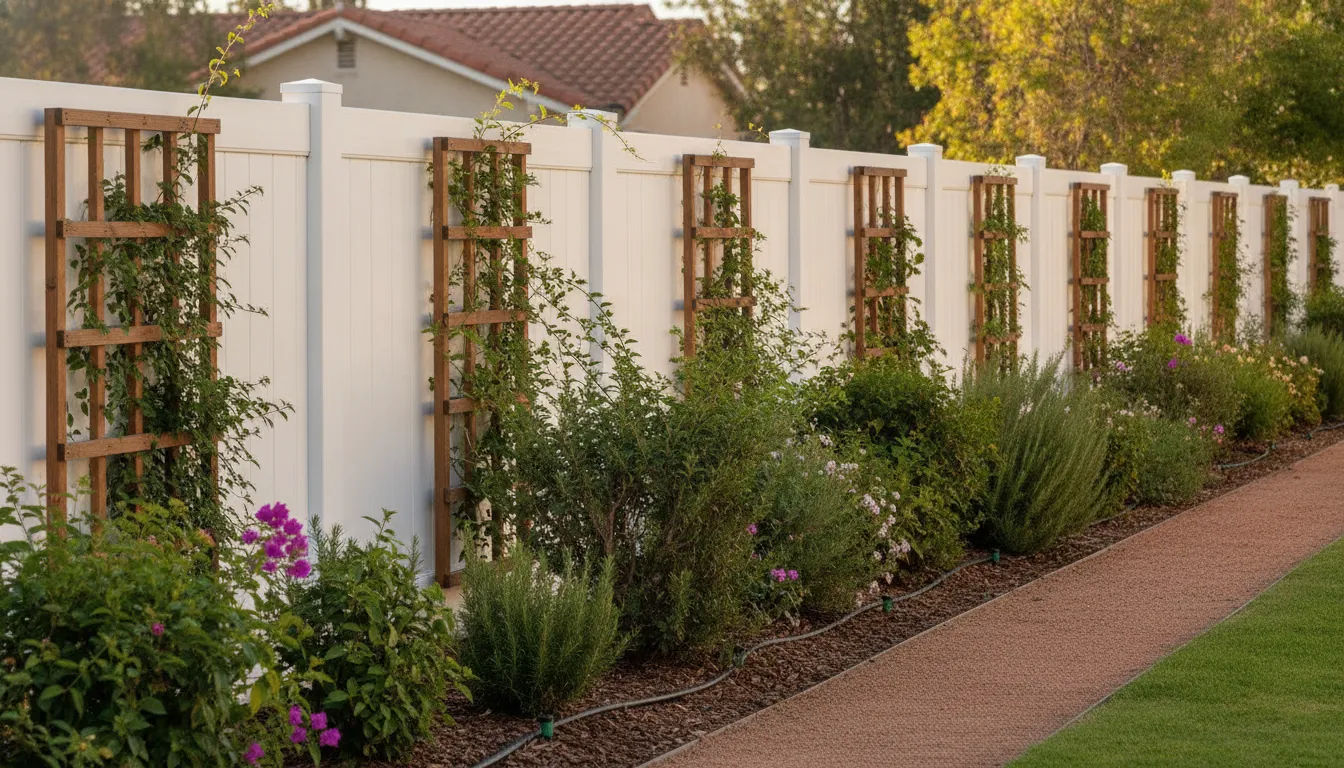
Match the plant to the light and screening goal
Start by deciding whether you need a full visual screen, a softer green backdrop, or a small amount of color beside the fence. A low screen in the range of 6 to 8 feet can include evergreen vines grown on a trellis, shrubs, or small trees that can be pruned into shrubs or hedges. In a shady or partly shady location, camellias may be considered for a less formal hedge. Meyer lemons are another cited option with dense foliage, while California lilac, or Ceanothus, offers a native screening possibility. These are categories to discuss with a local nursery or landscape professional, not universal recommendations for every Orange County yard.
Check mature size, roots, and local restrictions
Read the plant’s maximum height and width before planting. A small container plant can eventually crowd a narrow bed, shade part of the yard, or extend into a walkway. Consider root behavior as well. Roots that spread aggressively may affect a neighboring property or sidewalk, so placement deserves particular care near property lines and hardscape. In California, check whether a candidate appears on an invasive-species or noxious-weed list. The California Invasive Plant Council maintains a state invasive-plant list, but site conditions and local guidance still matter.
Account for pets and future maintenance
If dogs or other animals use the yard, avoid plants known to be toxic to them and confirm safety with a qualified local source. Fast-growing plants may create privacy sooner, but they will likely require more maintenance. A slower-growing screen can be easier to manage, while still needing observation as it fills out. Plan enough access to inspect the fence, trim growth, and reach irrigation without forcing plants into the fence line.
How Do You Landscape Without Damaging the Fence?
Protecting a vinyl fence starts with planning the planting area around the actual property, not with a universal clearance number. Review the fence line, finished grade, drainage pattern, and access needs before choosing plants or adding soil. A consistent grade can support a cleaner installation, but slopes and runoff are site-specific questions that should be reviewed for the yard rather than solved with a one-size-fits-all rule.
Check grade, drainage, and the planting bed
Note where water currently moves after irrigation or rain. A narrow bed may need a different layout from a broad side yard, especially where the soil strip receives intense summer sun. Avoid piling soil, mulch, or hardscape against fence components without confirming how that change affects grade and water movement. If the ground slopes toward the fence, discuss the finished elevation and drainage approach before installation.
Also consider mature root behavior. Roots can affect neighboring property or sidewalks, so plant selection should account for the eventual size and spread rather than only the container size. The University of California Agriculture and Natural Resources recommends asking whether roots may affect a neighbor’s property or damage sidewalks when selecting screening plants: review the root-planning guidance.
Preserve walkways, pools, and service access
Map gates, walkways, pool paths, equipment routes, and areas needed for future fence maintenance. A hedge that fits today can narrow a walking route as it matures. In one landscape case study, a hedge beside a pool encroached on the walking path; reducing its width restored room to pass. Use the same forward-looking test around gates and side yards: will someone still be able to open, walk, clean, and inspect the area when the plants reach their mature width?
Confirm boundaries before planting
For fences near a property line, shared walkway, pool, or HOA-controlled area, confirm the boundary and any applicable site requirements before committing to the layout. Do not assume a setback, permit, or pool-related rule applies without checking the specific location. A site review with measurements, photos, grade changes, and access concerns gives an installer enough context to coordinate the fence and landscape plan responsibly.
Coordinate Fence Style, Color, Gates, and Hardscape
The fence should support the way you use the yard, not compete with every other finish. Start by deciding whether the boundary needs privacy, a lighter visual edge, or a transition between outdoor rooms. Then coordinate the fence profile with gates, paths, patios, and the home’s existing colors. The right choice may change from the front yard to the side or back yard.
Match the fence to the job each area performs
| Planning priority. | Fence direction. | Coordinate with. |
|---|---|---|
| Privacy around a patio. | Solid privacy panels, with a lattice detail where appropriate. | Patio seating, shade structures, and the main gate route. |
| Open front-yard character. | Picket fencing that defines the boundary without closing the view. | Walkways, planting beds, and the home’s entry colors. |
| Color continuity. | White, wood-grain, or a darker tone selected with the property’s fixed finishes. | Siding, trim, paving, doors, and outdoor furniture. |
| Movement between spaces. | Gate location and swing planned around the usable path. | Driveways, pool or patio access, side-yard clearance, and grade. |
Use color and height to create a connected plan
White can keep a smaller yard feeling visually open, while a darker or wood-grain appearance may coordinate more deliberately with a contemporary patio or earth-toned hardscape. Compare samples beside the actual home finishes rather than choosing from a screen. For more background, review these vinyl fence color options and dark brown vinyl fence design options.
Privacy does not have to mean the same profile everywhere. A solid section can screen a seating area, while a picket section can define a visible garden edge. If the project includes both, keep one detail consistent, such as the color, post treatment, or gate hardware. You can also compare white vinyl fence privacy style before finalizing the layout.
Keep gates and hardscape practical
Place gates where people naturally approach them, and check that paths, paving transitions, and grade do not make access awkward. A G Vinyl Fencing provides design, space planning, material selection, and installation for residential and commercial projects in Anaheim and nearby Orange County communities. The final arrangement should be confirmed against the property’s measurements and site conditions.
Plan for Maintenance as Plants Mature
A planting bed can look perfectly sized on installation day and become difficult to manage a few seasons later. Build the maintenance plan around the plant’s mature height and width, its growth rate, and the space needed to reach the fence for inspection or cleaning. A fast-growing screen may provide coverage sooner, but it will usually demand more regular pruning than a slower option. The University of California Agriculture and Natural Resources notes that fast-growing privacy plants are likely to require more maintenance and recommends checking maximum height and width before choosing candidates.
Match growth rate to your available time
Ask how often you are realistically willing to prune, then choose plants that fit that schedule. One UC case study describes slow-growing vines needing no more than three trimmings a year, while a rapidly growing potato vine required pruning about twice a month for most of the year. Those examples are not a universal schedule for every plant or Orange County yard, but they show why growth speed matters when you compare options. A plant that quickly covers the fence can also narrow a walkway, shade nearby plants, or make gates harder to use.
Leave room for access and adjustment
Keep gates, walkways, pool paths, irrigation components, and the fence line in mind as the planting fills out. In the same case study, reducing a hedge’s width created more room to walk beside a pool. Plan where a pruner can stand and where clippings can be removed without leaning equipment against the vinyl. Root behavior also deserves attention near sidewalks and neighboring property, so review mature spread and site conditions before planting.
Observe before you overcorrect
Sun exposure can change by season, time of day, and position within the bed. Monitor moisture, shade, and plant vigor after installation, then adjust irrigation or move a struggling plant when appropriate. Ongoing observation helps keep the fence line attractive without forcing every plant into the same watering or pruning routine.
Sources: UC ANR guidance on privacy hedges; UC ANR planter and hedge case study; UC ANR vine maintenance case study.
What to Bring to a Vinyl Fence Estimate
A useful estimate starts with a clear picture of the property and how you want to use it. Bring the following details so the conversation can address layout, materials, access, and installation planning rather than only the fence line.
Document the space
- Measurements and photos: Note the approximate fence runs, corners, existing gates, grade changes, patios, pools, walkways, utilities, and planting beds. Take photos from both sides of the proposed fence when possible. Measurements can be confirmed on site, but these details help identify the questions that need attention.
- Privacy and style goals: Decide where you want more privacy, where you want light or visibility, and whether your preference is a solid privacy design, picket look, lattice detail, or another style. Bring color or architectural references if you want the fence to coordinate with the home and hardscape.
Plan access and planting around the fence
- Gate and walkway needs: Identify every route people, pets, bins, equipment, and service workers need to use. Mark pool, side-yard, driveway, and garden access. Mature shrubs or vines can narrow a path over time, so discuss their expected size before finalizing gate and walkway locations.
- Existing plants and site concerns: Point out trees, established hedges, irrigation, slopes, drainage patterns, and areas where roots or grade transitions could affect the layout. Consistent grade following matters during installation, while drainage and slope solutions remain site-specific.
Bring property and scheduling information
- Property and approval questions: Bring any available survey, plat, HOA design standards, or property-line information. Ask which local code, HOA, or neighbor-coordination questions should be confirmed for your project rather than assuming one rule applies everywhere.
- Timing preferences: Share your desired installation window, access restrictions, landscaping work, events, or other construction that could affect sequencing. Reviewing the vinyl fence installation timeline can help you prepare realistic scheduling questions.
Contact A G Vinyl Fencing to discuss your vinyl fence landscaping ideas and request a site-specific estimate.
Frequently Asked Questions
How can landscaping make a vinyl fence look better?
Start by coordinating the fence style and color with nearby patios, walkways, and planting. Use plants to soften the boundary without hiding gates or narrowing paths. Plan the mature height and width of each plant before installation so the landscape complements the fence over time.
What are the best plants to grow along a vinyl fence?
The right choice depends on sun, soil, desired screen height, and available width. Evergreen plants can support year-round privacy, while shrubs, trellised vines, and small trees may suit different layouts. Check mature size, root behavior, local invasive-plant guidance, and pet toxicity before choosing a species. UC ANR recommends evaluating these factors when selecting privacy plants.
How do you landscape around a vinyl fence without damaging it?
Keep planting, irrigation, and hardscape decisions coordinated with the fence layout. Leave enough room for mature growth, pruning, gate operation, and walking access. On a sloped or wet site, discuss grade, drainage, and property-line conditions during planning rather than assuming one clearance or installation detail fits every yard.
Should a vinyl fence touch the ground?
That is a site-specific installation question. Grade changes, drainage, soil conditions, and the fence design all affect how the bottom is planned. Ask the installer to review the finished grade and explain the proposed layout before landscaping is placed along the fence.
What should I bring to a fence landscaping estimate?
Bring property photos, rough measurements, preferred privacy and openness goals, gate and walkway needs, plant ideas, and any HOA or property-line information. Note slopes, existing irrigation, pools, patios, and areas that need equipment or maintenance access. These details help an installer develop a practical plan for an Anaheim or Orange County property.
Ready to Plan Your Vinyl Fence Landscaping?
A site-specific conversation can help you coordinate fence style, planting space, gates, and walkways before installation decisions are finalized. To discuss your Southern California yard or request a project estimate, contact A G Vinyl Fencing with your goals, photos, and any property or HOA questions. The team can review the details with you and help identify the next practical step for your Anaheim or Orange County project.

Gary Andreasyan is at the forefront of A G Vinyl Fencing, setting the standard for high-quality fencing solutions. His expertise in vinyl fencing has positioned the company as a go-to for durable, low-maintenance fencing options that enhance property value and security. Gary’s commitment to customer satisfaction and innovative fencing solutions drives A G Vinyl Fencing’s success, providing clients with a range of styles and designs that meet their specific needs and preferences.


0 Comments