


A vinyl fence can stay attractive and functional with a simple routine, but it still deserves periodic cleaning and inspection. In Anaheim and across Orange County, homeowners, HOAs, property managers, and businesses should look beyond surface dirt to check posts, rails, panels, gates, hardware, nearby vegetation, and drainage.
Request a free project estimate for your Orange County vinyl fence.
Effective vinyl fence maintenance Orange County property owners can manage includes washing buildup with appropriate care, trimming plants away from the fence, and inspecting the structure after significant weather or landscaping changes. Addressing small concerns early can help you decide whether routine care, a repair, or a professional evaluation is the sensible next step.
The right schedule depends on the property, fence layout, and surrounding site conditions. Start with the recurring tasks below, then adjust your checklist for shared properties, gates, slopes, and areas where soil or landscaping may shift.
What does vinyl fence maintenance in Orange County involve?
Routine vinyl fence maintenance in Orange County is straightforward, but it should include more than rinsing visible dirt from the panels. Homeowners, HOAs, property managers, and businesses should combine gentle cleaning with regular checks of posts, rails, gates, hardware, vegetation, and the surrounding soil. That approach helps separate normal surface buildup from a condition that needs professional attention.
A practical upkeep routine
Start with a visual walk-around. Look for loose or leaning posts, separated rails, cracked panels, sagging gates, damaged hinges, and fasteners that no longer hold securely. Check both sides of the fence when access allows, including corners and areas near driveways, pool enclosures, walkways, and shared property lines. Trim plants and branches that press against the fence or make inspection difficult.
For ordinary dirt, use soap and water with a soft brush or cloth, then rinse thoroughly. White fencing may need periodic washing when mildew or organic residue develops. For a gentler cleaning process, see this guide to cleaning a white vinyl fence without a pressure washer. Avoid treating cleaning as a substitute for checking the structure.
- Clean visible soil, residue, and mildew as needed.
- Inspect posts, rails, panels, gates, and hardware on a regular schedule.
- Trim vegetation and keep access clear around the fence line.
- After unusually strong weather or nearby landscaping work, check for movement, impact, or drainage changes and arrange prompt repairs when needed.
For a shared community or commercial property, document concerns by location and note whether the issue affects appearance, security, access, or safety. A loose gate may call for a different response than a stained panel. Use this resource on vinyl gate repair signs when gate operation is the concern, or review how to plan a vinyl fence panel replacement when a panel is damaged.
A seasonal vinyl fence maintenance checklist for Anaheim and Orange County
A practical routine helps homeowners, property managers, and HOAs catch small issues before they affect appearance, access, or safety. Use this checklist as a seasonal walk-through, then document anything that needs professional attention.
Walk the property at the change of each season
- Clean visible dirt and organic buildup. Rinse panels and rails, then use a gentle soap-and-water solution for routine cleaning. Pay attention to shaded areas and the lower portions of the fence where soil or plant debris can collect. For a detailed process, see this guide to cleaning a white vinyl fence without a pressure washer. Vinyl does not need painting because the material is the same color throughout, according to University of Georgia Extension guidance. Source.
- Inspect after strong wind or rain. Look along the fence line for leaning posts, displaced rails, loose panels, cracked components, or new gaps. Check both sides when possible, especially where the fence borders a street, parking area, play space, or pool. Promptly document and address visible movement rather than treating it as ordinary seasonal wear.
- Clear vegetation from the fence. Trim branches, vines, and dense growth that press against panels or block your view of posts and hardware. Keep landscape work separate from structural repairs. If roots, soil movement, or grading changes appear to be pushing on the fence, note the location for a closer evaluation.
- Test gates and hardware. Open and close each gate slowly. Confirm that it swings freely, latches correctly, and does not drag. Check hinges, latch hardware, posts, and nearby panels for looseness. For a focused list of warning signs, review these vinyl gate repair signs.
- Review drainage and soil conditions. After wet weather or irrigation changes, look for standing water, washout, exposed footing areas, or soil that has shifted around posts. Do not cover a developing problem with fresh mulch or fill before its cause is understood.
- Coordinate shared-property upkeep. For an HOA, commercial site, or managed property, record the inspection date, affected section, photos, gate locations, and access concerns. A consistent log helps multiple people report changes clearly and keeps routine cleaning, landscape trimming, and repair decisions organized.
How to clean vinyl fencing without damaging the finish
For routine dirt, dust, and light organic buildup, start with the least aggressive method. Rinse the fence with clean water, then use a soft cloth or soft-bristle brush with mild soap and water. Work in a small area, rinse thoroughly, and let the surface dry before deciding whether another pass is needed. This approach helps you clean the panels without treating normal surface soil as a reason for harsher products.
Use a gentle process first
Do not scrub with abrasive pads, scrape the surface with metal tools, or apply an untested cleaner across the entire fence. If a stain does not lift with mild soap and water, test any stronger product on a small, inconspicuous area first and follow its label directions. Mildew or persistent organic growth may require a more targeted treatment. University of Georgia Extension guidance notes that PVC or vinyl fences may need periodic washing for mildew, and identifies a chlorine bleach solution as one possible treatment when needed. Because bleach can damage nearby plants, soil, hardware, and other surfaces, use caution and consider professional help for widespread growth.
When pressure washing may be appropriate
Pressure washing is not the default for every fence. It may be considered for stubborn buildup when the equipment can be used at a low setting, with a broad spray pattern and sufficient distance from the panels, rails, posts, and gates. Avoid concentrating the spray on seams, hardware, caps, or damaged areas. If you are unsure how the fence will respond, follow the gentler method instead. Our guide to cleaning a white vinyl fence without a pressure washer provides a lower-impact starting point.
Cleaning is also a useful time to look for loose hardware, shifted posts, or a gate that no longer closes correctly. Separate those structural concerns from surface dirt, and consider vinyl gate repair signs before attempting an adjustment yourself.
What should you inspect after weather or landscaping changes?
After a storm, heavy rain, irrigation change, grading project, or landscaping work, walk the fence line before treating every mark as a repair problem. A practical inspection routine helps separate cosmetic dirt from movement, loosened connections, or drainage issues that can worsen if ignored.
Start at the posts, rails, and panels
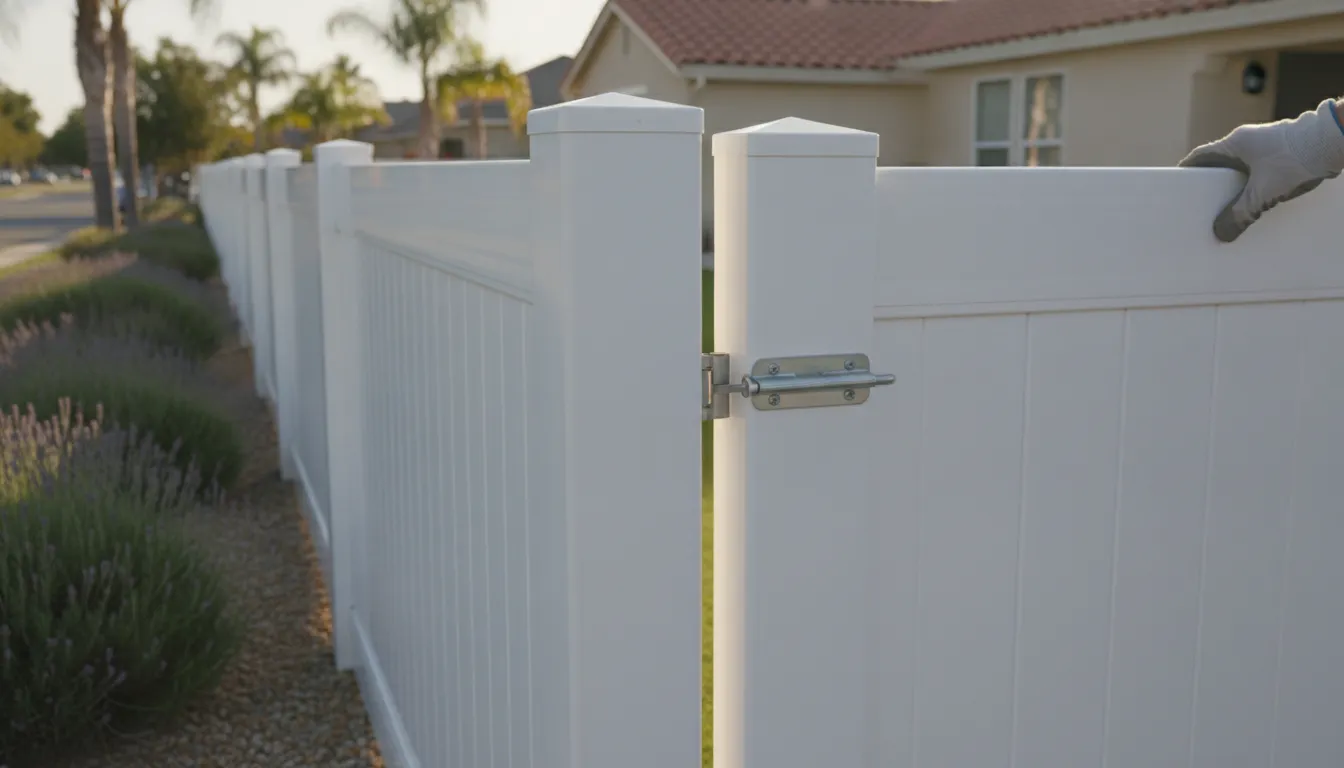
Look down the fence line for posts that lean, rails that have pulled away, or panels that no longer sit evenly. Check whether a panel is cracked, displaced, or simply covered with dust, mud, leaves, or plant debris. Surface grime can usually be handled as cleaning; a leaning post, separated rail, or panel that moves when gently checked points to a structural concern. Do not force a loose section back into place.
Inspect gates separately. Confirm that the gate swings without dragging, closes as intended, and remains aligned with its latch. Check hinges, latches, screws, and other visible hardware for looseness, corrosion, or damage. If the gate has begun sagging or binding, document the problem rather than repeatedly adjusting it without finding the cause. The vinyl gate repair signs guide can help you decide what to record.
Check soil, slopes, roots, and drainage
Landscaping can change the forces around a fence. Look for soil washed away from a post, new standing water, exposed roots, mulch or soil piled against the panels, and branches or vines pressing into the fence. On a sloped property, compare the bottom clearance and panel alignment along the grade. If recent work changed the slope or runoff path, review the conditions alongside guidance for vinyl fence installation on slopes.
Trim vegetation that touches or traps moisture against the fence, while avoiding cuts that destabilize nearby soil or roots. For a shared property, HOA, or commercial site, photograph each affected area and note whether the issue is cosmetic, access-related, or structural. That record makes professional maintenance and repair decisions more efficient.
Repair, replacement, or routine care: how to choose
Not every mark, loose fitting, or change in alignment calls for a full fence replacement. A practical decision starts with the part affected, whether the issue is getting worse, and whether the fence still provides the safety, privacy, appearance, or security the property needs. After strong weather, landscaping work, or a noticeable change in the gate or posts, inspect the area before deciding what to do.
| Situation | What you may notice | Best next step and owner-safe action |
|---|---|---|
| Routine care | Surface dirt, dust, leaves, or light organic buildup | Clean and continue a regular inspection routine. Use a gentle cleaning approach and trim vegetation away from the fence. |
| Minor cosmetic issue | A localized stain, scuff, or appearance change with no movement | Assess whether cleaning resolves it before considering replacement. Photograph the area and avoid abrasive tools or improvised chemicals. |
| Gate or hardware issue | A gate drags, does not latch correctly, or appears out of alignment | Review the hardware and surrounding posts; arrange a focused repair when needed. Do not force the gate. See vinyl gate repair signs for inspection cues. |
| Panel damage | A cracked, broken, or visibly compromised panel | Determine whether the affected panel can be replaced without changing the full run. Keep people and pets clear of the damaged area and plan a vinyl fence panel replacement. |
| Leaning post | A post or section no longer appears plumb, especially after weather or soil changes | Have the support and adjacent sections evaluated before cosmetic repairs. Do not pull, brace, or reset the post without understanding the cause. |
| Drainage or soil concern | Standing water, washout, erosion, or soil movement near the fence line | Address the site condition as part of the repair or replacement plan. Document the area after rainfall and request an assessment before work begins. |
For homeowners, HOAs, and property managers, the right choice should account for more than appearance. Safety, durability, consistent presentation, and maintenance demands all matter. If the condition is unclear, request a free project estimate so the fence and surrounding site can be reviewed together.
How local site conditions affect vinyl fence upkeep
Vinyl fence maintenance in Orange County should reflect the property around the fence, not just the material. A level backyard in Anaheim may need a different inspection routine than a sloped side yard, a pool enclosure, or a shared commercial property. Walk the fence line periodically and look for changes in the ground, landscaping, gates, and nearby use.
Slopes, drainage, and landscaping
On a slope, soil movement and runoff can place attention on posts, rails, and panel alignment. Check areas where water collects or flows toward the fence, especially after substantial rain. Anaheim’s normal precipitation is seasonal, with higher monthly averages in winter than in late summer, so a visual check after wet weather is a practical part of upkeep. If the fence follows a grade, vinyl fence installation on slopes can help you understand why alignment and drainage deserve specific attention.
Keep vines, shrubs, and tree growth from pressing against panels, gates, or hardware. Landscaping should also leave enough access to clean both sides and inspect the base of the fence. Vinyl does not need painting because its color runs through the material, but it still benefits from periodic washing when dirt or organic growth accumulates. Use a gentle cleaning approach rather than treating the fence as maintenance-free.
Pool, pet, HOA, and commercial settings
Pool areas call for regular checks of gates, latches, and the surrounding grade. Pet areas deserve attention to gaps, loose hardware, and places where digging or repeated contact could affect the fence line. For an HOA or property manager, document recurring concerns and keep a consistent appearance across shared areas. Commercial properties may need inspections coordinated with landscaping, deliveries, and access routes so a gate remains usable and the perimeter continues to look orderly.
When the site has a difficult slope, drainage concern, or multiple access points, compare the upkeep plan with the original layout. The local vinyl fence installation service page provides context for Anaheim-area projects, while a professional review can separate routine cleaning from a site-related adjustment.
When should you call a vinyl fence professional?
Call a professional when a fence problem affects safety, access, drainage, or the stability of the installation. A leaning section, loose post, damaged panel, or gate that repeatedly drops out of alignment is more than a cosmetic concern. Continued use can make the underlying repair more difficult, especially where soil has shifted or water is collecting near the fence line.
What to document before requesting an estimate
Take clear photos from both sides of the affected area, including the nearest posts, rails, panels, hinges, latches, and ground conditions. Note when the problem began, whether it followed landscaping or weather changes, and whether the gate still opens and closes safely. For a business, HOA, or rental property, record the section location and any access or security issue. This information helps the contractor distinguish routine care from a repair or replacement decision.
Professional guidance is also useful when trees, irrigation, slopes, or drainage make the cause unclear. A local installer can assess the site before you commit to a repair approach. A G Vinyl Fencing serves residential and commercial customers in Anaheim and surrounding Orange County communities, with more than 35 years of company experience. If the fence needs a broader solution, review local vinyl fence installation and compare vinyl with wood fencing before choosing materials.
Contact A G Vinyl Fencing for a free project estimate and a practical next step.
Frequently Asked Questions
What are some common problems with vinyl fences?
Common concerns include surface dirt or mildew, vegetation rubbing against panels, loose or leaning posts, damaged rails, and gates that no longer latch or swing correctly. Cleaning addresses cosmetic buildup, but movement, cracking, sagging, or drainage-related soil changes deserve a closer structural inspection.
How often should a vinyl fence be inspected in Orange County?
Check the fence during routine property care and after strong wind, heavy rain, landscaping work, or noticeable soil movement. Look at posts, rails, panels, gates, hardware, and the area around the footing. Shared commercial and HOA properties may benefit from documenting these checks so small issues can be assigned and addressed promptly.
What is the average lifespan of a vinyl fence?
There is no single lifespan that applies to every vinyl fence. Installation quality, site drainage, use, landscaping, weather exposure, and the condition of gates and hardware all affect service life. Rather than relying on a generic number, evaluate the fence’s current condition and have a professional assess recurring movement or damage.
How much does it cost to repair a vinyl fence?
Repair cost depends on whether the issue involves cleaning, hardware, one panel, a gate, a post, or multiple sections, as well as site access and footing conditions. Photograph the affected area and note any recent landscaping or weather event. An on-site review can clarify whether repair or panel replacement is the practical next step.
Get started with a practical fence plan
Regular care can help you spot cleaning needs, shifting components, vegetation growth, or drainage concerns before they become larger planning questions. If your vinyl fence needs maintenance, repair, or installation guidance in Anaheim or Orange County, request a free project estimate from A G Vinyl Fencing. Share the areas you have noticed, along with a few photos if helpful, so the team can better understand your project and recommend an appropriate next step.

Gary Andreasyan is at the forefront of A G Vinyl Fencing, setting the standard for high-quality fencing solutions. His expertise in vinyl fencing has positioned the company as a go-to for durable, low-maintenance fencing options that enhance property value and security. Gary’s commitment to customer satisfaction and innovative fencing solutions drives A G Vinyl Fencing’s success, providing clients with a range of styles and designs that meet their specific needs and preferences.


0 Comments