


A gate that drags, misses its latch, or shifts at the post can be giving you an early warning. The clearest vinyl gate repair signs are changes in movement, alignment, visible condition, or the way the gate stays closed. They do not identify a failed part by themselves, but they can help you decide when to stop using the gate and request an assessment.
Request an estimate for your gate project
Notice what changed without forcing the gate or adjusting its hardware. This guide explains five signs to watch, when a gate needs prompt attention, and what information can help a professional evaluate it. Homeowners and property managers in Anaheim and Orange County can also review professional gate repair in Anaheim.
What are the vinyl gate repair signs to watch?
Start with visible or repeatable changes rather than trying to diagnose the cause. A gate may sag or scrape, move unevenly, fail to latch consistently, show cracks or separation, or move with a leaning support post. A single symptom can have several explanations, so treat it as information for an inspection, not proof that a specific component has failed.
- Sagging, dragging, or uneven movement.
- A latch that repeatedly misses or will not hold.
- Cracks, bowed sections, or rails pulling apart.
- Loose-looking or moving hinges and attachments.
- A leaning or shifting gate post.
Pay attention to whether the symptom is new, happens repeatedly, or is getting worse. A gate that will not stay closed where access control matters, or that looks unstable, should not be treated as a minor nuisance. Stop operating it if continued movement could put someone at risk, and arrange a professional assessment.
A useful inspection considers how the gate, hinges, post, and latch work together. For example, a latch that misses may be associated with a change in alignment, but the symptom alone cannot establish why it happened. A qualified professional can inspect the connected parts and determine what attention is appropriate.
How do vinyl gate repair signs show up in movement?
A gate that once swung smoothly but now dips, scrapes the ground, or travels unevenly deserves attention. Look for a visible change in spacing around the gate. One side may sit lower, or the gap may widen from top to bottom. These movement changes are among the common vinyl gate repair signs, but they do not name the cause.
If the gate appears stable and safe to operate, notice whether the change occurs throughout its swing or only at one point. Do not keep testing it if it catches, shifts suddenly, or seems loose. A change that returns during ordinary use or grows more pronounced is useful context for a professional inspection.
For an initial observation, watch from a safe position rather than standing in the gate’s path. Note whether the bottom edge contacts the ground, whether the opening gap changes, or whether movement becomes rough near a particular point. Do not push or lift the gate to see whether the symptom goes away. A simple record of what happens during normal use is enough to help explain the concern.
The hinge area and supporting post are reasonable inspection points because the hinges connect the moving gate to the post. Movement around that connection may affect alignment, but similar symptoms can have different explanations. Read about the role of vinyl gate hinges and hardware, while keeping in mind that an article cannot diagnose a particular gate.
Note when the change began and whether it followed frequent use, an impact, or severe weather. Do not lift, bend, or adjust the gate or hardware yourself. If it seems unstable or could come loose, stop using it and arrange an assessment.
When describing movement, use plain observations. For example, note if the lower corner scrapes near the end of the swing or if the gap looks wider than last month. Such notes help an assessor understand where and when the change appears. Avoid repeatedly opening and closing a gate that catches or feels unstable just to reproduce the symptom.
Do vinyl gate repair signs include latch problems?
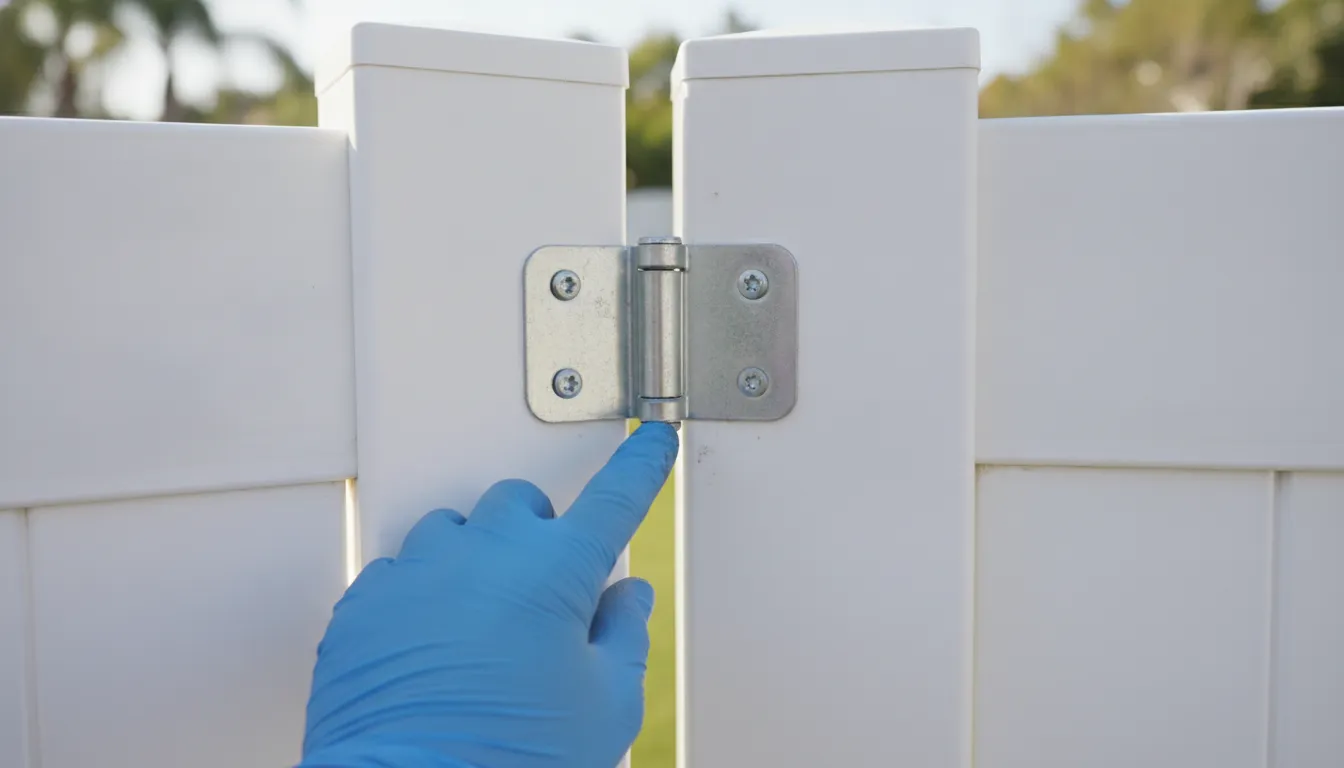
A gate that misses its latch, swings back open, or closes only when pushed hard may need assessment. The symptom does not prove the latch itself is defective. Movement at the hinges or post, a change in alignment, or another issue may affect how the latch meets its receiver.
Notice whether the gate stays shut without being held and whether the latch lines up when the gate is in its usual position. Do not force it closed or rely on a latch that engages inconsistently. An inspection can consider the latch, receiver, hinges, and support together. The vinyl fence gate hardware guide provides additional component context.
Think about the job this gate performs. A side-yard gate may affect everyday access, while an entrance gate may be relied on for security. A pool enclosure gate has additional safety implications and should be treated with particular care. Explain the setting when arranging an assessment so the professional understands why reliable closing matters.
Pool enclosure gates require special care. California Health and Safety Code section 115923 applies to the enclosures it covers. Among its requirements, access gates must open away from the pool and close automatically with a self-latching device at least 60 inches above ground. These provisions are specific to covered pool enclosures, not every driveway or yard gate. Review California Health and Safety Code section 115923 and applicable local requirements.
If a pool gate will not close or latch reliably, do not depend on it as a barrier. Keep children under direct supervision and seek qualified help promptly. A G Vinyl Fencing’s California pool fencing guide offers related planning context. The U.S. Consumer Product Safety Commission also states that pool barriers do not replace adult supervision in its Safety Barrier Guidelines.
| What you notice | Why it matters | Safer next step |
|---|---|---|
| Latch misses repeatedly | The gate may not stay closed reliably. | Arrange an assessment; do not rely on the latch where access control matters. |
| Pool enclosure gate does not self-close or latch | Pool gates have specific safety requirements. | Keep children supervised, check applicable rules, and seek qualified help promptly. |
| Gate needs force to close | A movement or alignment change may affect the latch. | Describe the symptom and avoid forcing the gate. |
Are there cracks, loose hinges, or separated rails?
Look at where rails meet posts and where hinges attach. A visible crack, a rail pulling away, or bowed vinyl can signal that the assembly needs attention. These signs are worth documenting, but appearance alone cannot show exactly what has failed or whether a repair or replacement is suitable.
Pay attention to movement as well as appearance. A hinge or attachment that shifts, rattles, or seems less secure may allow movement at its connection point. A changed fit or new rattle calls for a closer look, not an assumption about which part is at fault. A G Vinyl Fencing’s vinyl fencing repair materials guide discusses hardware in the broader context of fence care.
Consider whether the sign is new, spreading, or near a part that moves each time the gate opens. Hinges and their attachments experience repeated movement during normal use. A professional can inspect the connected components and determine whether the gate can be repaired. Avoid tightening, gluing, or patching damage yourself, since an improvised fix may obscure the condition or add stress.
If a rail is separating, a crack is spreading, or hardware moves noticeably, limit use when the gate feels unstable and arrange an assessment. If the gate appears sound but you want to understand its components, see the gate hardware overview.
Take note of whether the damage is confined to one spot or appears alongside movement elsewhere. For example, a visible separation and a gate that no longer latches are two observations to report, not proof that one caused the other. A professional can review the entire assembly before recommending a response.
Is a leaning or unstable post affecting the gate?
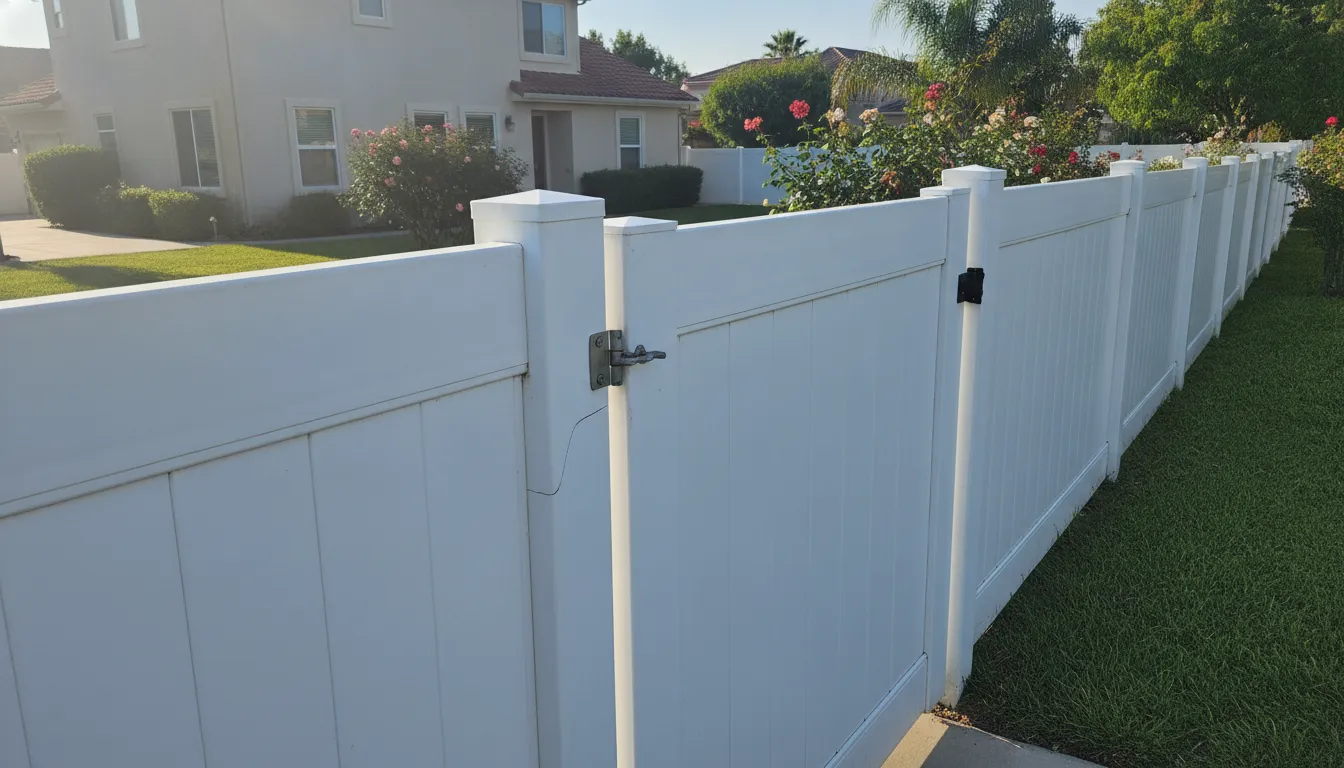
The support post provides the gate’s connection point. A new lean, visible movement, or a gap that changes beside the post can affect how the gate hangs and meets its latch. Those observations matter, but a leaning post does not automatically mean it needs replacement. The cause and appropriate response require an on-site assessment.
From a safe distance, compare the gate’s position with nearby fixed fence sections. Note if the post appears to tilt, if the gate hangs unevenly, or if the latch meets differently than before. Do not push or pull the post to test it. Movement that repeats or becomes more visible is useful information to share with a fencing professional.
A gate that is harder to open, close, or latch may have more than one possible cause. A professional can consider the post, hinges, frame, and surrounding ground as part of an assessment. Learn more about A G Vinyl Fencing’s vinyl gate services, including the options to discuss for a gate concern.
If the post or gate seems loose enough to shift, fall, or swing unpredictably, keep people clear and stop using it until it has been assessed. This matters especially when a gate controls access around children, pets, or a pool. Explain the safety concern when requesting help.
When the gate is part of a longer fence run, note whether nearby panels appear unchanged or show similar movement. This comparison can help explain the location and extent of the visible change, but it cannot establish the underlying cause. Avoid leaning on the fence or gate to test whether the post is firm.
Changes near the post can also affect day-to-day use even when there is no obvious break. A new rubbing point, a latch that meets at a different position, or a visible change in the gate’s hanging angle can all help describe what is happening. Record the change rather than trying to correct the alignment yourself.
When should you stop using a gate and request an assessment?
Stop operating a gate and arrange an assessment when it appears detached or unstable, has a sharp or broken section, or moves unpredictably. Do not continue testing it if movement could cause the gate to fall, strike someone, or worsen damage. Keep people clear and use another safe route or access measure until the gate has been checked.
Consider what the gate is meant to do. At a home, it may help keep children or pets within a defined area. At a business, it may control staff, customer, or delivery access. A gate that will not stay closed where security matters is a functional concern even when it is not part of a pool enclosure. If a covered pool gate will not latch, do not rely on it for protection; the CPSC guidance emphasizes that barriers never replace adult supervision.
For an unreliable gate in Anaheim or elsewhere in Orange County, request an assessment before returning it to ordinary use. You can ask A G Vinyl Fencing about a project estimate and explain whether the gate is unstable, will not latch, or serves a pool enclosure.
What should you note before a gate repair assessment?
A concise record can help a professional understand what you observed. You do not need to identify a failed part or decide why it is happening. Describe the behavior, when it occurs, and what the gate is used for.
- Symptom: Note whether it drags, swings unevenly, rattles, catches, misses the latch, or appears loose.
- Frequency: Say whether it happens every time or intermittently and whether it is becoming more pronounced.
- Timeline: Record when you first noticed the change and whether it appeared suddenly or gradually.
- Context: Mention a relevant impact or weather event as context, not proof of a cause.
- Setting: Explain whether the gate serves a home, business, shared property, or pool enclosure, and describe any access concern.
Keep observations separate from guesses. “The latch did not meet the receiver on three occasions this week” is more useful than naming a part as broken. If a photo already shows the gate in its usual position, you can share it. Do not operate an unstable gate or approach a questionable area to create a photo or video.
These details help a professional consider the gate as a connected system. Hinges attach it to a post, and the latch and receiver need to meet when it closes. A visible symptom at one point does not establish what is wrong elsewhere. For additional routine care information, see the vinyl gate maintenance checklist.
When you request help, be clear about any condition that makes the gate unsafe to operate or unable to control access. You can also mention whether it is a manual gate or used with an opener, without attempting to inspect or adjust the mechanism. An accurate description helps set expectations for an on-site review.
Try to keep the notes brief and factual. State the symptom, when it occurs, whether it is worsening, and whether the gate is used for routine access, security, or a pool enclosure. This supports a focused conversation without guessing at the cause.
Frequently Asked Questions
How can you tell if a vinyl gate needs repair?
Watch for changes such as sagging, dragging, uneven movement, a latch that will not hold, cracks, separating rails, or movement at the support post. These are signs to discuss with a professional, not a diagnosis. Stop using the gate if it seems unstable or cannot safely control access.
Can vinyl fencing be repaired?
Repair may be possible, but the right response depends on the condition of the fence or gate and the specific damage. A professional inspection can help determine whether repair is appropriate. Avoid assuming that a cracked section, loose-looking hardware, or leaning post always requires the same solution.
What should I do if a vinyl gate will not latch?
Do not rely on a latch that engages inconsistently, particularly when the gate controls access or is part of a pool enclosure. Avoid forcing the gate or adjusting its hardware. Keep children supervised around a pool and arrange a qualified assessment.
Share what changed, how often it happens, and what the gate is used for. For an Anaheim or Orange County property, contact A G Vinyl Fencing to discuss an estimate.
Request an assessment for your vinyl gate
Once the gate has been assessed, follow the professional’s guidance before returning it to regular use.

Gary Andreasyan is at the forefront of A G Vinyl Fencing, setting the standard for high-quality fencing solutions. His expertise in vinyl fencing has positioned the company as a go-to for durable, low-maintenance fencing options that enhance property value and security. Gary’s commitment to customer satisfaction and innovative fencing solutions drives A G Vinyl Fencing’s success, providing clients with a range of styles and designs that meet their specific needs and preferences.


0 Comments