


A cracked or missing vinyl fence panel can make an otherwise sound fence look unsafe, unfinished, or poorly maintained. For Anaheim homeowners, property managers, HOAs, and Orange County businesses, the first decision is not simply which panel to buy. It is whether the damage is limited to one panel or has affected the rails, posts, hardware, or adjoining section.
Request an estimate for your fence project.
Vinyl fence panel replacement may be possible when the existing posts and rails are sound, but the new panel must match the fence’s height, width, profile, color, connection points, and surrounding conditions. An on-site assessment can confirm whether an individual panel is the right scope or whether a broader section repair will provide a more consistent and secure result.
A G Vinyl Fencing provides design, product selection, repairs, modifications, maintenance, and professional installation for residential and commercial projects. With more than 35 years of installation experience in Southern California, the team can help you evaluate the condition of the fence before you commit to materials or a repair approach. That matters when panels have faded, posts have shifted, gates sit nearby, or the original system is difficult to identify.
The replacement process begins with understanding what is actually damaged and how the existing fence was assembled. From there, measurements and system details help define the work, avoid a mismatched appearance, and clarify whether the project is a single-panel fix or something larger.
What Does Vinyl Fence Panel Replacement Involve?
Vinyl fence panel replacement focuses on removing one damaged panel and fitting a compatible panel into the existing fence system. It is not automatically the same as replacing an entire fence line or a complete section. The right scope depends on what failed, how the panel connects to the rails and posts, and whether the surrounding components are still aligned and usable.
For example, an isolated impact, crack, warped panel, or damaged picket may leave the posts and rails in good condition. In that situation, an individual panel may be all that needs to change. The replacement still has to match the existing height, width, profile, color, and connection points. A panel that looks similar but does not fit the existing posts or rails can create alignment problems and a visibly inconsistent result.
That is why vinyl fence panel options should be treated as a reference for understanding styles and dimensions, not as a substitute for examining the fence already on the property. The existing system controls the practical match. Measurements, photographs, and an inspection of the surrounding fence can reveal whether the replacement is truly limited to one panel.
Individual panel replacement
An individual replacement is generally considered when the damage is confined to the panel itself. The posts remain stable, the rails or channels are intact, and nearby panels are not pulling out of alignment. The work may involve carefully removing the damaged panel, checking the connection points, fitting the replacement, and confirming that the fence line remains straight. If the damaged panel is next to a gate, corner, or end post, the adjacent hardware and spacing deserve extra attention.
When the scope expands beyond one panel
A damaged panel can point to a larger issue when the impact has shifted a post, broken a rail, affected multiple adjacent panels, or disturbed a gate opening. Movement from soil, weather, an earlier installation problem, or repeated pressure can also make a one-panel repair impractical. In those cases, the work may expand to a full fence section, post, rail, or gate-related assembly.
This page is intentionally narrower than a general section-replacement tutorial or broad panel-buying guide. The central question is whether one damaged panel can be matched and replaced without unnecessary reconstruction. Homeowners, property managers, and businesses in Anaheim and Orange County can protect that decision by having the existing fence assessed before ordering materials or removing sound components.
Should You Replace a Panel, Rail, Post, or Entire Section?
A damaged panel does not always mean the whole fence section needs to come out. The right scope depends on what failed, how the surrounding pieces connect, and whether the post is still stable and aligned. A clean-looking replacement can still be the wrong fix if a rail is bent, a post has shifted, or nearby panels no longer match.
| Visible clue | Likely scope | What to check | When to request an assessment |
|---|---|---|---|
| One cracked, dented, or discolored panel with the surrounding fence straight | Individual panel replacement | Panel height, width, profile, color, and how it connects to the rails | When the original product or matching replacement is uncertain |
| Panel is intact, but it moves, sags, or separates from the horizontal rails | Panel and rail inspection, with possible rail replacement | Rail condition, connection points, post spacing, and signs of movement | When the panel appears sound but will not stay aligned |
| Several panels lean together or the fence line changes direction unexpectedly | Post or connection repair, possibly affecting one section | Post alignment, caps, adjacent panels, slope, and ground conditions | Before removing a panel, especially near a gate or property line |
| Multiple panels and posts are damaged, mismatched, or visibly out of alignment | Entire section replacement or broader modification | Condition of each post and rail, matching availability, and the section’s endpoints | When replacing one piece would leave unstable or noticeably inconsistent results |
Appearance can hide connection problems
Vinyl components work as a connected system. A panel may look like the obvious problem while a loose rail or shifted post is causing the movement. Likewise, replacing a panel without checking its receiving channels can create gaps, stress the new piece, or leave the fence out of alignment. Check the posts at both ends of the section, the rails above and below the panel, and any adjacent panel that may have absorbed the impact.
Matching also matters beyond color. Height, width, profile, rail connections, post spacing, caps, and nearby gates can determine whether an individual replacement fits the existing fence. For background on related components and materials, see the guide to vinyl fence repair supplies, then confirm the actual system at the property rather than choosing by appearance alone.
When a full section is the better choice
A full-section decision is reasonable when the posts are damaged or displaced, several connected pieces have failed, or the available replacement cannot match the existing system. It can also be more practical when a gate, corner, slope, or property-line transition affects the section. If the post condition is unknown, request an assessment before ordering parts. A focused inspection can separate a straightforward panel replacement from work that needs coordinated repair or modification.
How Do You Match a Replacement Vinyl Fence Panel?
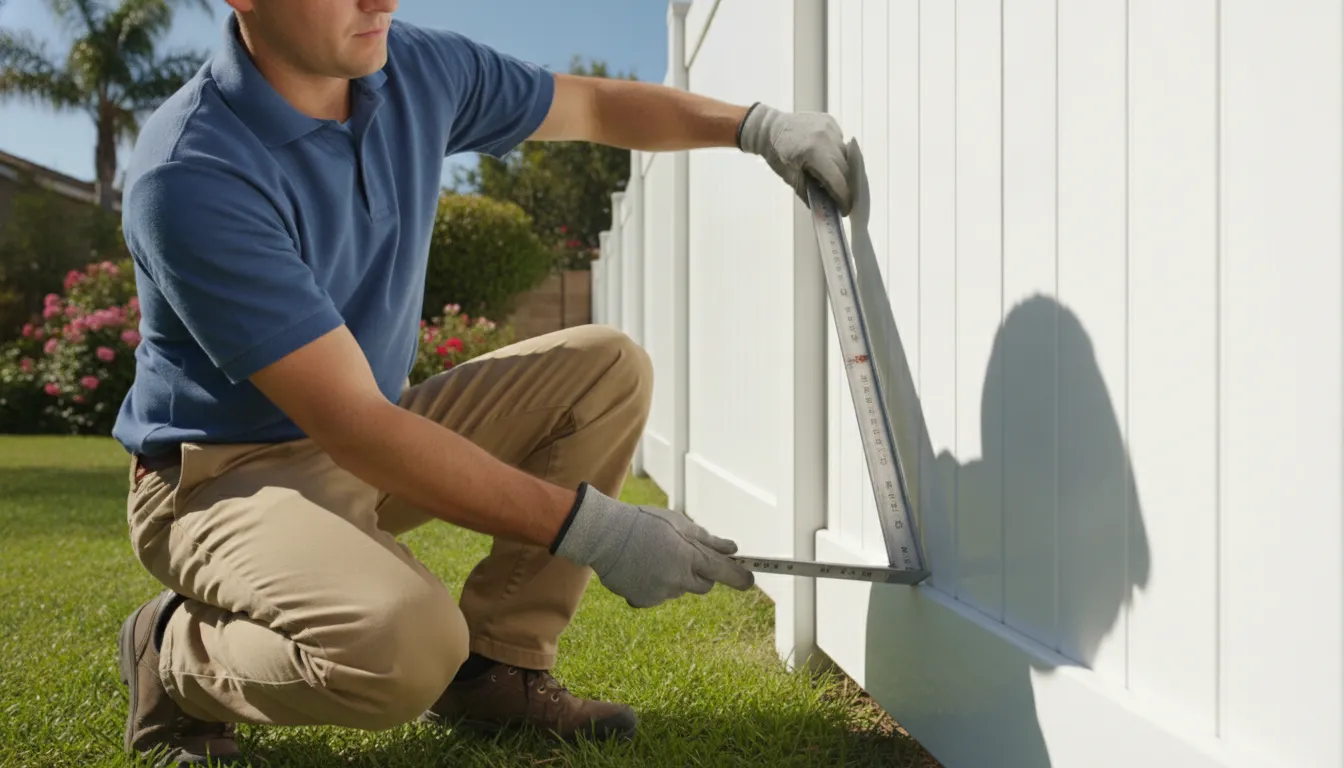
A close visual match is not enough when you are planning vinyl fence panel replacement. Two panels may both look white or six feet tall, yet differ in width, profile, rail connection, or the way they fit between posts. Gather measurements and photos before ordering or scheduling work so the replacement can be compared with the existing fence as a complete system.
Use this checklist to document the panel and the surrounding components:
- Measure the panel height and width. Measure the visible panel from the finished ground level to the top of the panel, then measure the opening between the posts. Record whether the measurement includes a rail, cap, or other trim. Take measurements at more than one point if the fence sits on a slope or the panel appears out of square. Do not assume a nominal size is the actual installed size.
- Identify the profile and style. Note whether the panel is solid, picket, privacy, lattice-topped, or another design. Look at the spacing and shape of the pickets, the number of rails, and any decorative top detail. A replacement with a similar color but a different profile can make the repaired section look visibly mismatched.
- Confirm the color in natural light. Record the color and compare an undamaged panel with the damaged one. White, tan, gray, and other vinyl colors can vary by product line and age. Photograph the fence in daylight, and include a wider view so the replacement can be matched to the neighboring sections rather than to a small close-up alone.
- Inspect the rail connections and posts. Check how the rails enter or attach to each post, and measure the distance from post center to post center. Look for cracked brackets, shifted posts, loose rails, or movement around the opening. If the supporting parts are damaged or have moved, replacing only the visible panel may not solve the problem.
- Check caps, gates, and adjacent sections. Photograph the post caps, rail caps, gate frame, hinges, and latch near the damaged panel. Note whether the panel shares a post with a gate or sits next to a transition in height or style. These details can affect the replacement scope and help distinguish an individual panel from a larger section that needs attention.
- Photograph the full system. Take one close photo of the damage, one straight-on photo of the panel, and wider photos showing both neighboring sections and the property side of the fence. Include a tape measure in key photos when possible. If you are comparing styles, the six-foot white vinyl fence guide can help you describe the existing height and appearance.
Send the measurements and images for an assessment before purchasing a replacement. For Anaheim and Orange County homeowners and property managers, reviewing the panel, rails, posts, caps, and nearby gates can clarify whether one panel is enough or a broader repair is needed.
What Is the Vinyl Fence Panel Replacement Process in Orange County?
A professional replacement usually begins before anyone removes the damaged panel. The goal is to confirm whether one panel can be replaced without disturbing the surrounding fence, then match the existing system closely enough that the repair looks intentional. For an Anaheim or Orange County property, the process typically includes an initial description, a documented or on-site assessment, careful measurements, removal, installation, cleanup, and a final walkthrough.
1. Share the damage and project details
Start by describing what happened and sending clear photos of the affected area. Useful images show the full fence run, the damaged panel from both sides, nearby posts and rails, caps, gates, and any slope or obstruction along the fence line. Include the approximate location, whether more than one panel is affected, and whether the fence is beside a driveway, pool area, landscaping, or another access concern.
This information helps identify whether the visible problem is limited to the panel or may involve a rail, post, hardware, or adjoining section. A G Vinyl Fencing serves residential and commercial customers, so the same initial review can help a homeowner, property manager, HOA, or business owner prepare for the next step.
2. Assess the existing fence and confirm measurements
Next, the fence is assessed using the available photos and documentation, or through an on-site review when the conditions require closer inspection. Measurements should account for the panel’s height and width, the profile and spacing of its components, the distance between posts, rail connections, cap style, and the location of nearby gates. Color and finish also matter because a replacement that is technically compatible may still look noticeably different from the surrounding fence.
Access is part of the assessment as well. The installer needs to understand how materials and tools will reach the work area, whether gates or narrow side yards limit movement, and whether landscaping or stored items need to be moved. These details are especially important on occupied residential properties and active commercial sites.
3. Remove, match, and install the replacement
Once the scope and replacement materials are confirmed, the damaged panel is removed with care around the adjacent posts, rails, and panels. If the inspection finds movement or damage beyond the panel, the work may need to address that broader condition rather than forcing a single-panel fix.
The replacement is then positioned within the existing fence line and checked for fit, level appearance, spacing, and alignment with the neighboring panels. The installer also checks the connection points, post relationship, caps, and any nearby gate so the repaired area functions as part of the complete fence rather than as an isolated patch. A G Vinyl Fencing provides design, installation, repair, modification, and maintenance services across the project lifecycle, with service throughout Anaheim and nearby Orange County communities. Learn more about Anaheim vinyl fence installation when planning a larger replacement or related project.
4. Clean up and complete the walkthrough
After installation, the work area is cleared of removed materials and checked for a clean finish. The final walkthrough gives the property owner an opportunity to review the replacement, confirm that the panel aligns with the existing run, and discuss any additional observations. This last step is also the right time to ask whether nearby panels, posts, gates, or maintenance concerns should be monitored before they become a larger project.
When Is Professional Replacement Better Than DIY?
DIY vinyl fence panel replacement can be reasonable when the damage is isolated, the fence system is familiar, and the replacement piece clearly matches the existing section. It becomes a poor fit when the visible panel is only one part of a larger problem. A careful assessment can prevent a new panel from being installed into a leaning post, misaligned rail, or unstable section.
Conditions that make professional help worthwhile
Consider professional help when you cannot identify the manufacturer, panel profile, rail connection, or post spacing. Matching by color and general appearance is not enough. A panel can look close in a photograph and still fail to align with the existing rails, caps, posts, or adjacent sections. Measurements, connection points, and the condition of the surrounding fence all affect whether an individual replacement will look and function as intended.
Post movement is another warning sign. If a post has shifted, settled, or pulled out of alignment, replacing the panel alone may leave the underlying issue unresolved. The same applies when several panels are damaged, rails are compromised, or an entire run no longer lines up. In those situations, the appropriate scope may include a broader section replacement, post work, or modifications rather than a single piece.
Site conditions can change the scope
Slopes and changes in grade require more careful layout than a straightforward level run. A gate also deserves separate attention because its alignment, hardware, and clearance affect the neighboring fence section. If damage is near a gate, review the gate and adjacent posts before ordering a panel. Limited access, tight side yards, landscaping, concrete, and other obstacles can also make removal and installation more difficult or less safe for an inexperienced installer.
Property managers and HOA customers should also confirm appearance, material, and approval requirements before work begins. A replacement that seems acceptable from the street may not meet an established community standard or property-owner expectation. For questions about posts, rails, panels, caps, and repair materials, see this guide to vinyl fence repair supplies.
What professional experience adds
A G Vinyl Fencing provides design, selection, installation, repair, modification, and maintenance support for residential and commercial projects in Anaheim and throughout Orange County. With more than 35 years of installation experience, the team can evaluate whether the damage is limited to one panel or points to a wider replacement need. If the work proceeds, the company supports a standard one-year workmanship warranty. That is a workmanship warranty, not a claim about the lifespan or warranty of the vinyl product itself.
What Should You Prepare for a Replacement Estimate?
The more complete the information you can provide, the easier it is to determine whether the project involves one vinyl fence panel, a larger section, or related posts, rails, or gate components. You do not need to identify the exact replacement part before contacting a fencing professional. Clear photos, basic measurements, and a description of what changed give the team a useful starting point for an assessment.
- Take photos from both sides. Include the full fence run, close-ups of the damaged area, and views of the panel’s connection to the posts and rails. Photograph the surrounding panels as well so the existing profile and color can be compared.
- Record the basic dimensions. Note the approximate panel height and width, post spacing, and the number of affected panels. If you are unsure where to measure, include a reference object in a photo and mention that the measurements are approximate.
- Describe the existing system. Share the fence profile, color, post and rail condition, post caps, and any visible hardware. A panel that appears damaged may be attached to a post or rail that has also moved, cracked, or deteriorated.
- Flag nearby gates and access concerns. Mention whether the damaged panel is next to a gate, corner, wall, pool area, driveway, or landscaping. Explain how a crew would reach the work area and whether narrow side access, locked gates, slopes, or obstacles may affect the assessment.
- Identify property-line or HOA questions. If the fence sits near a property boundary or the replacement must match a community standard, gather any available HOA guidelines or property information before the visit. This helps keep the discussion focused on the existing conditions and the desired result.
- Share the fence’s history. Include its approximate age, when the damage occurred, whether there was a storm, impact, settling, or another known cause, and whether previous repairs or modifications were made.
Also explain what you want the finished project to accomplish. You may want one damaged panel to blend into the existing fence, a more consistent appearance across several sections, or a broader replacement where the system no longer matches. A G Vinyl Fencing provides design, repair, modification, and replacement-related services for residential and commercial properties in Anaheim and Orange County. If you are planning work beyond an individual panel, review the Orange County vinyl fence estimate resource and include those wider goals in your request.
With more than 35 years of installation experience, the team can use your photos and project details to identify what should be inspected in person. An estimate should confirm the scope after considering the fence condition, access, adjacent components, and the result you want, rather than assuming every damaged panel can be matched or replaced in isolation.
Request an Orange County fence estimate.
Frequently Asked Questions
Can you replace just one damaged vinyl fence panel?
Often, yes. Individual panel replacement can be appropriate when the surrounding posts and rails remain sound and the new panel can be matched to the existing fence. An inspection helps confirm whether the damage is limited to the panel or has affected adjoining components.
How do you match a replacement vinyl fence panel?
Match the panel’s height, width, profile, color, rail connections, and post spacing. Also check nearby caps, hardware, and gates, because a visually similar panel may not fit the existing system. Photos and measurements help identify the correct replacement scope before installation.
When does a panel replacement become a post or full section replacement?
If a post has shifted, a rail is damaged, or several connected panels are affected, replacing one panel may not solve the problem. Slopes, gate connections, and broader alignment issues can also require work on a complete section. The right scope depends on the fence’s condition and how its components connect.
What should I prepare before requesting a replacement estimate?
Take clear photos of the damaged area from both sides, record approximate panel height and width, and note the fence’s color, style, age, and nearby gates. Include access details, the location in Anaheim or Orange County, and whether you want one panel replaced or the surrounding section assessed. This information helps guide a more useful project review.
Ready to Plan Your Vinyl Fence Panel Replacement?
A careful assessment can help confirm whether one panel is the right scope or whether nearby rails, posts, or gates also need attention. For a practical recommendation in Anaheim or Orange County, request a project estimate from A G Vinyl Fencing. Include a few photos and details about the damage so the team can better understand your fence before discussing the next step.
Gary Andreasyan is at the forefront of A G Vinyl Fencing, setting the standard for high-quality fencing solutions. His expertise in vinyl fencing has positioned the company as a go-to for durable, low-maintenance fencing options that enhance property value and security. Gary’s commitment to customer satisfaction and innovative fencing solutions drives A G Vinyl Fencing’s success, providing clients with a range of styles and designs that meet their specific needs and preferences.


0 Comments