


A fence can do more than mark a property line. In Anaheim and across Orange County, the right design can balance privacy, curb appeal, access, and the practical demands of a home, pool area, or commercial site. Start by deciding what the fence needs to accomplish, then choose a style that fits the property rather than forcing the site to fit a catalog option.
Request an Estimate | Discuss Your Project
A modern white vinyl fence typically combines clean panel lines with a purposeful layout and durable, low-maintenance material. Its details should suit the property’s privacy, boundary, gate, or screening needs. The best choice depends on sightlines, grade, access points, and whether the project is residential or commercial.
From panel proportions and post caps to height and gate placement, each choice affects how the finished fence looks and works. The first step is understanding which design details create a modern appearance without losing the function your property requires.
What Makes a Modern White Vinyl Fence Look Modern?
A modern white vinyl fence usually looks intentional rather than ornate. Its appearance comes from a combination of clean lines, consistent spacing, balanced proportions, and a profile that fits the property. White creates a clear visual boundary, but the fence should still relate to the home, yard, pool area, or commercial frontage around it.
Start with a simple, consistent profile
Modern design favors repetition that feels orderly. Privacy panels can create a continuous plane for a more enclosed yard, while picket sections keep the boundary open and add a lighter front-yard appearance. The goal is not to make every section identical at any cost. It is to use a clear panel rhythm so changes at corners, gates, and property transitions look planned.
For a more open residential look, review vinyl picket fence styles and consider how the spacing relates to the architecture. For a private yard, a solid panel may better support the intended use. A G Vinyl Fencing offers privacy, picket, pool, and commercial perimeter applications, with custom designs tailored to property specifications.
Balance privacy with proportion
Height and openness affect how substantial the fence feels. A taller, solid section can provide separation, but it may look visually heavy when placed beside a low home or a narrow side yard. A shorter picket section, a change in panel style, or a carefully placed gate can create variation without making the design busy. Residential vinyl fence heights are commonly listed as 4 to 6 feet, but the appropriate choice depends on the site, intended use, and applicable local requirements.
Use accents and context selectively
Decorative post caps and panel styles can add definition at entrances, corners, or prominent street-facing sections. They work best when repeated consistently rather than applied randomly. The surrounding property matters as well. A modern white fence should frame the entrance, define a pool or pet area when appropriate, or give a commercial perimeter a consistent appearance without competing with the building. For broader guidance on related vinyl fence color options, keep the focus on how the selected finish supports the overall property rather than treating color as the only design decision.
How to Plan a Modern White Vinyl Fence for an Anaheim or Orange County Property
A well-planned fence starts with how the property is used, not with a panel style selected from a picture. Work through the decisions below before discussing a layout so the finished design supports privacy, access, curb appeal, or perimeter definition without forcing one solution onto every part of the property.
- Define the primary purpose. Decide whether the fence is mainly for backyard privacy, pet or family containment, a front-yard boundary, pool-area separation, or a commercial perimeter. A residential yard may need a different balance of visibility and privacy than a business frontage. If several goals apply, rank them so the design has a clear priority.
- Confirm the intended fence line. Review the property plan and walk the proposed boundary to identify corners, transitions, existing gates, walls, and areas where the fence may need to meet another structure. Do not assume that an existing line or landscaping marks the exact property boundary. Resolve questions about the intended line before measurement and layout begin.
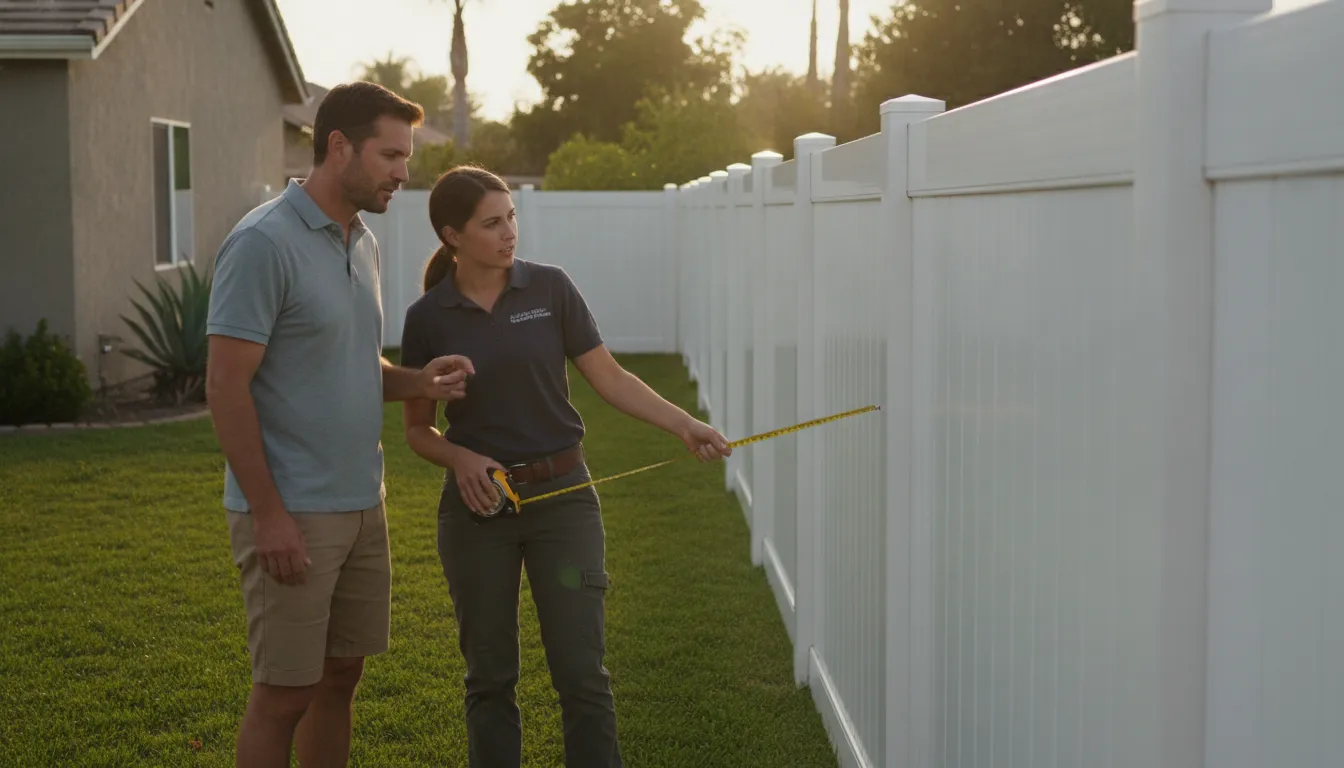
- Measure the usable run. Note each straight section, corner, opening, grade change, and obstruction rather than recording only one overall distance. This information helps establish panel rhythm and post locations. A design consultation can include property measurement, site assessment, layout planning, and guidance tailored to the property specifications.
- Choose a practical height. The KB-listed standard residential range is 4 to 6 feet, but that range is not a universal recommendation. Consider sightlines, the part of the property being enclosed, the desired level of privacy, and the surrounding site. For a deeper look at privacy-focused choices, review these vinyl fence privacy ideas for Anaheim.
- Plan gate locations and access. Identify the entrances people, vehicles, pets, and maintenance equipment will use. Consider whether a gate should sit near a driveway, walkway, side yard, or service area, and how it will relate to adjacent panels. Gate and hardware setup should be treated as part of the layout, not added after the fence line is finalized.
- Request a site assessment. Have the proposed design reviewed for slope, drainage, grade changes, soil conditions, and practical post locations. Installation planning may include posts set with concrete footings, panel placement, and gate or hardware setup. An Anaheim or Orange County site assessment gives the design team the context needed to recommend a cohesive modern white vinyl fence for that specific property.
This process keeps the visual design connected to real use and site conditions. It also gives you better questions to bring to a consultation before the fence materials and final layout are selected.
Which White Vinyl Fence Style Fits Your Privacy Goals?
Privacy is only one part of choosing a fence profile. A modern white vinyl fence should fit your daily use, desired light, visibility, and the impression it creates from the street. Comparing these options early keeps the layout practical instead of appearance-led.
| Style or use | Best fit | Visual effect | Planning note |
|---|---|---|---|
| Privacy panels | Backyards, patios, side yards, and boundaries where seclusion matters | A continuous, orderly backdrop with limited views through the fence | Confirm the desired height, gate locations, and how the solid profile meets the home and property lines. |
| Picket sections | Front yards, gardens, and areas where curb appeal or visibility is more important | An open, lighter appearance that defines the boundary without closing it off | Review spacing, transitions, and pedestrian access. See these vinyl picket fence styles for more focused ideas. |
| Mixed-visibility design | Properties needing privacy in selected areas while keeping other sections open | A layered look that can balance solid panels, pickets, gates, and decorative accents | Map each section by purpose so changes in profile look intentional rather than pieced together. |
| Pool or commercial perimeter | Pool enclosures, business boundaries, and larger properties needing a defined edge | A consistent perimeter appearance, with visibility and access planned around the use | Confirm site-specific height, gate, access, and other applicable requirements before final selection. |
Residential vinyl fence heights are commonly listed from 4 to 6 feet, but the appropriate choice depends on the site, intended use, and applicable local requirements. For a narrower look at taller white privacy profiles, review these 6-foot white vinyl fence options. A G Vinyl Fencing can assess the property, measure the layout, and help coordinate panel styles, post caps, and gates for a design suited to the project.
How Can Posts, Gates, and Accents Change the Finished Design?
Once the main panel style is selected, the smaller details determine whether the fence feels cohesive or pieced together. Posts create the visual rhythm from one section to the next, while caps, gates, and hardware give the installation its finishing character. These choices should support the property’s architecture and the way people will use each entrance.
Use posts and caps to set the rhythm
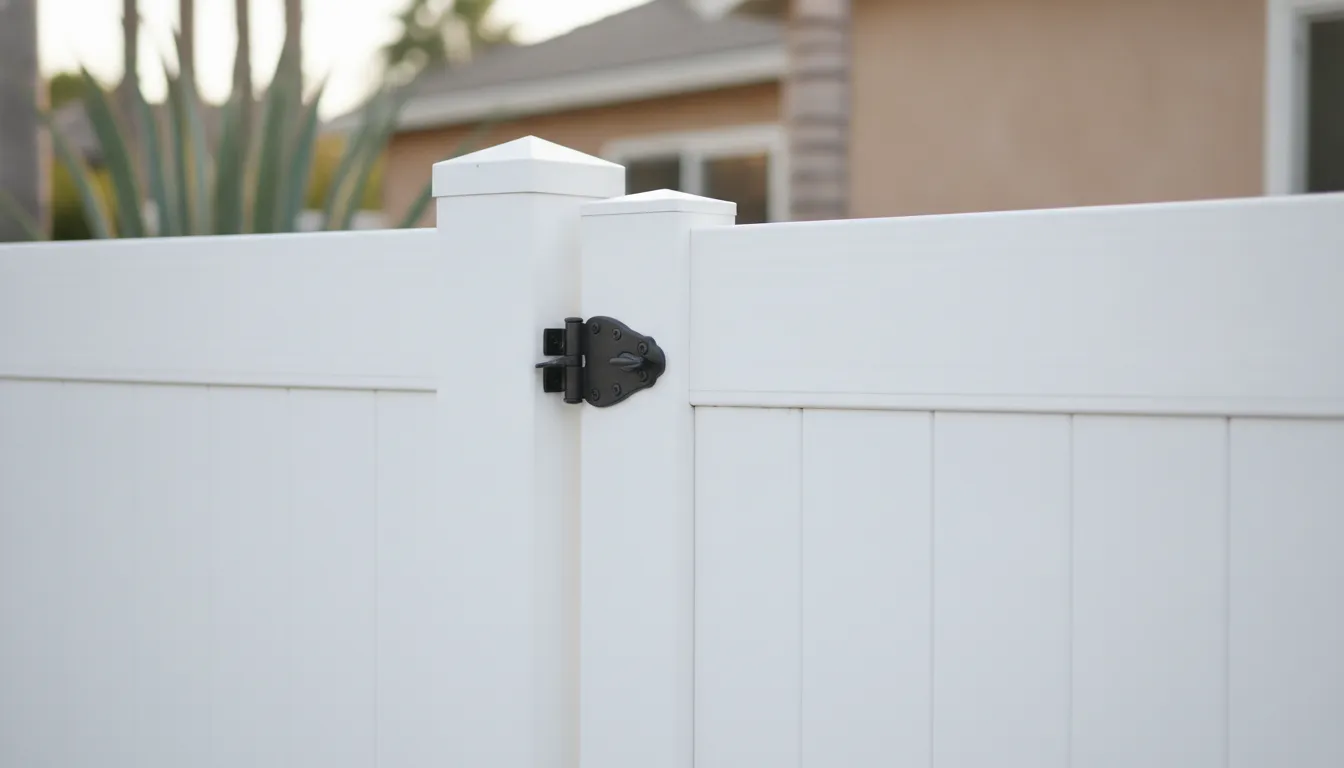
Post spacing and placement affect how a modern white vinyl fence reads from the street. A consistent sequence can reinforce clean lines, while changes in direction, corners, and transitions need deliberate post locations so the layout does not feel awkward. Decorative post caps add another layer of detail. A simpler cap can preserve a streamlined appearance, while a more pronounced profile may suit a traditional home or a boundary that needs a stronger visual marker. Available post-cap and panel selections should be confirmed for the specific project.
Make gates part of the overall layout
A gate is both an access point and a visible design feature. Its width, swing direction, location, and hardware should reflect whether it serves a walkway, driveway, side yard, pool area, or service route. Matching the gate frame and panel pattern to the adjoining fence usually creates a more finished appearance. At the same time, a frequently used entrance may call for a different hardware discussion than a rarely accessed side gate. Gate and hardware setup is part of installation planning, along with the surrounding post locations and footing needs.
Plan transitions for the property’s use
Residential projects may combine a more open front-yard treatment with privacy along a side or rear boundary. Picket sections, privacy panels, and pool-fence applications can each serve a different purpose within one property, provided the transitions are planned as one design. For a closer look at privacy decisions in the local context, review these vinyl fence privacy ideas for Anaheim.
Commercial perimeter work often prioritizes a consistent appearance across longer runs, controlled access, and clear property definition. That does not mean every commercial layout should look the same. Corners, vehicle gates, pedestrian access, and building entrances may require different treatments. In Anaheim and throughout Orange County, a site assessment and measurement help connect those practical needs with a custom design tailored to the property specifications.
What Site Conditions Should You Resolve Before Installation?
A clean fence layout depends on more than the panel style. Before installation, review how the property changes from one section to the next. Slope, drainage, grade, soil, access, and nearby structures can all affect post locations, panel transitions, gates, and the finished appearance of a modern white vinyl fence.
Start by identifying changes in grade. A sloped yard may need a stepped layout or another approach that keeps the fence line consistent with the property. Low areas also deserve attention because water that collects around posts or along the fence line can complicate the installation plan. Discuss drainage patterns, downspouts, irrigation, and any area where soil stays soft after rain. Post installation includes concrete footings, so the installer needs a practical understanding of the ground conditions before final measurements are made.
Confirm the boundary and clearance
Property lines should be identified before the layout is finalized. Mark walls, existing fencing, driveways, walkways, trees, utility features, and other fixed elements that may limit post placement or gate access. Leave enough working clearance for installation and enough operating room for gates to open as intended. If the fence will meet a house, retaining wall, pool area, or another enclosure, plan the transition rather than treating each section as an isolated run.
Account for landscaping and water use
Plants, raised beds, sprinklers, and irrigation lines can influence both access and long-term upkeep. The goal is not to remove every landscape feature, but to make sure the fence can be installed, cleaned, and inspected without unnecessary obstruction. For fence-line planting, spacing, and irrigation considerations, see this guide to landscaping along a white vinyl fence.
Plan gates and site-specific uses
Pool areas, side yards, pets, service access, and commercial perimeters may require different gate locations and traffic patterns. The right design depends on the use, site conditions, selected height, and applicable local requirements. A site assessment and measurement review help connect those practical needs to post locations, panels, footings, gates, and hardware before work begins.
What Should You Ask Before Requesting an Estimate?
A useful estimate discussion starts with how the fence needs to work on your property. Before reaching out, gather a few practical details so the design conversation can address appearance, access, site conditions, and long-term care together.
- What is the primary purpose? Decide whether the fence is mainly for privacy, pet containment, pool enclosure, front-yard definition, or a commercial perimeter. The intended use helps narrow the appropriate panel style and layout.
- How much privacy do you want? Note where you want a solid visual barrier and where you may prefer more light or visibility. A mixed layout may make sense when different parts of the property have different needs.
- Which profile and height fit the property? Consider clean privacy panels, picket sections, post-cap details, or another custom combination. Residential vinyl fence heights are commonly listed as 4 to 6 feet, but the right selection depends on the site, use, and applicable local requirements.
- Where will gates go? Identify everyday walking routes, driveways, service access, pool areas, and any equipment that must pass through. Ask how gate placement, hardware, and transitions will affect the finished design.
- What property conditions should be reviewed? Share anything you know about slopes, drainage, soil, landscaping, existing structures, and property-line questions. A site assessment and measurement help establish the layout, post locations, and footing plan rather than relying on assumptions.
- What should maintenance involve? Ask how to keep the selected design looking its best. Vinyl fencing is described as low-maintenance, with routine cleaning commonly handled using soap and water or pressure washing, but the property’s surroundings can affect upkeep.
The estimate conversation should clarify the proposed design, measurements, gates, hardware, site considerations, and any project-specific requirements. A G Vinyl Fencing provides design consultation, property measurement, site assessment, and custom guidance for residential and commercial projects in Anaheim, Orange County, and surrounding Southern California communities.
Request an estimate or contact A G Vinyl Fencing
Frequently Asked Questions
What are the most useful modern white vinyl fence design choices for a home?
Start with the function of each area, then choose the right balance of privacy and visibility. Privacy panels can define a backyard, while picket sections can keep a front yard open and welcoming. You can also coordinate panel styles, gates, and decorative post caps so the fence feels intentional rather than added as an afterthought.
What is the best white vinyl fence style for privacy and curb appeal?
There is no single best style for every property. A solid privacy profile generally suits areas where seclusion matters, while picket or mixed-visibility sections can preserve light and views. A site assessment helps determine where each style makes sense based on the home, adjacent spaces, gates, and desired boundary.
What are the downsides of vinyl fencing?
Vinyl still needs routine cleaning, and the right layout depends on site conditions, property lines, grade, gates, and intended use. It also may not provide the same visual character as another material. Its practical advantages include no painting or staining and cleaning with soap and water or pressure washing, according to A G Vinyl Fencing’s service guidance.
How should Orange County homeowners plan a white vinyl fence project?
Begin by identifying the purpose, preferred privacy level, gate access, and look you want. Then confirm property lines and discuss slope, drainage, post locations, footing needs, and any applicable local requirements. A project-specific consultation and measurement can turn those decisions into a workable layout and a more useful estimate.
Ready to Plan Your Modern White Vinyl Fence?
A thoughtful design starts with understanding your property, intended use, privacy goals, and gate needs. A G Vinyl Fencing can help you discuss the right direction for your Anaheim or Orange County home or business and identify the details to consider before installation. To request an estimate or talk through your project, contact A G Vinyl Fencing.

Gary Andreasyan is at the forefront of A G Vinyl Fencing, setting the standard for high-quality fencing solutions. His expertise in vinyl fencing has positioned the company as a go-to for durable, low-maintenance fencing options that enhance property value and security. Gary’s commitment to customer satisfaction and innovative fencing solutions drives A G Vinyl Fencing’s success, providing clients with a range of styles and designs that meet their specific needs and preferences.


0 Comments