


A white vinyl fence can give a yard a crisp edge. The planting bed beside it needs more planning than simply filling an empty strip. The right layout considers mature plant size, sun exposure, root behavior, and water needs. It also preserves clearance around panels, posts, gates, and walkways.
Plan your fence-line project with A G Vinyl Fencing.
Successful landscaping along white vinyl fence lines starts with a measured plan. Confirm the property line and observe the area’s light and drainage. Choose plants for their eventual size and water needs. Keep irrigation from spraying or pooling against the fence. Southern California conditions vary from one property to the next. Adjust general plant guidance for your soil, exposure, and maintenance routine.
Before choosing plants or edging, map how the fence, planting bed, and outdoor spaces need to work together. This review helps prevent crowded growth and blocked access. It also reduces landscaping decisions that create avoidable fence or drainage problems.
Plan the Fence Line Before You Plant
Good landscaping along white vinyl fence starts with the site, not the plant list. Walk the fence line at different times of day. Note where the bed receives full sun, filtered light, or shade. In Southern California, that exposure can affect plant selection and irrigation needs. Also look at the mature size of every plant. A small nursery container can become crowded against a panel or post as it grows. This matters most where access is limited.
Consider root behavior, water needs, and long-term clearance together. Keep stems, branches, and spreading groundcover from pressing against the fence. Leave room to clean panels, inspect posts, open gates, and reach both sides when necessary. Avoid placing thirsty plants where irrigation will constantly overspray the fence. Watering schedules depend on the plant, soil, exposure, and local conditions. Treat the bed as a system rather than choosing plants by appearance alone.
Match the fence design to the planting plan
Fence style and height influence how the finished yard feels. Common residential vinyl fence heights range from 4 to 6 feet. Privacy, picket, split-rail, and pool styles provide different levels of screening and openness. A dense planting bed beside a privacy fence may feel enclosed. A lower or more open design can support a lighter border and preserve sightlines. Review vinyl privacy fence options before finalizing a layout if privacy is part of the goal.
Confirm boundaries and future access
Before digging or building a raised bed, verify the property line and consider grading, drainage, utility locations, and gate swing. HOA review may be required in some communities. Utility marking through 811 can help identify buried lines before excavation. If the fence is new, coordinate the bed with post locations, terrain, and installation access. Do not plant first and force the fence crew to work around established plants. Planning these details early also makes it easier to install vinyl fence panels without damage.
Which Plants Work Best Beside a White Vinyl Fence?
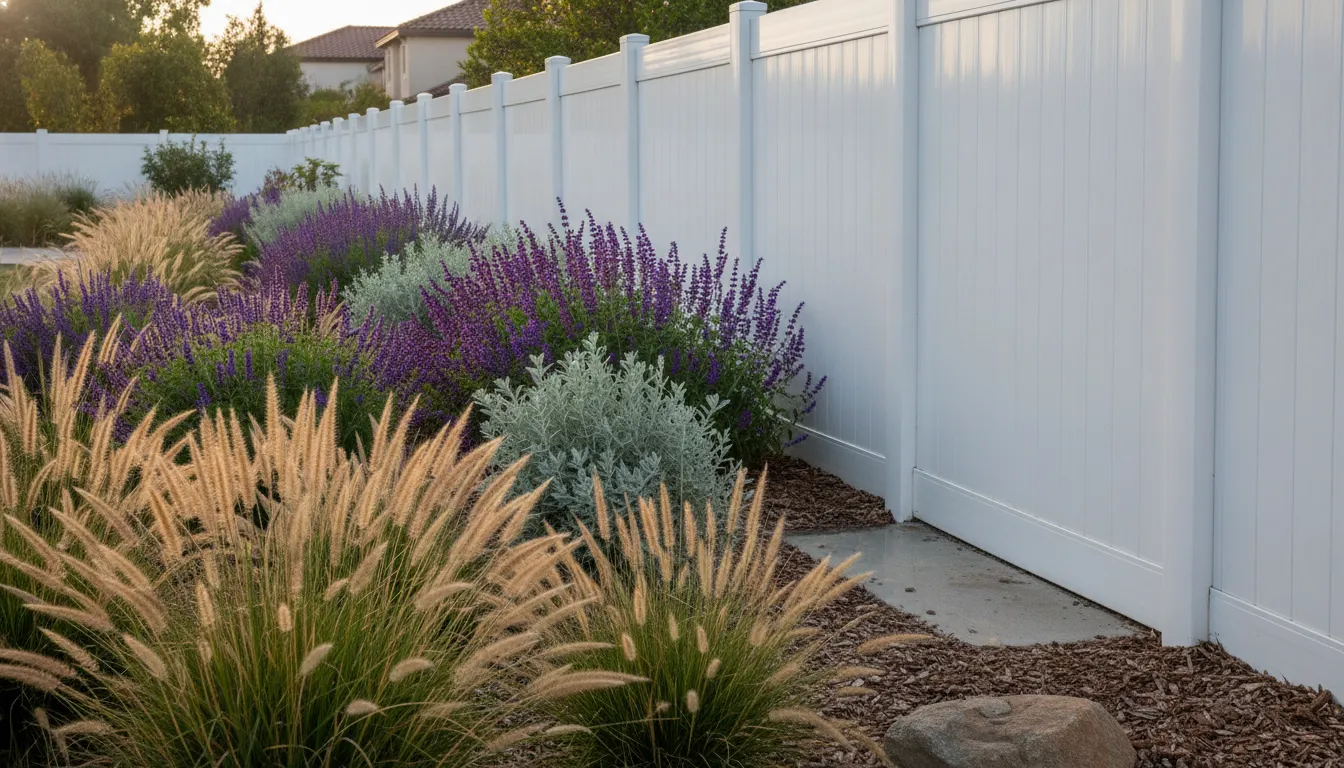
The best planting plan depends less on a single “perfect” plant. It depends on how each selection fits the fence line and the conditions around it. For landscaping along a white vinyl fence in Southern California, observe the space through the day. Note full sun, reflected heat, partial shade, or limited light. Then choose plants that suit those conditions rather than forcing one look across the entire yard.
Build the bed in layers
| Layer | Purpose | Planning check |
|---|---|---|
| Low | Define the bed edge | Keep the fence base visible |
| Middle | Soften long fence runs | Check mature width |
| Tall | Add screening where needed | Protect gates and access |
A layered arrangement usually looks more intentional than a continuous row of plants at one height. Lower groundcover or edging can define the bed without hiding the fence. Mid-height foliage can soften long runs of vinyl. Taller plants can provide screening where privacy is the goal. Leave enough of the fence visible to preserve its clean lines. Panels and posts should remain accessible for inspection.
Use the fence’s style as part of the design. A privacy fence creates a solid background for varied foliage. Picket or split-rail styles leave more of the landscape visible. White vinyl also creates strong color contrast. Green foliage will stand out clearly. Gray, blue-green, burgundy, or warm-toned leaves can create a deliberate palette. Check the combination in bright sun and evening shade before planting a long row.
Match plants to the site and their mature size
Read the expected mature width and height for every plant, not just the size at purchase. A plant that fits neatly today may eventually press against panels, posts, or gates. Plan a maintenance path where needed, and allow clearance for pruning, fence cleaning, and gate movement. Keep vigorous roots and large root zones away from posts and other areas where they could interfere with stability or access. When the fence borders a property line, confirm the layout before digging.
For a lower-maintenance bed, group plants with similar water needs and favor a drought-aware design approach suited to the site. Water requirements still depend on the plant, soil, exposure, and local conditions, so avoid treating a single irrigation schedule as universal. Design irrigation to limit overspray and prevent standing moisture against the fence.
Before buying plants, sketch the layers, mature dimensions, sun exposure, access points, and irrigation route. That simple plan helps coordinate the planting bed with the fence instead of creating a maintenance problem after installation.
How to Install Landscaping Along a White Vinyl Fence
A planting bed beside a fence works best when the layout is planned around the fence, not added as an afterthought. Use this sequence to protect access, support healthy planting, and keep the finished edge neat in an Orange County yard.
- Confirm the property line and mark utilities. Verify where the fence and planting bed should sit before digging. If the location is uncertain, resolve the property-line question first. Contact 811 before excavation so underground utilities can be identified. If the fence is part of a neighborhood with design rules, check whether HOA review is needed before changing the bed or fence line.
- Check fence access and condition. Walk the full run, including gates and corners. Make sure there is room to open gates, move equipment, clean the panels, and reach posts for inspection. Look for loose, damaged, or leaning components before planting. If the fence is new, coordinate the bed with the installation plan. This guide to installing vinyl fence panels can help you understand why access to the line matters during the work.
- Evaluate soil and grade. Remove unwanted growth and identify areas that hold water or wash soil toward the fence. Plan the bed so finished soil and mulch do not cover the base of panels or posts. Where the ground is uneven, consider how grading will affect drainage, gate operation, and the stability of the fence. A site-specific solution may require help from a landscaping or fencing professional.
- Plan irrigation before planting. Lay out the water source, tubing, and spray direction while the bed is still accessible. Choose an approach suited to the plants, soil, sun exposure, and local conditions. Keep irrigation from spraying directly onto the fence, and avoid creating standing moisture beside panels or posts. Test the system before covering lines or filling the bed.
- Install plants with mature growth in mind. Select each plant for its light needs, water needs, root behavior, and mature size. Leave practical clearance from panels, posts, gates, and corners so future growth does not block access. Place taller plants where they will not interfere with gates or obscure needed fence inspections, then add lower layers toward the visible edge.
- Finish with mulch and a defined edge. Spread mulch without piling it against the fence. Use edging only where it will not create a trip hazard, trap water, or interfere with maintenance. Keep the finished surface consistent along the bed and away from gate swings.
- Complete a final clearance inspection. Open every gate, walk the fence line, run the irrigation, and check for overspray, pooled water, blocked panels, or restricted access. Trim or reposition anything that prevents cleaning or inspection. Recheck the bed after the first watering and after settling soil so small drainage or clearance issues can be corrected early.
Irrigation, Drainage, and Fence Protection
Water management is one of the most important parts of landscaping along a white vinyl fence. A planting bed can look tidy when it is installed, then create problems if sprinklers continually spray the panels or rainwater collects along the fence line. Plan the irrigation and drainage at the same time as the plants so the finished landscape supports the fence instead of making access and maintenance harder.
Keep irrigation focused on the planting bed
Adjust sprinkler heads so they water the intended plants rather than the fence. Overspray leaves the surface wet, contributes to staining from soil or minerals, and can keep the area around posts damp. It also wastes water when the spray lands on a hard surface instead of the root zone. Check the system after installation and again when plants mature, because foliage can redirect spray toward the panels.
Drip irrigation can be useful where individual plants have distinct root zones and water needs. Spray irrigation may be appropriate for other layouts, but the heads, pressure, and coverage should be suited to the bed rather than applied automatically. There is no single watering schedule for every Orange County yard. Plant type, soil, sun exposure, and local conditions all affect how often and how deeply an area should be watered. California’s landscape guidance recommends assessing the existing irrigation system, soil, sun conditions, and climate-appropriate plants before re-landscaping. See the California landscape guide for that broader planning approach.
Manage grading and standing moisture
Water should not be directed toward the fence or allowed to sit at the base after irrigation or rain. Before adding soil, edging, or mulch, observe how water moves across the property. Low spots may need grading or another drainage solution, while compacted soil can prevent water from soaking in evenly. Keep mulch and loose soil from piling directly against panels or posts. A narrow, accessible clearance makes it easier to inspect the fence and reduces the chance that moisture, roots, or debris will hide a developing issue.
Inspect posts and panels as the landscape grows
During routine yard care, look for loose or shifted panels, unusual movement at posts, soil erosion, and water collecting near gates. Plants should be selected and positioned with their mature size, root behavior, water needs, and clearance from fence components in mind. If grading changes, drainage remains unresolved, or landscaping begins to affect access and fence stability, have the area evaluated before the problem grows. A fencing professional can review the terrain, posts, panels, and gate clearances together, which is especially useful when coordinating a new fence and planting bed in Southern California.
Keeping the Fence and Planting Bed Looking Clean
A simple maintenance routine helps a white vinyl fence stay crisp while keeping the planting bed from interfering with panels, posts, or gates. Start by pruning branches, vines, and fast-growing ground cover before they lean into the fence. Leave enough clearance for air movement and for someone to inspect the fence line. Plants should not press against panels, climb across gate hardware, or hide the base of posts.
As you work through the bed, remove leaves, fallen branches, and excess mulch that collect along the fence. A thin, tidy layer of mulch can support the planting design, but it should not be piled against panels or posts. Keep soil and mulch from covering the bottom edge of the fence, particularly where grading or drainage is already a concern. This makes it easier to spot movement, buildup, or moisture that needs attention.
Check gates and access points
Make sure plants do not narrow the gate opening or catch on hinges and latches. Walk through each gate and look for rubbing, sagging, or hardware that no longer operates smoothly. A planting bed can look attractive and still create a daily access problem if mature growth blocks the swing path. Keep a clear route for household traffic, pets, maintenance equipment, and any future fence repairs.
Clean the vinyl without overcomplicating it
Vinyl fencing generally does not need painting or staining. For routine care, soap and water can remove ordinary dust and soil. Pressure washing may also be appropriate when used carefully and from a safe distance. Follow the equipment manufacturer’s guidance, avoid forcing water into sensitive gate hardware, and test a less visible area if you are unsure how the surface will respond. For more practical guidance, review these vinyl fence maintenance tips.
Include the fence and planting bed in an annual care review. Look for overgrown plants, exposed or shifting posts, damaged panels, standing moisture, blocked drainage, and gates that need adjustment. The right review timing depends on the property’s plants, soil, exposure, and local conditions. So use the inspection to decide what needs attention rather than relying on an inflexible schedule. A clean fence line is easier to maintain, easier to inspect, and more likely to keep the landscape looking intentional throughout the year.
When Should You Call a Fence Professional?
Some fence-and-landscape decisions are easy to handle with careful planning. Others affect property boundaries, drainage, structural stability, or access and deserve a professional review. That is especially true when you are coordinating landscaping along a white vinyl fence with a new installation or a major yard renovation in Anaheim. Orange County, or elsewhere in Southern California.
Before a new fence or landscape project
Bring in a fencing professional before work begins when the fence line is new. Get help when the yard is being regraded, or when a landscape contractor, pool builder, and fence installer need to coordinate their work. A site review can help identify property-line questions, existing-fence removal needs, post locations, uneven terrain, and areas where planting beds or irrigation could limit future access. It is also a good time to discuss fence height, privacy, openness, gate placement, and how the finished design should work with the landscape.
HOA review may be required in some Orange County communities. Confirming the association’s requirements before materials are ordered can prevent avoidable changes. Utility marking should also be coordinated through 811 before digging. These steps matter whether you are replacing an old fence or adding plants beside an existing one.
When damage, drainage, or access is involved
Call for an assessment if panels are cracked, posts are leaning, or a gate drags, will not latch, or no longer provides adequate clearance. Replacing only a visible panel may not address movement or ground conditions affecting the post. A professional can evaluate the fence as a system and identify whether repair, replacement, or an adjustment to the surrounding grade is appropriate.
Drainage concerns are another reason to ask for help. Standing water near posts, soil pressing against panels, or runoff directed toward the fence can affect long-term stability. Likewise, dense plantings should not block gate swings, service access, or inspection areas. When the planting plan, terrain, and fence all need to work together, a design consultation and measurement visit can clarify the safest layout before installation begins.
Frequently Asked Questions
How much space should I leave between plants and a white vinyl fence?
Leave enough clearance for the plant’s mature size, root behavior, airflow, pruning, and access to the fence. The right spacing depends on the specific plant and site, so do not size the bed only by how wide it looks on planting day. Keep panels and posts reachable for inspection, cleaning, and repairs.
How can I protect a vinyl fence from irrigation?
Plan irrigation so water does not repeatedly overspray the panels or collect at the fence line. Watering schedules depend on plant type, soil, sun exposure, and local conditions. California’s landscape guidance also recommends assessing the existing irrigation system before re-landscaping and evaluating soil and sun conditions first (California Department of Water Resources).
Should I choose plants based on Southern California conditions?
Yes. Consider the amount of sun, soil, mature size, root behavior, and water needs before choosing plants. California’s WUCOLS database can help you review plants by regional water needs, but your property’s exposure and soil still matter (California Department of Water Resources).
Can landscaping affect fence access or stability?
It can if planting, grading, drainage, irrigation, or mulch blocks gates, covers posts, or directs water toward the fence. Keep access paths usable and address property-line or drainage questions before installation. A fencing professional can help evaluate landscaping that may affect access or fence stability.
When should I get help before landscaping beside my fence?
Ask for guidance when you are planning a new fence, changing the grade. Dealing with damaged panels or posts, resolving a property-line question, or working in a community that may require HOA review. Mark underground utilities through 811 before digging. Coordinate the fence layout with the planting plan.
Request a fence-line planning conversation with A G Vinyl Fencing.
Get started with a thoughtful fence-line plan
Good landscaping along a white vinyl fence should complement the property while preserving clearance, drainage, gate access, and long-term maintenance. If you are planning an update in Anaheim, Orange County, or elsewhere in Southern California, A G Vinyl Fencing can help you think through the fence line before work begins. Contact A G Vinyl Fencing to request design guidance, measurements, terrain evaluation, and a project estimate for your space.

Gary Andreasyan is at the forefront of A G Vinyl Fencing, setting the standard for high-quality fencing solutions. His expertise in vinyl fencing has positioned the company as a go-to for durable, low-maintenance fencing options that enhance property value and security. Gary’s commitment to customer satisfaction and innovative fencing solutions drives A G Vinyl Fencing’s success, providing clients with a range of styles and designs that meet their specific needs and preferences.


0 Comments