


White vinyl fencing is easy to maintain, but Southern California dust, pollen, irrigation overspray, and landscaping can make a bright surface look dirty quickly. You do not need a pressure washer to restore its appearance. A bucket, clean water, a mild soap, and a soft brush or microfiber cloth are usually enough for routine buildup. Work in small sections, scrub gently, and rinse before the solution dries.
Need help assessing your vinyl fence? Request a free project estimate.
To learn how to clean white vinyl fence without a pressure washer, start with soap and water, then use a soft tool to loosen dirt rather than relying on force. Treat algae, mildew, rust, or paint spots separately instead of applying a strong cleaner to the entire fence. Protect nearby plants, keep runoff under control, and follow the fence manufacturer’s care instructions before trying any product.
The right preparation makes hand cleaning faster and safer. Gather the basic supplies, choose a manageable work area, and plan where rinse water will go before you begin.
What You Need to Clean a White Vinyl Fence by Hand
A hand-cleaning setup can stay simple. Gather a bucket, clean water, mild soap or detergent, a soft brush or sponge, and a garden hose for rinsing. The goal is to loosen surface dirt without relying on a forceful spray. Cleaning with water, soap, and scrubbing is the basic approach recommended by the CDC. Soap and water are often enough for routine cleaning. Learn more about choosing and using a white vinyl fence cleaner if you need help comparing products.
Start with a mild soap-and-water solution
Use a phosphate-free soap, detergent, or household cleaner. The EPA specifically recommends phosphate-free products, which is a useful choice for an outdoor fence near lawns, planting beds, and drainage paths. Follow the product label for the correct dilution, and measure the amount rather than adding extra cleaner. More detergent is not better. A stronger mixture can leave more residue behind without making the hand-cleaning process safer or more effective.
For ordinary dust, pollen, irrigation overspray, and other light buildup, work with the mildest solution that does the job. Apply it to a small area, loosen the soil with a soft brush, sponge, or cloth, and rinse before moving on. Small sections help the solution stay under control and make it easier to notice whether a mark is lifting. They also reduce the temptation to let soapy water dry on the vinyl.
Protect landscaping, pets, and nearby drains
Before mixing or applying anything, move pet bowls and toys away from the work area. Wet or cover sensitive plants when practical, and keep pets away until the fence and surrounding ground are rinsed. Use only the amount of water needed to clean each section. The EPA advises using water efficiently, and its outdoor-washing guidance is a reminder that detergent-rich runoff can flow into storm drains. Storm drains lead directly to local waterways rather than treatment facilities.
Direct rinse water toward a planted area or another location where it can be managed, rather than intentionally washing it into a street gutter or drain. Avoid flooding the base of the fence. If the property layout makes runoff difficult to control, clean a shorter section at a time and pause to manage the water before continuing.
Keep the cleaning solution clearly separate from other products. Do not add bleach, ammonia, or another cleaner to the bucket unless a later stain-specific step calls for it and the product label supports that use. Mixing household bleach or ammonia with other cleaning products can release dangerous gases. For this basic hand-cleaning pass, soap, water, gentle scrubbing, and a thorough rinse are the safer starting point.
How to Clean White Vinyl Fence Without a Pressure Washer
The safest manual approach uses water, a mild cleaning solution, and gentle scrubbing. Focus on one manageable area at a time. This makes it easier to notice whether a mark is ordinary dirt, algae, mildew, or a stain that needs a different approach.
For routine care, plan a monthly hose rinse and a more thorough cleaning at least once a year. Monthly rinsing can remove surface dirt before it settles and helps reduce staining. Annual deep cleaning gives you a chance to inspect the panels, posts, and landscaping around them. Use water efficiently and avoid letting dirty wash water run toward a storm drain.
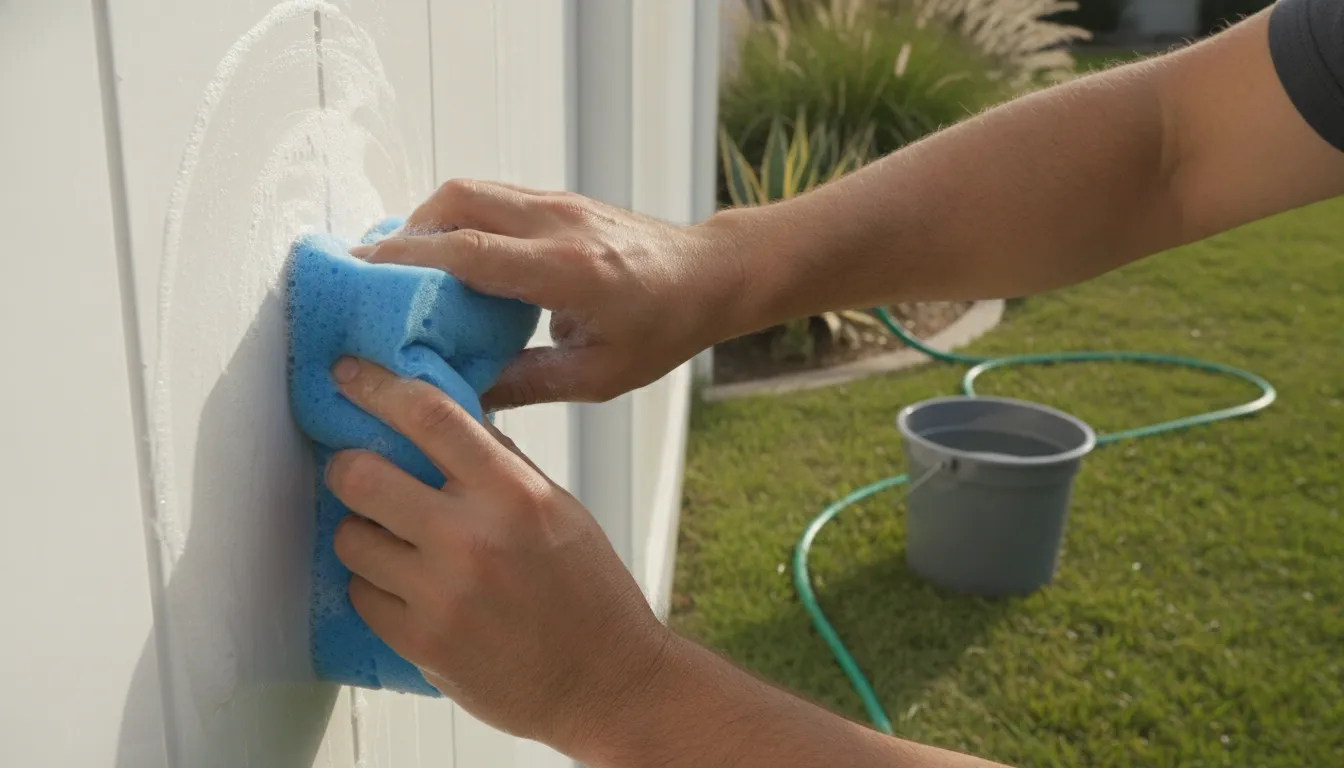
- Wet nearby plants and the ground. Before mixing or applying cleaner, spray the grass, shrubs, and garden beds beside the fence with clean water. Move toys, furniture, and other items out of the work area. Wetting vegetation first can reduce contact with cleaning solution, and working in a small zone helps you control runoff.
- Rinse the fence from top to bottom. Use a garden hose with a normal spray pattern, beginning at the highest rail or panel. Let the water carry loose dust, pollen, and cobwebs downward. Avoid blasting one spot for too long. A top-down rinse prevents you from re-wetting areas you have already cleaned.
- Work in small sections. Divide the fence into sections you can wash and rinse before the surface dries. A few panels at a time is usually easier to manage than applying solution along the full property line. Small sections also help you compare results and identify persistent stains without over-treating clean vinyl.
- Apply the cleaning solution. For ordinary dirt, start with the mildest option that fits the fence manufacturer’s care instructions. A commonly cited manual option is one part white vinegar to eight parts warm water. Apply it with a soft-bristled brush, sponge, or microfiber cloth, keeping the solution off nearby surfaces whenever possible. This diluted vinegar approach and soft-tool application are commonly used in manual cleaning, but the fence manufacturer’s care instructions should take priority.
- Let the solution dwell without drying. Keep the section damp while the cleaner works. Guidance for manual fence cleaning commonly allows about 10 minutes for a mild vinegar solution, while some product directions call for three to five minutes. Follow the product label when using a packaged cleaner, and shorten the dwell time if the sun or wind is drying the surface. Never allow cleaner to dry into a film.
- Scrub gently with a soft tool. Work from the top down using overlapping strokes. A soft brush, sponge, or microfiber cloth can lift dirt without the force of a pressure washer. Use extra patience on textured areas, corners, and around post caps. Do not use an abrasive pad or scrape aggressively, since a scratched surface can be harder to keep clean.
- Rinse thoroughly. Hose the section from top to bottom until the water runs clear and no slippery residue remains. Rinse plants and ground areas again if solution reached them. Thorough rinsing is especially important before moving to the next section so loosened dirt and cleaner do not dry on the vinyl.
- Inspect before moving on. Look at the fence from several angles after rinsing. If the panel is clean, continue to the next section. If a green, black, rust-colored, or paint-like mark remains, do not automatically apply a stronger chemical to the whole fence. Note the affected area and use the stain-specific guidance later in this article.
This process is effective because it combines water, soap or an appropriate cleaner, and gentle scrubbing rather than relying on high pressure. With regular rinsing and an annual deep clean, many Orange County homeowners can keep white vinyl looking fresh while limiting unnecessary water use and chemical runoff.
Which Cleaner Should You Use for Dirt, Algae, Mildew, or Stains?
The right cleaner depends on what is actually on the fence. Start with the mildest option that fits the problem, test it on an inconspicuous area, and follow the fence manufacturer’s care instructions. White vinyl can show ordinary dirt and stains quickly, but that does not mean the entire surface needs a strong chemical treatment.
| Problem | Starting option | How to use it | Important caution |
|---|---|---|---|
| Dust and routine dirt | Mild soap solution | Apply with a soft brush, sponge, or microfiber cloth, then rinse thoroughly. | Use the appropriate amount. More detergent is not better. |
| Green algae | Diluted white vinegar | Use a tested mixture, let it sit briefly, gently scrub, and rinse. | Keep it off sensitive plants and do not let the solution dry on the fence. |
| Mildew or heavy organic growth | Label-directed mildew treatment | Clean visible dirt first, then use only a product approved for the surface. | Follow the label for dilution and protective equipment. Never mix cleaners. |
| Paint or stubborn spot | Careful spot treatment | Soften the spot with a compatible treatment and lift it gently. | Do not scrape aggressively or treat the whole fence for one small mark. |
For dirt, algae, and ordinary buildup
For routine dirt, use water and a small amount of mild soap. Cleaning works through water, soap, and scrubbing, so a soft tool is usually more useful than a harsher product. A phosphate-free household cleaner is a sensible choice, particularly where runoff could reach landscaping or a storm drain. The EPA recommends phosphate-free soaps and using the appropriate amount of detergent. It also notes that storm drains can lead directly to local waterways, so control the rinse water whenever practical.
Algae may respond to a diluted white vinegar solution. Research-based cleaning guidance commonly uses either eight parts warm water to one part vinegar or, for algae-specific treatment, one part vinegar to three parts water. These are not universal prescriptions for every vinyl formulation. Test first, protect nearby plants, and choose the gentler dilution that gives you a useful result. Allowing the solution to sit for about 10 to 15 minutes before gentle scrubbing can help loosen algae, but do not allow it to dry.
For mildew, paint, and stubborn stains
Mildew requires more caution than surface dirt. Clean the visible grime with soap or detergent first. If a mildew treatment is appropriate, follow that product’s label exactly, including dilution, ventilation, gloves, and eye protection. Some guidance cites a one-part-bleach-to-five-parts-water mixture, but that ratio should not be treated as a universal vinyl-fence formula. The product label and the fence manufacturer’s instructions take priority. Never mix bleach with vinegar, ammonia, or another cleaner. The CDC warns that these combinations can release dangerous vapors.
For a small paint spot, try careful spot treatment rather than escalating the entire cleaning process. A compatible solvent or white vinegar may soften some paint, but test first and avoid aggressive scraping that can mark the vinyl. If a stain keeps returning, spreads across multiple panels, or appears alongside damaged or discolored material, cleaning may not be the real solution. It is better to identify the cause before applying a stronger chemical.
How Do You Clean a White Vinyl Fence Safely Around Plants and Pets?
Cleaning a fence beside flower beds, edible gardens, lawns, or pet areas requires as much attention to runoff as to the fence itself. Southern California landscaping often places irrigation lines and plantings close to the fence, so use the mildest effective method and keep the work area controlled. For routine dirt, water, a small amount of suitable soap, and gentle scrubbing are usually the right starting point. The CDC describes cleaning as using water, soap, and scrubbing to remove dirt and impurities from surfaces. It also notes that soap and water can remove most germs in many situations.
Protect plants and control the runoff
Before applying a cleaner, wet nearby plants with plain water. This helps dilute any accidental splash, but it does not make an unsuitable product safe for foliage. Cover especially sensitive plants temporarily, and move pet bowls and toys away from the work area. Keep dogs and other animals indoors or at a safe distance until the fence and surrounding ground are dry.
Choose phosphate-free soap, detergent, or household cleaner when a product is needed. The EPA recommends phosphate-free household cleaners and using the appropriate amount because more detergent is not better. Follow the product’s dilution instructions rather than making the solution stronger. Work in small sections, apply only enough to wet the vinyl, and rinse each section before moving on. This prevents cleaner from drying on the fence and limits the amount that can flow into planting beds.
Keep wash water away from storm drains whenever practical. EPA guidance explains that storm drains can lead directly to local waterways rather than treatment facilities. Use a bucket for controlled rinsing, direct light runoff toward a planted area that can safely receive plain water, and use water efficiently. Do not allow concentrated detergent or visibly dirty wash water to pool around roots, enter a drain, or run toward a neighboring property.
Handle bleach and other chemicals carefully
Do not reach for bleach just because the fence is white. Reserve stronger products for a specific problem and check the fence manufacturer’s care instructions and the cleaner label first. If bleach is permitted, the CDC says to clean visible dirt with a soap- or detergent-based cleaner before disinfecting. Never mix bleach with another cleaner, disinfectant, or ammonia. The CDC warns that these combinations can release dangerous vapors; its ammonia safety guidance also says not to mix household cleaners.
Read the label every time, use only the stated dilution, and wear the gloves or eye protection the label requires. Keep the product away from children and pets, avoid spraying in windy conditions, and rinse thoroughly. If a spill reaches plants or a pet contacts wet cleaner, follow the product’s first-aid and cleanup directions rather than improvising.
How Often Should You Clean a Vinyl Fence in Southern California?
Vinyl fencing is designed for low-maintenance ownership, but white surfaces make dust, pollen, water spots, and other buildup easy to notice. In Southern California, a practical routine is to rinse the fence with a garden hose about once a month and plan a more thorough hand cleaning at least once a year. That schedule can change with your landscaping, irrigation pattern, and the amount of dust your property receives.
A monthly rinse is usually a quick maintenance pass, not a full restoration project. Start at the top and work downward so loose soil and pollen do not settle back onto areas you already rinsed. Pay special attention to sections near sprinklers, planters, walkways, and unpaved areas. Irrigation overspray can leave repeated mineral marks, while nearby landscaping can place pollen, leaves, and fine debris against the fence. Efficient water use matters, so work in manageable sections instead of leaving the hose running.
When to schedule a deeper cleaning
At least once a year, wash the fence by hand with water, a suitable soap or cleaner, and gentle scrubbing. White vinyl can show dirt and stains relatively quickly, so do not wait for the entire fence to look dull before addressing it. If you notice green growth, dark areas, or grime collecting along seams, rails, or post bases, schedule the deep cleaning sooner. Follow the fence manufacturer’s care instructions before using any specialty product, and never assume that a stronger chemical or more aggressive tool is better.
For product-selection guidance, see this companion resource on choosing a white vinyl fence cleaner. If you are reviewing the fence’s overall look while you maintain it, the guide to white vinyl fence options can also help you compare common designs.
Use each cleaning as a visual inspection
Cleaning is a good time to look for changes that a quick rinse might hide. Check each of these areas:
- Posts: Look for leaning, movement, open caps, or soil and debris collecting around the base.
- Rails: Check for sagging, separation, cracks, or dirt trapped where rails meet posts.
- Seams and panels: Watch for gaps, displaced pieces, persistent discoloration, or damage that does not improve with gentle cleaning.
- Gates: Confirm that the gate hangs evenly, latches correctly, and does not drag across the ground.
Keep a simple note of the month you rinsed and the date of your annual deep clean. That small record makes it easier to spot recurring stains or irrigation problems. Regular care can help limit mold and mildew buildup, while an inspection helps you separate ordinary surface dirt from a repair issue that cleaning cannot solve.
When Is Cleaning Not Enough?
Manual cleaning is appropriate for surface dirt, dust, pollen, irrigation residue, and some organic buildup. It cannot correct every problem, however. If a white vinyl fence still looks damaged after a careful wash and rinse, stop treating it as a cleaning problem and identify what remains.
Persistent paint, rust, or stains
Paint overspray and other stuck-on material may need targeted treatment rather than harder scrubbing. A gentle spot test with a compatible product may soften paint, but follow the fence manufacturer’s care guidance and avoid aggressive scraping that can mark the vinyl. Do not use a broad chemical treatment across the entire fence just because one spot is difficult. For help choosing a white vinyl fence cleaner, use a product specifically intended for the surface and test it in an inconspicuous area first.
Rust-colored marks deserve extra caution. They may come from nearby metal, irrigation water, fasteners, or another source rather than from the vinyl itself. If the mark returns after cleaning, look for the source instead of repeatedly applying stronger chemicals. Recurring dark stains can also point to persistent moisture, poor drainage, landscaping contact, or organic growth that needs to be addressed at its source.
Damaged panels, posts, and attachments
Cleaning will not straighten a leaning post, repair a cracked panel, or correct a loose gate hinge, latch, or attachment. Check whether posts remain plumb, panels are seated correctly, and gates swing and latch without dragging. A gap, broken component, or repeated movement under normal use is a condition to assess, not a reason to increase water pressure or scrub harder.
Likewise, if the same area stains quickly after a thorough cleaning, inspect nearby sprinklers, soil, plants, and drainage. In Southern California yards, irrigation overspray and landscaping can keep a fence damp or transfer soil back onto the surface. Correcting that condition may accomplish more than another round of cleaner.
When the issue may involve a panel, post, gate, or attachment, document the area with a photo and seek a professional assessment before attempting a repair. A clear evaluation can distinguish removable surface buildup from material or structural damage and help determine whether a localized repair or broader replacement discussion is appropriate.
Need help assessing your vinyl fence? Request a free project estimate.
Frequently Asked Questions
How do you clean a white vinyl fence without a pressure washer?
Rinse loose dirt with a garden hose, work in small sections, and apply a mild cleaning solution. Let it dwell without drying, scrub gently with a soft brush or sponge, and rinse from top to bottom.
What is the best basic cleaner for a vinyl fence?
Start with water and a mild soap or detergent that is compatible with your fence manufacturer’s care instructions. Use only the amount needed, and consider a phosphate-free product to reduce unnecessary nutrient runoff.
How can you remove mildew or green algae from a vinyl fence?
Try a mild, targeted treatment rather than applying a strong solution to the entire fence. For any vinegar or bleach product, follow the product label and fence-care guidance, test a hidden spot, protect nearby plants, and rinse thoroughly.
Can I mix bleach with another fence cleaner?
No. Never mix bleach with another cleaner or disinfectant, including products that contain ammonia. Read the label, use the recommended protective equipment, and keep children and pets away from the wet work area.
How often should a white vinyl fence be cleaned?
A light hose rinse can be part of a monthly routine, while a deeper manual cleaning is useful at least once a year. Clean sooner when dust, pollen, irrigation overspray, algae, or visible stains build up.
Ready to Keep Your Vinyl Fence Looking Its Best?
Regular hand cleaning can handle much of the dust, pollen, and everyday buildup that shows on a white vinyl fence. If stains keep returning, a panel or post needs attention, or you want guidance before attempting a more involved repair. A G Vinyl Fencing can help you choose a practical next step. Contact us to request a free project estimate or discuss vinyl fence maintenance and repair. Share what you are seeing, and our team can learn more about the condition of your fence and the work you have already tried.

Gary Andreasyan is at the forefront of A G Vinyl Fencing, setting the standard for high-quality fencing solutions. His expertise in vinyl fencing has positioned the company as a go-to for durable, low-maintenance fencing options that enhance property value and security. Gary’s commitment to customer satisfaction and innovative fencing solutions drives A G Vinyl Fencing’s success, providing clients with a range of styles and designs that meet their specific needs and preferences.


0 Comments