


Choosing a vinyl fence is not only a question of color or appearance. Panel height changes privacy, visibility, post planning, gate design, property-line questions, and the way the finished fence relates to the yard. For many residential properties, four to six feet is the more common range. 8ft vinyl fence panels can be useful when a property needs a taller privacy screen or a more defined perimeter, but they are a project-specific option, not an automatic upgrade.
Request a project-specific fence estimate
8ft vinyl fence panels are tall privacy and perimeter sections for selected residential, commercial-adjacent, multifamily, and larger-property applications. Before choosing them, confirm the intended use, property lines, easements, HOA rules, height and setback requirements, access, drainage, gate locations, soil, and support design for the actual site.
This guide explains how to compare vinyl fence sizes and decide whether an eight-foot layout fits your property. It also covers installation planning, maintenance, and the questions to answer before materials are ordered.
How Do Vinyl Fence Panel Sizes Compare?
Vinyl fence panels are planned by height, width, style, and system configuration. The right size depends on the job the fence needs to perform. A front-yard boundary may prioritize an open appearance and street visibility. A rear-yard enclosure may prioritize privacy. A business or multifamily property may need a consistent perimeter with controlled access and several gates.
Residential vinyl fences most often fall within the four- to six-foot range. Four-foot panels can define a front yard without making it feel closed in. Five- or six-foot privacy sections provide more separation for side and rear yards. Eight-foot sections provide additional screening where the property, local rules, and support conditions make the height appropriate.
| Height range | Typical planning goal | Questions to answer |
|---|---|---|
| About 4 feet | Front-yard definition, decorative boundary, and open sightlines | Will the style provide enough separation while preserving intended visibility? |
| About 5 to 6 feet | General residential privacy, pets, and side or rear boundaries | How much screening, gate access, and yard separation does the property need? |
| About 8 feet | Higher privacy, stronger perimeter definition, and selected larger or adjacent-use sites | Do height rules, HOA requirements, terrain, wind exposure, access, and support planning allow it? |
Panel width matters as well. A panel may be designed around a standard span, but corners, gates, transitions, slopes, and property features can change the layout. The visible panel is only one part of the system. Posts, rails, caps, gates, hardware, and installation details all affect the finished result. Review the vinyl fencing panel basics before comparing individual styles.
Height is only one part of the design
A solid privacy panel, a picket profile, and a decorative or partially open style create different results at the same height. Color and post-cap choices also change the visual weight of the fence. A taller section may be appropriate along one boundary while a lower or more open section works better near the street, driveway, or front entry.
What Are 8ft Vinyl Fence Panels Used For?
The most common reason to consider eight-foot panels is additional screening. A taller solid-style fence can separate an outdoor living area from a nearby property, screen activity beside a busy use, or create more privacy around a rear or side yard. It can also help define a larger perimeter where a shorter fence would not meet the property’s screening goal.
That does not mean every eight-foot fence should be the same. One project may need a continuous privacy run. Another may combine a taller rear boundary with a lower front-yard transition. A third may use multiple gates and different sections because vehicles, equipment, tenants, or maintenance crews need access.
Privacy and outdoor living areas
Extra height may help screen a patio, pool-adjacent area, side yard, or backyard from nearby homes. The layout should still consider sunlight, airflow, drainage, views, and access for cleaning or repairs. A privacy goal is easier to achieve when fence height, panel style, gate locations, and surrounding landscaping are planned together. Compare related vinyl privacy fencing options before selecting one uniform height.
Property boundaries and pet containment
A fence can define an outdoor area and support pet containment, but height alone does not make an enclosure complete. Gates, gaps, corners, grade changes, and the relationship between the fence and existing structures all matter. Verify the property line and any easements before deciding where the fence will sit.
Commercial-adjacent and larger properties
Businesses, multifamily properties, HOAs, and properties next to active commercial uses may have additional goals such as controlled access, uniform appearance, privacy, or separation from neighboring operations. Eight-foot panels can be considered in those settings, but the project should be planned around its use, traffic, access points, and applicable approvals. See the commercial vinyl fencing solutions page for broader planning context.
Are 8ft Vinyl Fence Panels Right for Every Property?
No. An eight-foot fence can be a strong fit for a property that needs substantial screening, but it is not the default residential choice. A tall fence may feel out of proportion in a front yard, affect a corner or driveway sightline, or conflict with a neighborhood standard. It may also require a different support and access plan than a typical four- to six-foot residential fence.
Start by identifying the boundary where the problem exists. If a neighboring use is visible from a rear patio, a taller section may be useful there. If the concern is curb appeal, a lower decorative design may provide a better result near the street. If the property is on a slope, the fence may need planned transitions rather than a straight line forced across changing grades.
Ask these questions before choosing the height:
- What should the fence screen, contain, or define?
- Which boundary needs more height, and which areas should remain open?
- Will the fence affect a driveway, sidewalk, corner, street frontage, or neighbor’s view?
- Where will people, vehicles, equipment, and maintenance crews enter?
- Do city, county, HOA, easement, pool, or right-of-way rules affect the design?
- Can the site receive materials and installation equipment without damaging landscaping or hardscape?
These questions help prevent a common planning mistake: ordering tall panels first and discovering later that the property needs a different layout. A site-specific design can balance privacy with appearance, access, and local requirements.
How Do Wind, Terrain, and Drainage Affect Tall Panels?
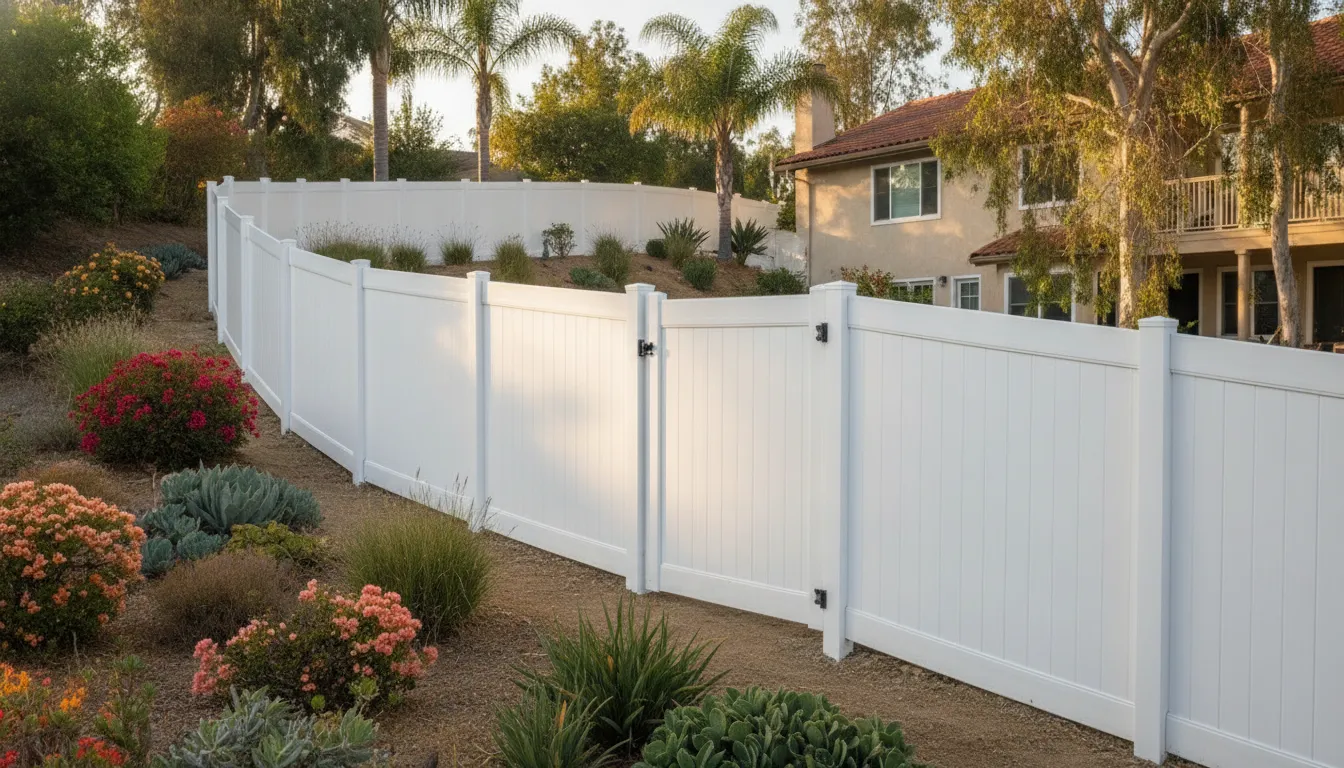
An eight-foot fence presents a larger surface area than a shorter fence, so the site should be evaluated rather than treated as a simple panel swap. Wind exposure is one consideration on an open lot, a corner property, or a boundary with little nearby landscaping or construction. Terrain and drainage matter too. Slopes, retaining features, low areas, runoff paths, and recently disturbed soil can affect the fence line and the way posts are planned.
Review the whole fence line
Walk the proposed route and note long uninterrupted runs, corners, grade changes, narrow side yards, mature landscaping, walls, hardscape, and areas with limited staging space. A fence that follows a slope may need deliberate transitions to maintain a clean appearance. A gate on uneven ground may need additional planning so it opens, closes, and latches as intended.
Drainage should be reviewed before installation. Keep water from being directed toward the fence line in a way that creates standing water, erosion, or difficult maintenance. Southern California properties may experience long dry periods and occasional heavy rain, so the finished layout should work with the way runoff moves across the lot.
Why corners and gates deserve extra attention
Corners change the direction of the fence and can make alignment errors more visible. Gates add movement and concentrated use. A walk gate, wider access gate, or multiple openings should be planned with adjacent posts, circulation, delivery needs, and the grade in mind. The best fence plan accounts for these points before materials are ordered.
What Supports 8ft Vinyl Fence Panels During Installation?
The panel is not the support system. Tall vinyl fencing depends on posts, rails or connecting components, appropriate footing work, gates, transitions, and careful alignment. The exact method should be selected for the fence system and the actual soil, drainage, terrain, and local conditions. Avoid applying a generic post or concrete specification to every property.
- Confirm the route and openings. Mark corners, endpoints, grade changes, gates, transitions, structures, and areas needing special access. Verify the route against property records and easements.
- Plan post locations. Posts establish the fence line and carry panel and rail connections. Straight runs, corners, gates, and changes in direction each deserve careful layout and alignment.
- Choose the footing approach for the site. Soil, drainage, exposure, terrain, and the selected fence system affect the support plan. A qualified installer should determine the method.
- Install rails and panels. Sections should be seated and aligned so the fence follows the planned grade and maintains a consistent appearance. Sloped sites may need planned transitions.
- Complete gates, caps, and transitions. Gate assemblies need operational checks. Caps and transitions should match the approved design and remain accessible for future care. Review the available vinyl gate options when planning openings.
- Inspect the finished work. Check the fence from both sides, confirm that gates operate correctly, and review connections, spacing, caps, transitions, and access before closeout.
Professional installation is especially valuable when the fence includes long runs, slopes, several gates, difficult access, or a height that is not standard for the neighborhood. A G Vinyl Fencing supports projects from design through installation with in-house crews and local planning experience.
Talk through your fence layout and site conditions
What Should You Check Before Ordering Tall Vinyl Panels?
Approval and placement questions should be answered before materials are ordered. Requirements vary by city, county, zoning district, property type, HOA, and project location. An eight-foot configuration should never be assumed to have the same approval path as a common residential fence.
- Confirm the property line. Use a current survey, deed information, or other reliable records. Do not rely only on the location of an old fence or a visual estimate.
- Review easements and shared areas. Check for utility, drainage, access, or other recorded easements. Identify shared side yards and maintenance responsibilities where relevant.
- Request utility marking. Contact 811 or the appropriate utility-marking service before digging. Private irrigation or landscape lines may need a separate check.
- Ask the local authority about height and setbacks. Provide the address, proposed height, fence location, and whether the design is solid or open. Ask about front, side, rear, street-side, corner-lot, and right-of-way rules, plus permit or inspection requirements.
- Review pool requirements when relevant. If the fence is part of a pool or spa enclosure, ask which rules apply to the complete barrier, gates, latches, and surrounding layout.
- Get HOA approval in writing. Associations may regulate height, style, color, location, neighborhood appearance, and approval documents. Review your governing documents and approval process. The HOA fence rules guide offers local context, but your association’s current decision controls.
Bring surveys, site plans, utility information, HOA decisions, and local guidance to the installation consultation. That information helps the design team recommend a layout based on the property rather than assumptions.
How Should You Maintain Vinyl Fence Panels?
Vinyl is a low-maintenance material because it does not require routine painting or staining. Maintenance still matters, especially on a taller fence where a small issue can be harder to notice from the ground or can affect a longer run over time.
Clean with a gentle method first
For dust, pollen, and ordinary soil, start with a garden hose, mild soap, and water. Use a soft brush or cloth for stubborn marks, then rinse thoroughly. If you use a pressure washer, follow the equipment manufacturer’s guidance, use controlled pressure, and avoid concentrating the spray on seams, caps, or hardware.
Keep vegetation and runoff under control
Trim vines, shrubs, and other growth that presses against panels, rails, posts, or gates. Keep mulch, soil, and standing water from building up around posts. If landscaping changes the grade or drainage pattern, check that water is not directed toward the fence line.
Inspect after weather or impact
After significant wind, rain, or an accidental impact, walk the fence line. Look for leaning posts, shifted panels, open seams, cracked components, loose caps, or unusual movement. Check corners, long runs, transitions, and areas near driveways carefully.
Check gates separately
Gates receive more movement than fixed panels. Confirm that each gate opens and closes without dragging, the latch engages, and visible hinges or hardware remain secure. Do not force a gate that has dropped or become obstructed. Have the supporting components evaluated if a simple adjustment does not solve the problem.
Vinyl fencing is commonly described in the customer knowledge base as having a typical lifespan of 20 to 30 years with suitable product selection, installation, and care. That is a planning range, not a guarantee. Actual service life depends on the product, installation quality, weather exposure, site conditions, use, and timely repairs.
Frequently Asked Questions
Are 8ft vinyl fence panels allowed on every property?
No. Height, setbacks, solid-fence rules, corner visibility, HOA standards, easements, and permits can vary by location. Confirm current requirements for the specific address before ordering.
Are eight-foot panels better than six-foot panels?
Not automatically. Eight-foot panels may provide more screening, while six-foot panels may suit a typical residential privacy project or a property with different approval requirements. The best choice depends on the goal and site.
Do tall vinyl panels need different installation planning?
They may. Height, wind exposure, long runs, terrain, soil, drainage, corners, and gates should be evaluated together. The support method should be selected for the actual fence system and property.
Can an eight-foot fence use more than one height?
Yes. A project may use taller sections along one boundary and lower or more open sections near a street, driveway, front yard, or transition. Mixed-height planning can balance privacy, appearance, visibility, and access.
How do I start planning an 8-foot vinyl fence?
Begin with the purpose of the fence, proposed route, gates, property records, HOA requirements, local height rules, access, and site conditions. A project-specific consultation can then help organize the design and installation questions.
Plan Your Vinyl Fence Panel Layout
Whether your project needs four-foot definition, six-foot privacy, or a carefully reviewed eight-foot perimeter, the layout should match the property and its rules. A G Vinyl Fencing can help evaluate panel style, height, gates, access, terrain, and installation needs across Anaheim, Orange County, and Southern California.
Request a free project estimate from A G Vinyl Fencing

Gary Andreasyan is at the forefront of A G Vinyl Fencing, setting the standard for high-quality fencing solutions. His expertise in vinyl fencing has positioned the company as a go-to for durable, low-maintenance fencing options that enhance property value and security. Gary’s commitment to customer satisfaction and innovative fencing solutions drives A G Vinyl Fencing’s success, providing clients with a range of styles and designs that meet their specific needs and preferences.


0 Comments