


A backyard fence has to do more than mark the property line. It should provide the level of privacy you want, work with gates and landscaping, and fit the lot’s access, grading, and neighborhood requirements. In Orange County, those practical details matter as much as the panel color or decorative post caps.
Request a privacy fence estimate
The right privacy vinyl fence backyard Orange County homeowners choose starts with the desired screening level and a practical height. The layout should account for property lines, gates, terrain, HOA review, and future maintenance. Vinyl is low maintenance and does not require painting or staining. Common residential heights range from 4 to 6 feet.
For homeowners in Anaheim and nearby Orange County communities, the best design is the one that balances seclusion with access, appearance, and a realistic installation plan. Start by looking at why vinyl may fit your backyard, then narrow the choice through height, style, color, and site-specific planning.
What Makes a Privacy Vinyl Fence a Good Backyard Choice in Orange County?
A privacy fence can make a backyard feel more usable by defining the property line and limiting direct views into outdoor living areas. For an Orange County homeowner, vinyl can be a practical option when the priority is a consistent barrier without the recurring painting or staining associated with some other materials. A G Vinyl Fencing serves homeowners across Orange County from its Anaheim base, so the design can be considered in the context of local lots, access, landscaping, and neighborhood requirements.
Low maintenance for an active backyard
Vinyl fencing is positioned as a low-maintenance material. It does not require painting or staining, and routine care can generally be handled with soap and water or pressure washing as needed. That can be useful around patios, play areas, and pool-adjacent yards where homeowners want to spend time using the space instead of maintaining the fence finish. Cleaning needs still depend on site conditions, including dust, irrigation overspray, plants, and the amount of exposure to the elements.
Vinyl is also described as weather resistant and suitable for the Southern California climate. That is general material guidance, not a promise that every product or installation will perform identically. A fence should still be matched to the property, installed correctly, and kept clear of conditions that can affect it. For example, landscaping and irrigation should be planned so mature plants, roots, overspray, and standing moisture do not crowd or continually wet the panels and posts.
Privacy, height, and curb appeal
Common residential vinyl fence heights are 4 to 6 feet. The right height depends on the views you want to screen, the relationship with neighboring properties, yard grade, gates, and any HOA or local review that applies. A taller fence is not automatically the best choice for every backyard. It may need more careful layout around access points, slopes, existing walls, and sightlines.
Style can also determine how the fence feels from both sides. Privacy panels provide substantial screening, while picket, split-rail, and pool-oriented styles create different levels of openness. Colors, panel profiles, and decorative post caps can help the fence coordinate with the home and existing landscape. Review vinyl privacy fence options before choosing a configuration, then compare the desired privacy level with property lines, planting space, gates, and neighborhood expectations.
In short, vinyl can fit an Orange County backyard when low upkeep, privacy, and a finished appearance matter. The best result comes from treating the material as one part of a property-specific plan, rather than assuming a standard height or style will suit every lot.
How Do You Choose the Right Height, Style, and Color?
Start with what the fence needs to do in your backyard. A solid privacy design may suit a patio or pool area where screening is the priority. A more open style can define the property without closing in the view. Common residential vinyl fence heights are 4 to 6 feet. The right choice depends on sightlines, adjacent properties, landscaping, gates, and community review requirements.
| Style or application | Best fit | Questions to consider |
|---|---|---|
| Privacy | Backyards, patios, and boundaries where visual screening matters most | Which sightlines need coverage? Will the height work with the property line and HOA expectations? |
| Picket | Front yards, garden edges, or areas where openness and curb appeal are important | How much visibility should remain? Will landscaping complete the desired screening? |
| Split-rail | Decorative boundaries and larger areas where a lighter visual divider is preferred | Does the open layout provide enough separation for pets, children, or the intended property boundary? |
| Pool-oriented | Pool areas that require a design planned around access, visibility, and the surrounding layout | What gate locations, circulation paths, and local or community requirements need review? |
Match the design to the backyard
Height should follow the privacy goal rather than an assumed standard. Walk the yard and note where neighboring windows, streets, seating areas, or elevated ground affect visibility. A 4-foot fence may define a space while preserving openness. A 6-foot fence may provide more screening, but it can change the feel of a narrow yard and may require additional HOA or local review.
Color and gate details should support the house and outdoor space. Consider whether a lighter or darker color complements the exterior, hardscape, and landscaping. Then plan gate width and location around daily access, equipment, pets, and furniture. Property-line information matters before finalizing the layout, especially when an existing fence or irregular lot line makes the boundary unclear.
For more examples of materials and design decisions, review these vinyl privacy fence options. If your community has an HOA, gather its fence rules before choosing a final height, color, or style. A design discussion that includes screening, gates, property lines, terrain, and HOA review will produce a more practical plan than selecting panels from a sample alone.
What Should You Plan Before Installation?
A smooth backyard fence project starts with the site, not the panels. Before selecting a final layout, confirm where the fence can go, how the yard will be prepared, and how the finished installation will work with gates, landscaping, utilities, and community requirements.
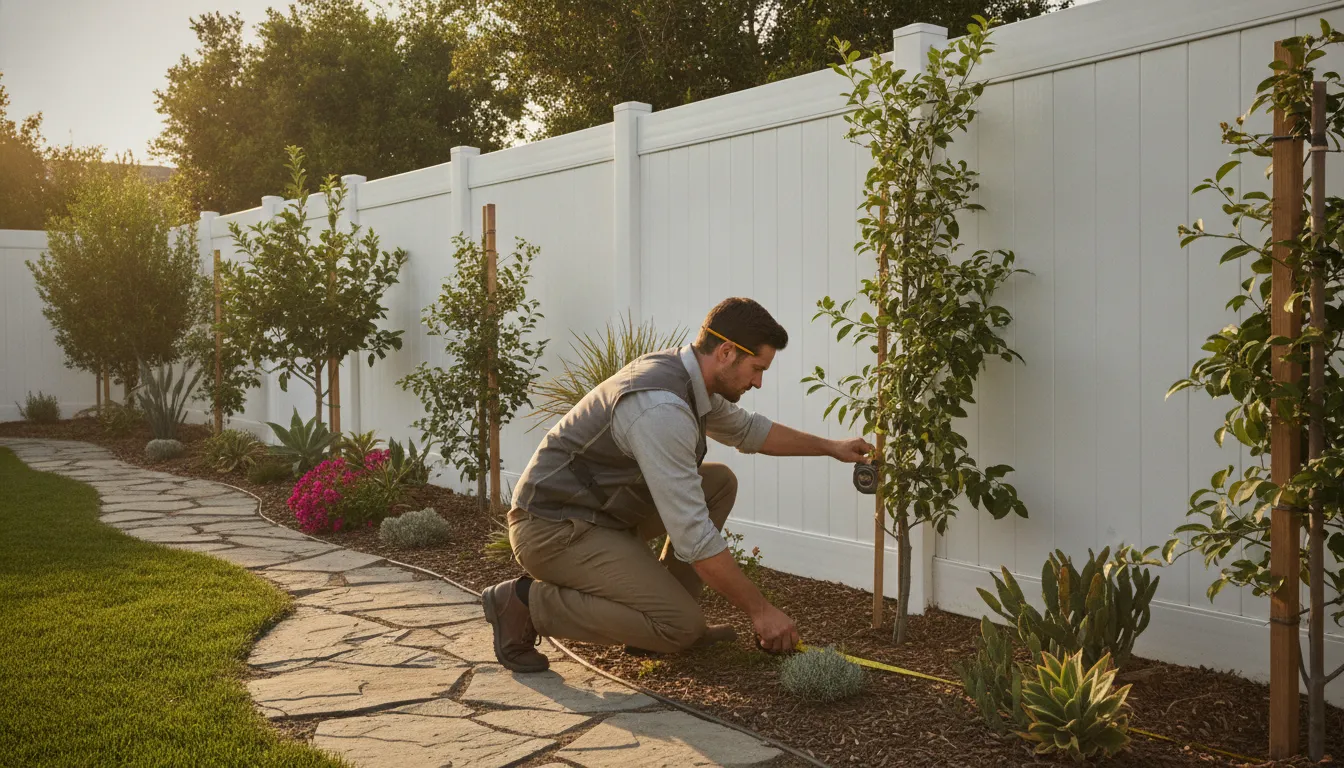
- Verify the property line. Review your survey, plat, or other property records before marking a fence line. Do not assume an existing fence sits on the exact boundary. Property-line verification is part of proper site preparation and can help prevent an expensive layout correction later.
- Measure the proposed run and list the openings. Record approximate linear footage, the desired height, and every gate location. Note gate width, direction of swing, clearance for people or equipment, and whether a side-yard gate or wider access gate is needed. These details affect the layout and material recommendations.
- Document the existing conditions. Photograph the yard, corners, slopes, planting beds, retaining features, irrigation lines, and any existing fence. Decide whether the old fence should be removed, and identify where debris or materials can be staged. Existing-fence removal and site preparation should be included in the project discussion rather than overlooked.
- Evaluate grading, drainage, and terrain. Walk the full fence line and note changes in elevation, uneven ground, low areas, drainage paths, and areas that may need leveling or grading. Terrain evaluation helps determine how panels, posts, and gates should follow the yard without creating avoidable gaps or access problems.
- Mark post-hole locations and coordinate utility marking. Once the preliminary layout is established, post-hole locations can be marked for review. Arrange utility marking through 811 before digging. Also identify irrigation components that may be near the fence line. California recommends assessing an existing irrigation system before re-landscaping, so plan for adjustments rather than cutting lines during installation.
- Check HOA and permit requirements early. Some Orange County communities may require HOA approval, and local permit requirements can vary. Gather the association rules, approved colors or styles, height limits, property documents, and any municipal questions before materials are finalized. Permit coordination and approval support should be part of the planning conversation.
- Plan access and the final inspection. Confirm how installers, tools, removed fencing, and new materials will reach the backyard. Protect plants and identify anything that must be moved. Before accepting the finished work, check the line, post alignment, panel condition, gate operation, cleanup, and drainage. For additional preparation guidance, review how to install vinyl fence panels.
How Much Maintenance Does a Vinyl Privacy Fence Need?
A vinyl privacy fence is designed for straightforward upkeep, but the area around it still matters. Plan to wash the panels with soap and water or use appropriate pressure washing about once a year, then check for dirt buildup, discoloration, loose hardware, damaged panels, and gate alignment. These simple inspections can catch small issues before they affect how the fence looks or operates.
For more practical guidance, review these vinyl fence maintenance tips. Vinyl does not require painting or staining, which removes a recurring chore for many Orange County homeowners. However, low maintenance does not mean no maintenance, especially when landscaping and irrigation are close to the fence line.
Keep irrigation, grading, and drainage under control
Sprinklers should not repeatedly spray the panels, posts, or gate hardware. Adjust irrigation heads and observe the area after watering. Overspray and standing moisture against the fence should be corrected rather than allowed to become a routine condition. Watering schedules depend on plant type, soil, sun exposure, and local conditions, so the best adjustment may involve both the irrigation system and the landscape design.
Also watch how water moves through the backyard. Soil, mulch, or decomposed plant material should not be piled against the fence. Low areas that remain wet, runoff flowing toward posts, and grading changes near the fence may require attention. Good drainage helps keep the fence line accessible for cleaning and makes it easier to spot movement, settling, or damage.
Manage plants before they crowd the fence
Choose and place plants with their mature size, root behavior, water needs, sun exposure, and clearance in mind. Keep vines, branches, and dense growth from pressing against panels or hiding posts. Roots can complicate access and may contribute to movement in surrounding soil, while overgrown landscaping can make gate operation and repairs more difficult. Trim vegetation before it blocks the fence line, and leave enough room to inspect both sides where the property layout allows.
A simple schedule can help you stay consistent. Use this guide to plan monthly vinyl fence care, including visual checks after heavy watering, drainage changes, or landscaping work. If a panel or post is damaged, a gate stops working correctly, or grading and drainage remain unclear, a fencing professional can assess the condition and recommend the next step.
What Questions Should You Ask Before Choosing an Installer?
A useful installer conversation should be specific to your Anaheim or Orange County property, not limited to a discussion of panel color. Ask how the installer will measure the fence line, account for slopes or uneven ground, and identify obstacles that could affect post locations. Property-line verification and utility coordination may be part of preparation, so ask who handles those steps and what information you need to provide.
Ask which vinyl products are being proposed and why they fit your project. You can ask whether the material uses virgin vinyl, UV inhibitors, impact modifiers, a five-layer co-extrusion, or titanium dioxide for color retention. These are quality questions to raise with the installer, not specifications to assume without product documentation. Also confirm the panel height, style, color, post caps, and gate locations. If you need a walk gate or driveway gate, ask how width, hardware, clearance, and daily access will be addressed.
Request a written proposal that separates the important parts of the project. It should identify the materials, measurements or quantities, gates, removal of an existing fence, site preparation, terrain considerations, expected schedule, and any permit or HOA coordination. A proposal that only gives a broad description can make it difficult to compare bids or identify changes later. In an HOA community, ask whether the installer can help you understand the documents needed for review. Approval requirements can affect pre-installation timing, so resolve that question before scheduling work.
Finally, ask how the installation will be checked when the work is finished. Discuss post locations, panel alignment, gate operation, cleanup, and how you will report a concern. Ask the installer to state the workmanship warranty in writing, including its duration, what it covers, and any exclusions. A G Vinyl Fencing supports a standard one-year workmanship warranty, while product warranties should be explained separately and verified in the supplied documentation. An on-site assessment, measurements, terrain evaluation, design discussion, and itemized proposal give you a clearer basis for choosing a contractor.
Frequently Asked Questions
What height is best for a backyard privacy fence?
For many residential backyards, a 4- to 6-foot fence provides a practical starting range. The right choice depends on the privacy you want, sightlines from nearby homes, local requirements, HOA rules, and the finished grade of the yard. A site review can help confirm whether the selected height works consistently across the property.
Do I need to check with my HOA or the city before installation?
Yes. Check your HOA documents for approval requirements, design rules, and submission procedures, then ask the applicable city or building department whether a permit or other review is required. Permit and HOA approval can affect the project schedule, so it is best to identify those requirements before materials are ordered. Property-line verification and utility coordination may also be part of preparation. A G Vinyl Fencing’s Anaheim installation guidance notes that permit and HOA reviews may add planning time.
How much maintenance does a vinyl privacy fence need?
Vinyl fencing generally does not require painting or staining. Routine cleaning with soap and water or pressure washing can help remove dirt and buildup. Inspect the panels, posts, gates, and areas near irrigation or landscaping periodically, especially after unusual weather or changes to the surrounding grade.
Can a vinyl fence be installed on a slope or near drainage?
Often, but the layout and installation method should be evaluated for the specific property. A slope may affect panel transitions, post locations, gate clearances, and the finished appearance. Drainage patterns also matter because standing water, runoff, or soil movement can affect the site. Share photos and any known grading concerns during the assessment so the design can account for terrain and access.
What should I prepare before requesting an estimate?
Gather the approximate fence length, preferred height and style, gate locations and widths, property-line information, HOA rules, site photos, access limitations, and any questions about permits or drainage. An on-site consultation can then cover measurements, design, terrain, materials, site preparation, and the proposal details needed for an informed decision.
Ready to Plan Your Orange County Privacy Fence?
A property-specific review can help you connect your preferred privacy style with accurate measurements, terrain conditions, gates, and access needs. If you are planning a backyard fence in Anaheim or elsewhere in Orange County, contact A G Vinyl Fencing to request design guidance, measurements, terrain evaluation, and a fence estimate.
Gary Andreasyan is at the forefront of A G Vinyl Fencing, setting the standard for high-quality fencing solutions. His expertise in vinyl fencing has positioned the company as a go-to for durable, low-maintenance fencing options that enhance property value and security. Gary’s commitment to customer satisfaction and innovative fencing solutions drives A G Vinyl Fencing’s success, providing clients with a range of styles and designs that meet their specific needs and preferences.


0 Comments