


Choosing 5 ft vinyl fence panels can help define a yard without defaulting to a very low or taller fence. The best fit depends on the boundary’s purpose, the yard’s layout, and the rules that apply to the specific property. In Orange County, those details can vary by location, so check them before selecting a panel system.
Request a free project estimate
A five-foot vinyl fence may offer more definition than a low boundary while avoiding a taller profile. Whether it provides the screening or separation you want depends on the style, the assembled system, the site’s grade, and local requirements. Check the manufacturer’s specifications and confirm the proposed location with the appropriate city before ordering.
Start with the job the fence should do along each run. That makes it easier to decide whether five feet suits a front boundary, patio edge, or another part of the yard before you compare styles and components.
When 5 ft Vinyl Fence Panels Fit a Southern California Yard
Short answer: A five-foot fence may suit a yard where a low boundary leaves too much of the space exposed. A taller privacy fence may feel unnecessary. Treat it as a middle-ground option, then check the sightlines and rules for your specific property.
In a side or rear yard, five-foot panels can give a boundary more presence and reduce direct views across the fence than a lower design. They may work when you want a clearer division between neighboring spaces or some screening around a seating area, without automatically choosing the tallest common residential height. The customer’s vinyl fence guide describes common residential heights as four to six feet, but that range does not establish what is allowed on a particular lot.
Consider the views from both sides before settling on a height. Stand where you expect to sit, walk, or spend time outdoors, and notice which neighboring windows, pathways, or parts of the yard remain visible. Also consider the view from the street and from inside the home. A five-foot boundary may offer a useful balance in one layout, while a different fence line, grade, or nearby structure can change how enclosed it feels.
Style matters as much as the number on the panel label. A more open design can preserve a lighter feel, while a privacy style is intended to provide greater seclusion. Choose based on the purpose of each run rather than assuming one configuration will suit the whole property. If keeping a front garden or outdoor area visually open is the priority, compare 3 ft vinyl fence panels. If stronger screening is the goal, review the guide to taller vinyl fence heights as a distinct option.
Before ordering, account for gates, changes in grade, and the actual assembled fence system. A panel’s nominal height should not be treated as a guarantee of the finished height or of privacy from every viewpoint. Check the property line and applicable city, HOA, visibility, and pool requirements for the proposed location; rules can vary by property and jurisdiction. For an Orange County project, check Orange County fence HOA rules as part of planning, then confirm requirements with the relevant authority before construction.
What to Check Before Choosing Five-Foot Panel Style
Begin with the purpose of each fence run. A privacy style can screen a patio or make a boundary feel more secluded. Picket and split-rail designs leave more of the yard visible. Decide what views you want to keep or block before choosing a style. A five-foot height label does not confirm that every design is offered at that height.
Next, check the specifications for the complete system, not just the panel. Ask the manufacturer or installer to confirm actual panel dimensions and assembled fence height. Posts, rails, caps, ground clearance, and the grade along the fence line can affect the finished measurement. Verify that the panels, posts, rails, caps, gate, and gate hardware are intended to work together. Corner turns and openings need to fit the selected system too.
Pool areas need additional care. Do not assume a panel height or style by itself meets the safety requirements for your location. Confirm the applicable requirements before choosing a design. Likewise, end use and applicable codes should inform choices such as style, spacing, height, and installation method.
ASTM F1999 covers installation of rigid PVC fence systems and accessories, including posts, rails, sections, caps, and gates. It advises readers to follow the specific manufacturer’s instructions. ASTM F964 addresses properties of PVC profiles, but it does not establish load-bearing performance of an assembled fence. It should not be treated as proof of wind capacity.
Use this short checklist before finalizing a style:
| Check | Question to ask |
|---|---|
| Purpose | Should this run screen a patio, define a boundary, or keep views open? |
| Dimensions | What are the actual panel and assembled fence measurements? |
| Compatibility | Do the posts, rails, caps, gates, and hardware match this system? |
| Local review | What city or HOA requirements apply at this address? |
For a practical parts overview, review vinyl fence panel supplies before ordering. Confirm product-specific details with the manufacturer or installer.
How to Measure a Fence Line for 5 ft Vinyl Fence Panels
Accurate measurements start with the path the fence will follow, not an assumed panel count. Walk the boundary, note changes in direction and ground level, and keep gate openings separate from fence runs. This gives you a clear plan to review before ordering.
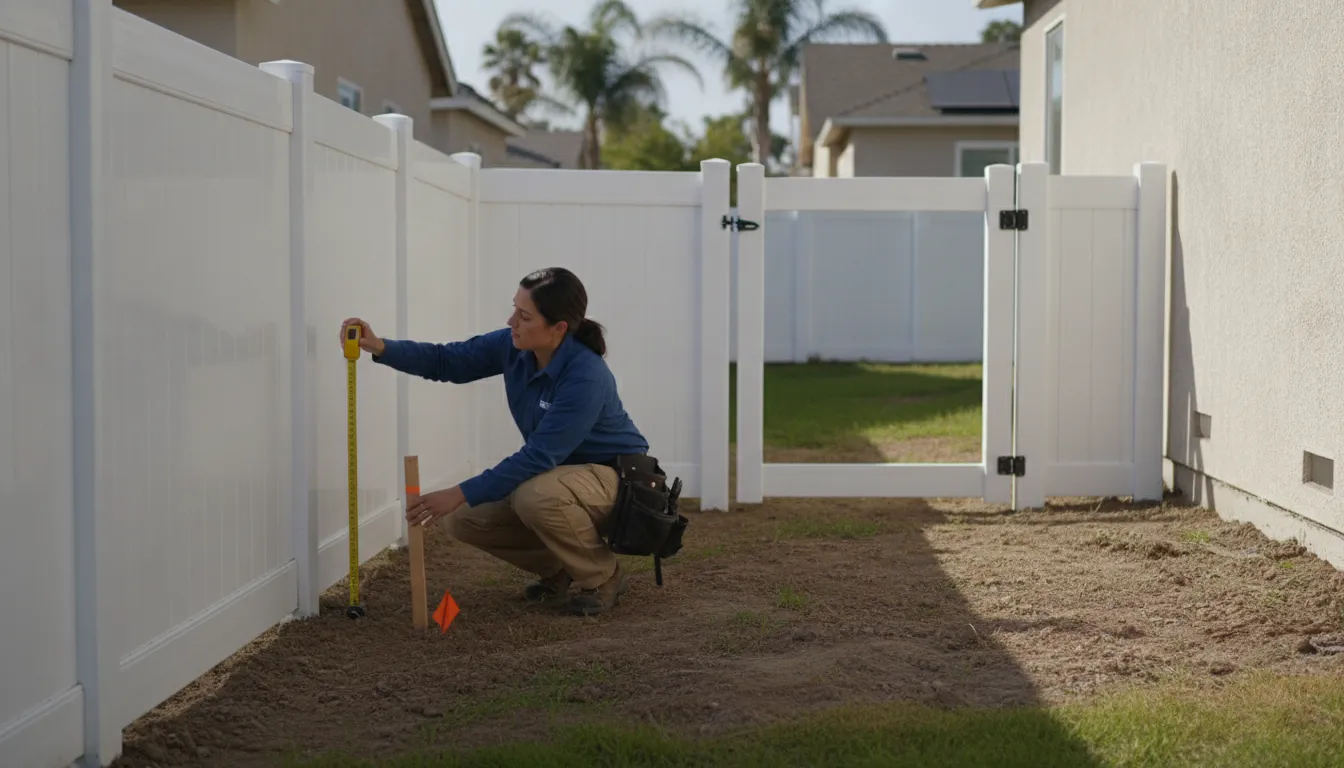
- Break the route into straight runs. Measure each stretch between corners, ends, and planned openings. Record each length separately, then add the runs for a preliminary total. Do not subtract a gate opening from one run and forget to list it as a separate dimension.
- Mark corners, ends, and gates. Sketch every turn and fence endpoint, and note each gate opening and its intended location. Gates and corners affect which system components are needed, so keep those marks visible in your notes.
- Check the ground and boundary. Walk each run for slopes, grade changes, retaining walls, or other changes that could affect the layout. Confirm the property line and proposed fence location before treating measurements as final. Terrain and gates are among the project details to consider when planning a fence.
- Record the site and proposed fence details. Sketch existing structures such as the home, garage, shed, or pool. Add the proposed fence location, intended height, and total length. Anaheim’s Planning Division requests these items on the site plan for fence review; check the rules for the city where your property is located. See Anaheim’s fence and wall zoning permit guidance.
- Check actual system dimensions before counting panels. A “5 ft” label is not enough to calculate an order. Use the selected manufacturer’s actual panel dimensions and installation instructions, including any direction for measuring runs, corners, and openings. Do not assume a universal panel width or post spacing. Installation guidance calls for following the specific manufacturer’s instructions and considering end use and applicable code. ASTM F1999
- Confirm the component list before ordering. Match the layout to the required panels, posts, rails, caps, gate hardware, and other project supplies. The vinyl fence supplies guide can help you review the parts to account for. Finalize quantities only after the layout and any required approvals are clear.
Does a Five-Foot Fence Need Approval in Orange County?
Do not assume a five-foot fence is automatically approved across Orange County. Requirements can vary by city and by where the fence sits on the property, and a homeowners association may have a separate review process. Check the rules that apply to your address before ordering 5 ft vinyl fence panels. A panel’s nominal height does not replace approval for the proposed fence location and finished assembly.
Anaheim illustrates why it helps to distinguish a building permit from planning approval. The city says fences and walls seven feet or less do not need a building permit, but they do require Planning Division approval. The Division checks the proposed location and height for zoning compliance. Anaheim’s application guidance also calls for a site plan showing existing structures, the fence location, height, and total length. These are Anaheim-specific requirements, not a county-wide five-foot rule. Review the City of Anaheim’s fence and wall zoning permit guidance for current details.
Elsewhere, contact your city’s planning or building department to ask what applies to the exact fence line. Be ready to describe the location, height, length, gates, and nearby structures. Placement near a front yard, corner, shared property line, retaining wall, or pool may bring additional considerations. So do not rely on a general height threshold or a neighbor’s past project as confirmation.
HOA approval is a separate check from city review. Read your association’s architectural rules and ask whether it requires an application, material or color details, drawings, or approval before work begins. The Orange County fence HOA guide can help you prepare, but your own association’s current documents control its process.
Get written confirmation from the relevant city and HOA before purchasing materials or scheduling installation. If either reviewer asks for a revised location or height, you can adjust the plan before the order is placed.
Will a Five-Foot Fence Give Enough Privacy and Boundary Definition?
A five-foot fence may suit a yard where you want a clearer edge without choosing the tallest option. But its effect depends on where people sit, stand, and look from. Think through the view from the patio, nearby windows, the sidewalk, and neighboring yards. A panel’s labeled height alone cannot tell you whether it will screen the places that matter.
For a patio, ask whether the fence needs to screen seated guests, standing people, or both, and whether the yard changes elevation along the boundary. The result also depends on the chosen style: privacy, picket, split-rail, and pool-fencing applications serve different purposes. Five feet does not automatically create privacy, so match the panel style and placement to the specific sightlines you want to change. The backyard fence privacy guide can help frame those decisions.
If the main goal is to mark a front-yard or garden boundary while keeping the area visually open, consider how a shorter design could preserve sightlines. The 3 ft vinyl fence panels guide discusses that lower-boundary use case. At the other end, a five-foot fence may not provide the screening you expect in every layout; review the six-foot privacy fence guide if you are considering a taller option. These examples are planning context, not a substitute for checking your property’s dimensions and requirements.
For pets, ask what the specific animal might do at the fence, including whether it could jump, squeeze through an opening, or dig underneath. Do not treat a five-foot fence as a guarantee of containment. Around a pool, confirm the applicable safety requirements for your location and planned fence design before selecting a height; the panel height by itself does not establish compliance. A pool-fencing application needs its own review.
Before deciding, write down the job each stretch must do: screen a seating area, define a boundary, retain an open view, or serve a pool or pet-related purpose. Then consider style and placement alongside height. A single fence line may need to balance more than one of these needs. And the best fit is the one that addresses the actual layout without assuming that height alone solves it.
What Installation Details Matter for Vinyl Fence Sections?
A five-foot panel is only one part of a fence system. Before ordering, confirm that the posts, rails, panel sections, post caps and any gate hardware are designed to work together. A mismatch can affect fit at corners, ends and openings, so plan the whole fence line rather than selecting panels in isolation. The vinyl fence panel supplies guide can help you identify the components to discuss.
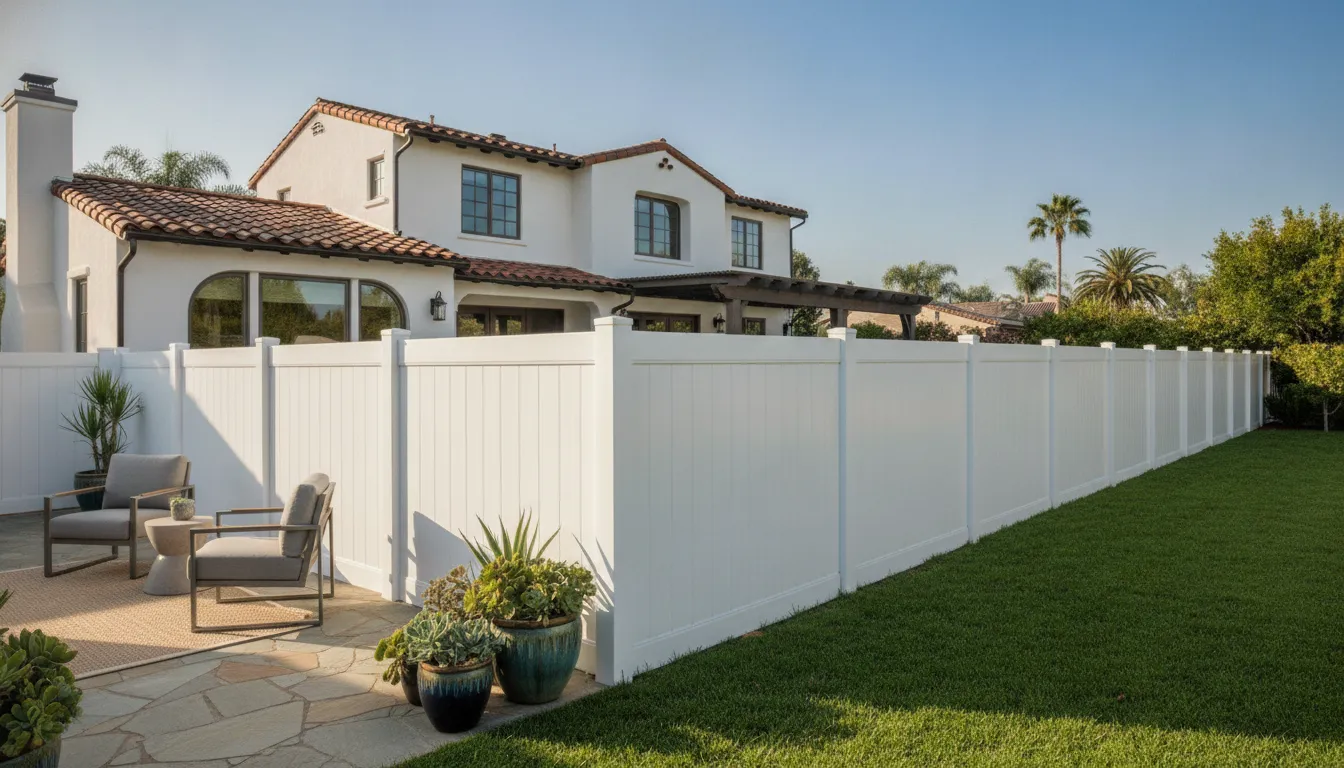
Also clarify what the five-foot label describes. Ask the manufacturer or installer to confirm the assembled fence height and how the selected panel, rails, posts and caps affect the finished measurement. If the layout includes gates, confirm that their dimensions and hardware are compatible with the posts and adjoining sections. Sloped ground, corners and changes in direction can also affect how the system is laid out; the correct approach depends on the specific product and site.
Use the product’s installation instructions rather than generic online measurements. ASTM F1999 covers installation of rigid PVC fence systems and accessories, including posts, rails and sections, caps, and gates. It directs users to the specific manufacturer’s instructions and says end use and applicable codes should inform choices such as style, spacing, height and installation method. That makes it a useful reference, not a one-size-fits-all DIY specification. Confirm the applicable requirements for your property before work begins.
Keep material standards distinct from system performance. ASTM F964 addresses material and physical properties of rigid PVC profiles, including dimensional tolerances and weatherability. It does not evaluate load-bearing characteristics of assembled fence systems, such as wind load. Do not treat compliance with F964 as proof of a particular installed fence’s wind performance.
For a project-specific plan, review the intended layout, compatible components, manufacturer instructions and local requirements together before ordering. This is especially important when a gate or unusual site condition changes the configuration. Ask the supplier or installer to identify the matching components for the selected system and confirm site-specific installation details in the project plan. Rather than assuming parts from different product lines will fit, confirm compatibility with the selected system.
How to Maintain Vinyl Fence Panels After Installation
Routine care for vinyl fencing can stay simple. The customer’s fence guide recommends cleaning with soap and water or using a pressure washer, and notes that vinyl fencing does not require painting or staining. Follow the care instructions supplied with your specific fence, especially if they give limits or precautions for cleaning equipment.
For ordinary upkeep, wash the panels with soap and water when they need cleaning, then rinse away soap and loosened dirt. If you choose a pressure washer, check the manufacturer’s guidance first and use it only as directed. Avoid assuming every product has identical care requirements; the fence manufacturer is the best source for instructions that match your panel and finish. See the vinyl fence care and style guide for the customer’s general overview.
As you clean, take a moment to look over the visible sections, posts, rails, and gates. If you notice a part that appears loose or damaged, consult the installer or manufacturer about the appropriate next step rather than trying an unverified repair. Keep any product care documents with your project records so they are available when questions come up.
Simple cleaning and following product-specific care directions help you keep the fence presentable without adding a painting or staining routine. For a project-specific recommendation on panel selection, layout, and installation, ask for an estimate before you finalize your plans.
Request a free project estimate
Frequently Asked Questions
What should I check before choosing five-foot vinyl fence panels?
Start with the job each fence run needs to do, such as defining a boundary, screening a patio, or keeping a yard visually open. Then check the layout, gates, terrain, property line, and any city or HOA requirements. Choose a style for the intended use, rather than assuming one panel style fits every side of the yard.
Is a five-foot fence enough for privacy?
That depends on the view you want to screen, the fence location, and the surrounding yard. Compare privacy, picket, or other suitable styles, and consider how the fence works with nearby structures and grade. Height alone cannot promise seclusion; review the actual site and intended sightlines before settling on a design.
Do I need approval for a five-foot fence in Anaheim?
In Anaheim specifically, fences and walls seven feet or less do not need a building permit, but they do require Planning Division approval. The Division checks the proposed location and height for zoning compliance. Its site plan should show existing structures, fence location, height, and total length. See Anaheim’s fence and wall zoning permit guidance.
How should I measure a fence line before ordering panels?
Record the proposed fence location and total length, and mark where the line turns or where a gate opening is planned. Note the height and show existing structures on the site plan. Check the property line and terrain, then confirm the layout and applicable local or HOA requirements before finalizing the order.
What parts should be planned with the fence panels?
Plan the compatible posts, rails, caps, and any gate and gate hardware alongside the panels. The right combination depends on the system and intended use, so check the specific manufacturer’s installation instructions and applicable code requirements. Do not assume parts from different systems will fit together.
Choosing five-foot panels involves more than selecting a height; the yard layout, gate openings, and local review all shape the plan. A project-specific estimate can help you consider those details together before moving ahead. To discuss vinyl fence design and installation for your property, contact us for a free project estimate.

Gary Andreasyan is at the forefront of A G Vinyl Fencing, setting the standard for high-quality fencing solutions. His expertise in vinyl fencing has positioned the company as a go-to for durable, low-maintenance fencing options that enhance property value and security. Gary’s commitment to customer satisfaction and innovative fencing solutions drives A G Vinyl Fencing’s success, providing clients with a range of styles and designs that meet their specific needs and preferences.


0 Comments