


A lower fence can define a property without blocking the sightlines that make a front yard, garden, or outdoor area feel open. For homeowners and property decision-makers in Anaheim and Orange County, the right choice depends less on panel height alone and more on the purpose of the fence. The layout, gates, terrain, and any applicable HOA, permit, pool, or visibility rules also matter.
Request a free 3 ft fence estimate
3 ft vinyl fence panels are generally best for decorative edging, garden borders, low boundary definition, and visibility-preserving separation. They may not provide the privacy, security, or pool protection that a taller or specially designed fence requires, so confirm the intended use before ordering materials.
Once the purpose is clear, you can evaluate how a short vinyl fence will function around your property and whether its open profile fits the space. The first step is identifying where this lower-height option makes practical sense.
What Are 3 Ft Vinyl Fence Panels Best Used For?
Three-foot vinyl fence panels are a lower-height option for projects where you want a finished boundary without blocking the view. Standard residential vinyl fences are commonly 4 to 6 feet tall. A 3 ft panel is best treated as a purpose-specific design choice rather than a universal replacement. The right fit depends on what the fence needs to accomplish, how the property is laid out, and which local or HOA rules apply.
Decorative front-yard edging
A low panel can frame a front walkway, planting bed, driveway edge, or lawn without making the property feel closed in. It can create a clear transition between the public-facing yard and the sidewalk while preserving sightlines toward the home. This is often useful when curb appeal matters as much as separation. Post caps, panel styles, and a coordinated color can make the fence look like part of the landscape design instead of an afterthought.
Garden borders and outdoor spaces
Three-foot panels can define a garden, side-yard planting area, or small outdoor living zone. They help establish where a space begins and ends while keeping the plants, patio, or other features visible. If you are planning a broader yard update, consider how the fence will work with vinyl fencing for outdoor living, gates, paths, and existing walls. The panel height should support the layout, not compete with it.
Low boundaries and visibility-preserving separation
A 3 ft fence can separate neighboring areas, a shared driveway edge, or parts of a commercial or residential property without creating a tall visual barrier. This can be helpful in front yards and other locations where visibility, openness, or a consistent streetscape is important. Measure the proposed line carefully and account for corners, gates, slopes, and property boundaries before selecting a system. A consultation can also clarify the posts, rails, caps, and other vinyl fence supplies and components needed for the installation.
Some pet-related layouts
In the right configuration, a low fence may help define a pet area or guide movement between parts of a yard. It should not automatically be considered secure containment. A pet that can jump, climb, squeeze through openings, or push against a panel may need a taller fence, a different picket arrangement, a gate designed for the use, or another solution. The animal, terrain, nearby objects, and gate location all matter.
Three-foot panels are generally not the first choice when the primary goal is privacy, security, or a required pool barrier. A privacy project may need more height and a different panel design, while a pool-area fence must be planned around applicable safety requirements. Confirm pool, setback, front-yard visibility, permit, and HOA requirements with the relevant city, association, or project professional. When a taller option may be more appropriate, you can compare vinyl fence heights before finalizing the layout.
Why Choose Vinyl for a Low Fence?
For a low fence, the material matters because the fence remains highly visible from the yard, sidewalk, driveway, or neighboring property. Vinyl offers a clean finished appearance without turning a small boundary project into a recurring painting and staining job. That can be useful for Anaheim and Orange County homeowners who want a defined edge around a garden, patio, walkway, or front yard while keeping routine upkeep manageable.
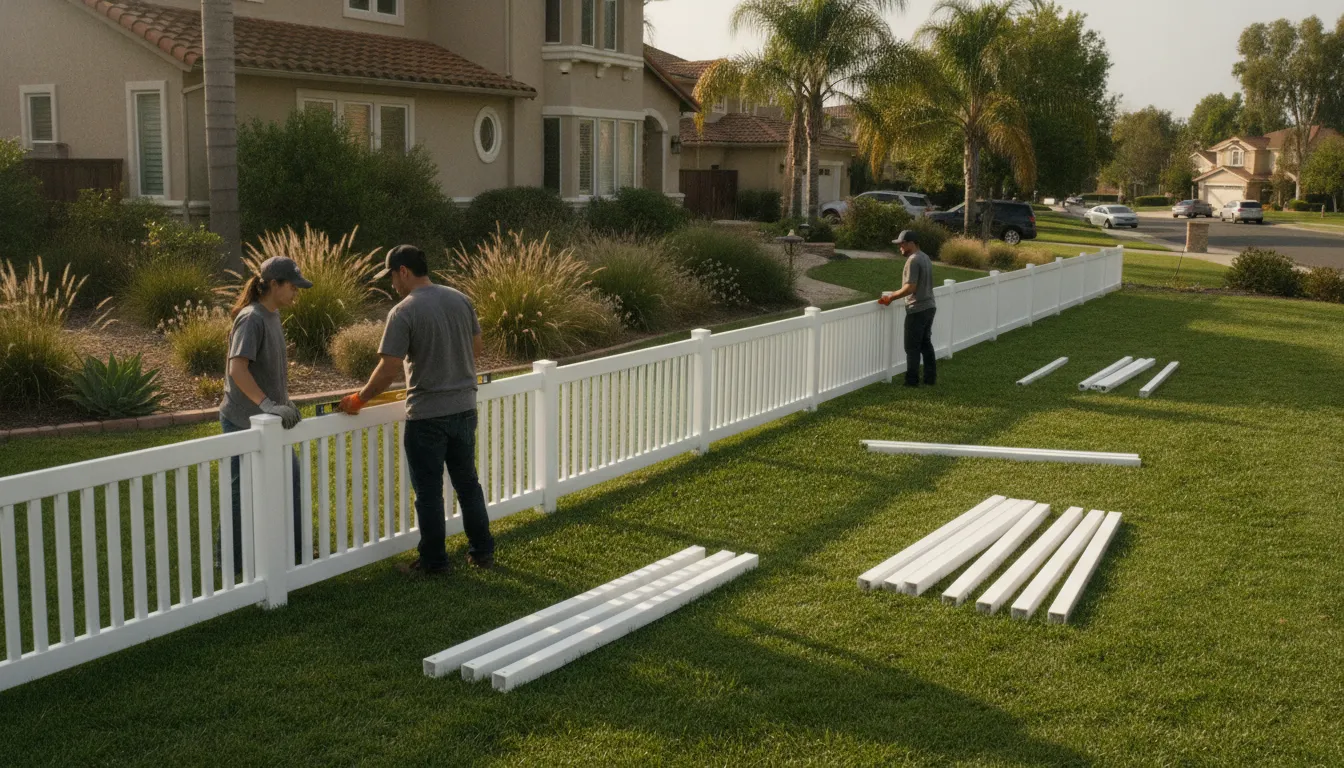
Vinyl requires no painting or staining. For ordinary dirt and surface buildup, maintenance typically involves soap and water or pressure washing, depending on the manufacturer’s care guidance and the condition of the fence. A low panel is also easy to see and reach, so cleaning does not require the same effort as maintaining a tall enclosure. The result is a practical option for busy households and retirees who want an attractive boundary without adding another seasonal maintenance task.
Low upkeep for Southern California conditions
The customer guidance describes vinyl fencing as weather-resistant for the Southern California climate. That does not mean every product or installation is immune to damage, and it is not a promise that a fence will look new forever. It does mean vinyl can be considered when you want a material suited to a generally dry local setting and prefer to minimize routine surface maintenance. With proper installation and ordinary care, the typical lifespan is described as approximately 20 to 30 years. Actual performance depends on product quality, installation, exposure, impact, and site conditions.
That long-term perspective can make a low fence worthwhile even when its primary role is decorative. Instead of treating the project as a temporary divider, you can plan the line, gates, posts, and finish as part of the property’s overall design. For a broader look at components and planning, review this guide to vinyl fence supplies and components.
More design flexibility than a basic boundary
A low vinyl fence does not have to look plain. Multiple colors, custom designs, decorative post caps, and panel styles can help coordinate the fence with the house, landscaping, hardscape, or outdoor entertaining area. A white picket-inspired profile may keep a front yard bright and traditional, while a darker tone can create a more defined line against green planting or concrete. Explore vinyl fence color options when deciding whether the fence should blend into the landscape or provide a stronger visual accent.
Post caps and panel details are especially useful on a low installation because they are part of the view from both sides. Small design choices can make the fence feel intentional rather than like an afterthought. The same principle applies when a low fence borders a seating area, garden, or walkway. See ideas for vinyl fencing for outdoor living if the boundary will be part of a larger patio or backyard plan.
Choose vinyl when low maintenance, consistent appearance, and design coordination are more important than maximum privacy or security. The right style still depends on the property, the intended use, and any applicable HOA, pool, visibility, or local requirements.
How Do You Plan the Panels, Posts, and Layout?
A good layout starts with the fence line, not the panel carton. Walk the proposed route and note property corners, changes in direction, gates, slopes, existing walls, driveway approaches, landscaping, and any areas where access must remain clear. Measure each straight run separately rather than assuming the lot is a perfect rectangle. Mark where the fence begins and ends, then verify the line against your property information and any applicable local requirements.
Start with a component checklist
A vinyl fence system is more than a row of panels. Your plan may include panels, line posts, corner posts, end posts, rails, post caps, gate posts, and one or more gates. Count corners and transitions before estimating quantities. A gate usually needs its own posts and hardware, and a slope may change how panels are stepped or aligned. Existing masonry or another wall can also affect the connection detail, finished height, and whether a standard panel is the right starting point.
Reviewing the vinyl fence supplies and components can help you identify what belongs in a complete installation scope. For a project in Anaheim or elsewhere in Orange County, bring photographs and rough measurements to a design consultation. The proposed layout can then account for the actual site rather than a generic drawing.
| Planning item | What to confirm |
|---|---|
| Fence line | Measure each run and confirm the intended line stays on or within the property boundary. |
| Corners and ends | Identify changes in direction, terminations, wall connections, and the posts each condition requires. |
| Gates | Choose locations, clear opening, swing direction, latch access, and reinforced gate-post requirements. |
| Slope | Decide whether the design should follow the grade, step between posts, or use a different panel arrangement. |
| Posts and rails | Confirm spacing, embedment, rail configuration, and caps from the selected manufacturer’s instructions. |
Let the product and site determine post details
Do not calculate post spacing or embedment from a general online rule. Those details follow the selected manufacturer’s instructions and the conditions at your property, including soil, wind exposure, slope, panel design, gate loads, and local requirements. Ask for the installation specification before ordering panels so the number and type of posts match the system.
A public specification can be useful for understanding the components commonly shown in a formal fence installation, but it is not a universal residential rule. For example, the NY DOT fence specification illustrates how a public project may define posts, rails, fabric, and related work. A homeowner in Southern California should not copy its dimensions or embedment requirements without direction from the selected manufacturer and the relevant local authority.
Account for walls, visibility, and approvals
When a low fence meets an existing wall, measure the wall height and inspect its condition. The connection may need a terminal post, a transition detail, or a design adjustment to keep the finished line consistent. Also look for sight-line concerns near driveways and corners. HOA rules, front-yard visibility standards, pool-barrier requirements, setbacks, and permit questions can change the acceptable layout even when the fence is only 3 feet tall. Confirm those items with the city, HOA, or project professional before materials are ordered.
If you are still deciding between a low boundary and a taller system, compare vinyl fence heights alongside the intended use, gate locations, and surrounding grade. A measured plan gives the installer enough information to recommend the appropriate panels, posts, rails, caps, corners, and transitions without treating a 3 ft panel as a one-size-fits-all solution.
Are 3 Ft Panels Right for Privacy, Pools, or Security?
In most cases, 3 ft vinyl fence panels are better for defining space while preserving sightlines than for creating complete privacy or a high-security perimeter. Their lower profile can separate a front yard from a walkway, outline a garden, organize an outdoor living area, or create a visual boundary without making the property feel closed in. That can be useful in Anaheim and throughout Orange County, where homeowners may want a finished edge while maintaining visibility from the street or between neighboring areas.
Privacy depends on both height and design. A low panel may screen the base of a property, protect a planting bed, or add a modest layer of separation, but it generally will not block views at seated or standing eye level. If your primary goal is to limit visibility into a yard, compare vinyl fence heights before choosing a panel. A taller privacy design, such as a 6 ft fence where permitted and appropriate, may be a better fit for the intended result. The surrounding layout, grade, gates, posts, and local rules still matter, so height alone should not determine the design.
When a low fence can improve visibility and boundaries
Visibility-preserving fencing is often useful near a front yard, driveway, garden, patio, or shared outdoor area. A 3 ft design can mark the edge of a property or landscape without creating the visual weight of a taller privacy fence. It may also work as part of a larger design when a wall, hedge, or existing structure already provides some screening. The right arrangement depends on the property and the purpose of each fence run, rather than on the panel height by itself.
For security, however, a 3 ft panel should be viewed as a boundary cue, not an automatic deterrent. It can communicate where access changes or help organize a perimeter. A homeowner seeking stronger separation may need a taller fence, a different panel configuration, a secure gate, or another complementary measure. Review the complete system, including posts and gate hardware, with an experienced installer instead of assuming that any panel marketed for a particular use will provide the same result on every property.
Pool fencing requires a separate safety review
Do not assume that 3 ft vinyl fence panels are suitable as a pool barrier. Pool projects involve safety and access considerations that can depend on the applicable California requirements, city or county rules, property conditions, and HOA standards. Requirements may also affect the location, gates, surrounding structures, and overall barrier design. A panel that works for garden edging or a decorative boundary may not satisfy the requirements for a particular pool area.
Before selecting materials, review the planning considerations in this guide to California vinyl pool fencing and confirm the current requirements with the relevant authority or qualified project professional. Front-yard visibility, setbacks, permits, and HOA approval can also affect the design, even when a project seems straightforward. If you are weighing a low boundary against a taller privacy or security fence, compare vinyl fence heights and then request a site-specific recommendation based on the property and intended use.
What Does a 3 Ft Vinyl Fence Project Cost?
The cost of a low fence depends on more than the number of 3 ft vinyl fence panels you plan to use. A realistic project budget accounts for the complete fence system, site conditions, installation scope, and any gates or layout changes. A panel purchased by itself is not the same as a finished, installed fence.
For a broad planning reference, the customer knowledge base cites a Southern California installed-vinyl market range. This is a general market reference, not a guaranteed A G Vinyl Fencing quote, and it should not be read as panel-only pricing. Your actual estimate can vary based on the selected design, materials, access, preparation, and installation requirements. The range is useful for early budgeting, but a project-specific measurement is needed before anyone can price the work responsibly.
What affects the total project cost?
- Total linear footage: A short garden border and a long property boundary require different quantities of panels, rails, posts, and caps.
- Number of corners and ends: Changes in direction require additional posts and careful layout work. Sloped or irregular areas may also need more planning than a straight run.
- Gates and access points: A walk gate or wider entry gate adds hardware, posts, and installation steps beyond a continuous fence line.
- Site preparation: Existing fencing, walls, landscaping, hardscape, soil conditions, and limited access can affect labor and preparation.
- Design and finish: Panel style, color, decorative post caps, and the way the fence connects to other structures influence the material selection.
- Project requirements: HOA review, permits, pool-area planning, setbacks, or visibility rules may affect the layout and scope. Confirm the applicable requirements with the relevant authority before ordering materials.
It also helps to budget from the finished layout rather than from a panel count alone. Three panels may cover only a short section, depending on the selected panel width and the space between posts. They may also require end posts, line posts, caps, rails, and possibly a gate. Without the panel dimensions and site plan, assigning a reliable price to three panels would be guesswork. Reviewing the vinyl fence supplies and components can help you understand why a complete system estimate includes more than the visible panel sections.
How should you budget for 100 linear feet?
For a 100-linear-foot project, start by mapping the actual fence line and marking corners, ends, gates, slopes, and connections to existing walls. Then ask for the estimate to identify what is included: panels, posts, rails, caps, gate hardware, removal or preparation, installation, and cleanup. The Southern California reference range can provide a preliminary framework, but multiplying it mechanically does not create a quote, especially if the project includes unusual access, several corners, or a gate.
In Anaheim and throughout Orange County, the most useful next step is to provide project-specific measurements and explain the fence’s purpose. If the goal is privacy or stronger separation, a taller design may be more appropriate and may have different material needs. You can also review vinyl fence installation services when comparing a complete installation with panel-only shopping. A site-specific consultation gives you a clearer scope, a suitable height recommendation, and an estimate based on the property rather than a generic number.
How Does Installation Work in Anaheim and Orange County?
A well-planned installation starts before any posts are set. For a 3 ft vinyl fence project in Anaheim or another Orange County community, the first step is a site review. The installer looks at the proposed fence line, property edges, existing walls, grade changes, access points, landscaping, and the locations where gates may be needed. This is also the right time to explain whether the goal is garden edging, front-yard definition, pet containment, or a visible boundary rather than privacy.
Measurements should account for corners, turns, slopes, gate openings, and any sections that meet a wall or other structure. A design consultation can help confirm the panel style, post layout, colors, caps, and hardware before materials are ordered. It also gives you a chance to ask whether a 3 ft height fits the property or whether a different height would better serve the intended use. A G Vinyl Fencing combines product selection, design consultation, and in-house installation, so the plan can be developed around the complete fence system rather than a panel alone.
Site checks and local approvals
Before installation, confirm the rules that apply to the property. HOA approval may be required, and city or county requirements can affect fence height, placement, visibility near a driveway or corner, setbacks, and the location of gates. Pool-area projects may have additional barrier requirements. A 3 ft panel should not be assumed to satisfy a pool, safety, privacy, or code requirement simply because it is a common residential height. Ask the relevant city department, HOA, or project professional what must be reviewed. Do not assume that the absence of a permit requirement means there are no placement rules.
Property-line questions deserve the same care. The fence should be located according to the verified boundary and any applicable local restrictions, not simply where it appears convenient from the street. If the layout approaches a driveway or corner, discuss sight visibility before finalizing the line. These checks can prevent a redesign after posts, gates, or panels have been installed.
Posts, panels, gates, and cleanup
Once the layout is approved, the crew marks post locations and prepares the installation area. Posts establish the line and support the rails and panels. Panels are then fitted between posts, with gates installed at the planned access points. Slopes, uneven ground, narrow side yards, and transitions to existing walls may require adjustments to the layout or finishing details. That is why a panel count alone cannot define the entire installation scope.
The crew should also review gate swing, latch access, clearances, and the finished appearance from both sides of the fence. At the end of the work, the installation area is checked, construction debris is removed, and the completed line is reviewed with the homeowner. For a practical overview of scope and questions to ask, use this checklist to choose a residential fence installer. You can also review the available vinyl fence installation services when comparing design and installation support.
How long should the project take?
The customer information for a standard residential installation of approximately 200 linear feet uses about 3 to 5 days as a reference. That is not a guarantee for every project. Actual timing depends on site conditions, the design, materials, terrain, access, gate details, and any permitting or approval process. A smaller project may not follow the same schedule, while a complex layout can take longer than its linear footage suggests. Request a consultation early if you are coordinating landscaping, construction, an HOA review, or a planned move-in date. A site-specific estimate can clarify the sequence and identify decisions that need to be made before installation begins.
A G Vinyl Fencing is headquartered in Anaheim and typically serves a 15 to 25 mile radius, including nearby communities such as Fullerton, Orange, Placentia, Yorba Linda, Irvine, Tustin, Santa Ana, and Garden Grove. If your property is in or near that service area, a conversation about measurements, access, gates, and local review requirements can clarify the project. It can also show whether 3 ft vinyl fence panels are the right starting point.
Get a free vinyl fence design consultation
Frequently Asked Questions
What is the standard size of a vinyl fence panel?
There is no single universal panel size. Height, width, rail layout, post spacing, and gate configuration vary by product and design. A 3 ft panel is a lower-height option, while common residential vinyl fence heights are often 4 to 6 feet. Confirm the manufacturer’s dimensions before ordering, and measure corners, gates, slopes, and the full fence line.
How much would three fence panels cost?
Panel-only pricing depends on the panel width, style, color, posts, caps, hardware, shipping, and whether the system needs gates or custom fabrication. Do not treat the price of three panels as an installed project estimate. A professional quote should account for the complete system and site conditions, not just the visible panels.
How much is 100 feet of vinyl fence?
Use the total linear footage as a starting point, then add the cost of posts, rails, caps, gates, removal, terrain adjustments, and installation. A Southern California market reference can provide context for installed vinyl fencing, but it is not a guaranteed quote or panel-only price. Source: local installation cost guidance.
When should I choose a taller fence instead?
Choose a taller design when privacy, stronger separation, security, or a specific pool application is the priority. Three feet is often better for garden borders, decorative edging, and visibility-preserving boundaries. For pool fencing, front-yard visibility, setbacks, permits, or HOA approval, confirm the applicable requirements with the relevant city, HOA, or project professional. Source: California vinyl pool-fence planning guidance.
If you are planning a 3 ft vinyl fence project in Anaheim or Orange County, A G Vinyl Fencing can help you choose a practical layout and panel solution.
Request a free estimate or design consultation

Gary Andreasyan is at the forefront of A G Vinyl Fencing, setting the standard for high-quality fencing solutions. His expertise in vinyl fencing has positioned the company as a go-to for durable, low-maintenance fencing options that enhance property value and security. Gary’s commitment to customer satisfaction and innovative fencing solutions drives A G Vinyl Fencing’s success, providing clients with a range of styles and designs that meet their specific needs and preferences.


0 Comments