


Vinyl driveway gate styles shape more than the front view of a property. The opening type affects privacy, curb appeal, vehicle access, swing clearance, maintenance, and whether the entry can support future automation. For Anaheim and Orange County homes, the best choice depends on the driveway layout and how the property is used, not simply on the most attractive photo. This guide compares the main vinyl driveway gate styles so you can narrow the design before requesting a project estimate.
Start by separating two decisions. First, choose the operating layout, such as a single swing, double swing, or a sliding configuration where the site supports it. Then choose the visual treatment, including privacy level, panel profile, color, and decorative details. Keeping those decisions separate makes it easier to compare a gate that looks right with one that also works reliably at the driveway.
What Are the Main Vinyl Driveway Gate Styles?
The most useful comparison begins with how each gate moves across the vehicle opening. A gate can be attractive and durable, but the operating path must match the available room, grade, posts, and vehicle approach. A site assessment should confirm the finished opening and the conditions around it before materials or hardware are selected.
| Gate style | Best fit to consider | Primary planning question |
|---|---|---|
| Single swing | A narrower opening with room for one leaf to travel | Can one panel open without blocking vehicles, landscaping, or structures? |
| Double swing | A wider vehicle opening where dividing the movement is useful | Will both leaves align at the center and have enough clearance? |
| Sliding or cantilever-style entry | A property with limited swing space and suitable side room | Is there enough straight run and a structure that can support the track or operating system? |
| Open-profile gate | Owners prioritizing a lighter visual boundary and sightlines | Does the desired visibility provide enough separation for the property? |
| Privacy-profile gate | Owners prioritizing screening and a more enclosed frontage | Will the panel height, local rules, and posts work together at the opening? |
These categories can overlap. For example, a double swing gate can use a privacy profile, while a single gate can use an open decorative treatment. The right comparison is therefore not one style against every other style. It is a combination of movement, appearance, privacy, and site conditions.
For a broader overview of gate components and configurations, review the vinyl driveway gate guide. The guide can help with general planning, while an estimate should address the measurements and operating conditions at your property.
How Do Single and Double Swing Gates Compare?
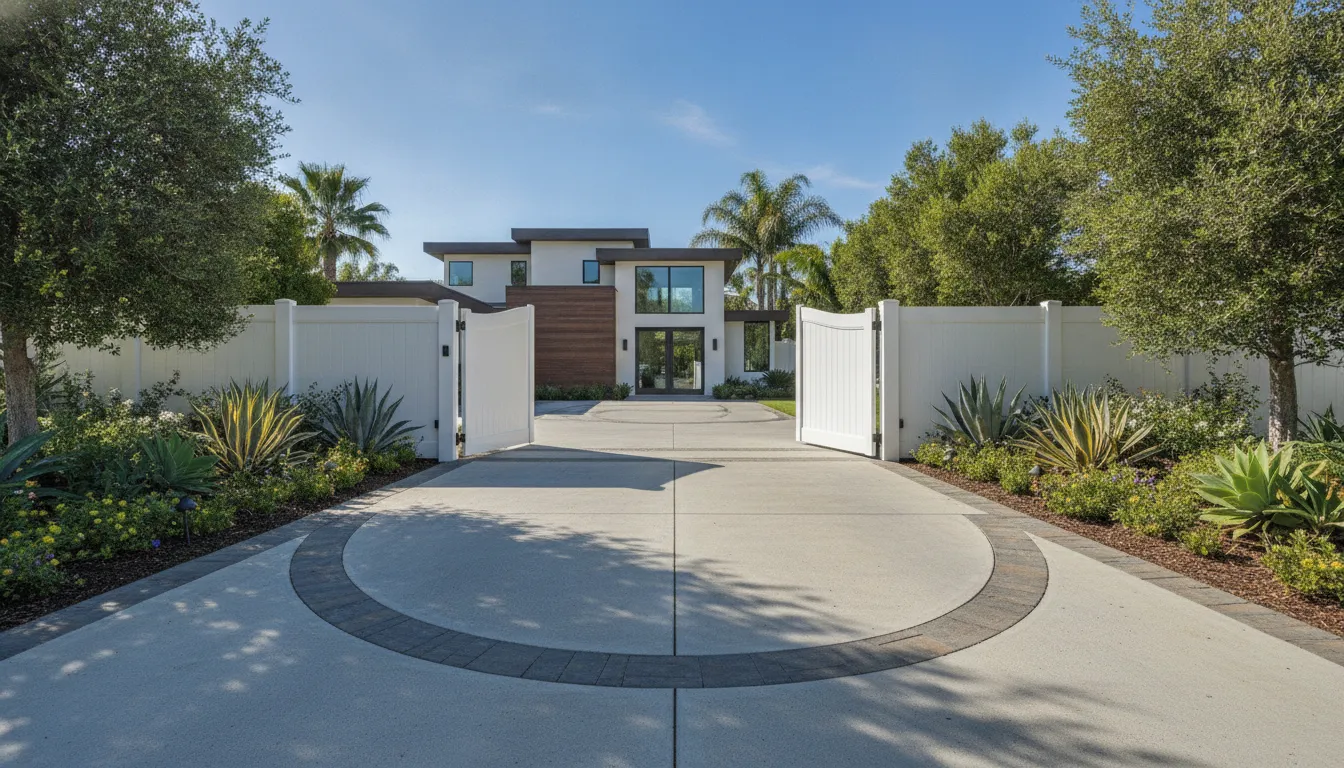
A single swing gate uses one leaf across the vehicle opening. A double swing gate divides the opening into two leaves that meet at a center point. Neither configuration is automatically better. The decision depends on the finished opening, swing space, post placement, vehicle path, terrain, and the way the gate will be used every day.
When a single swing design may make sense
A single-leaf design can provide a straightforward visual layout when one panel can cover the opening without becoming difficult to move or support. It may suit a property with adequate room on one side for the leaf to swing and a vehicle approach that does not require unusual turning movements. The installer should still evaluate the panel size, post structure, hinges, latch, grade, and clearance before treating it as a simple option.
When a double swing design may be worth comparing
A double gate splits the movement between two leaves. That can be useful for a wider vehicle entrance or a property where dividing the swing path provides a more practical layout. It creates an additional center meeting point, however, so both leaves need coordinated hinges, stops, latching, and alignment. The opening should be measured as a complete system, not as two unrelated panels.
A double configuration can also support a balanced frontage and a strong sense of symmetry. That visual benefit should be weighed against the additional hardware and the need to keep the center meeting area clear. If a vehicle, wall, slope, or landscaping interferes with either leaf, the symmetrical appearance will not compensate for poor daily operation.
What should both options have in common?
Both single and double gates need stable posts, correctly selected hinges, an accessible latch, a defined closed position, and enough clearance through the full swing path. Before approving a layout, ask the installer to demonstrate how the gate will open, where vehicles will wait, and how the panels will be secured when closed. The Orange County gate installation guide offers additional context on the site review and installation process.
Should You Choose an Open or Privacy Vinyl Driveway Gate?
Privacy and visibility are two of the clearest visual differences among vinyl driveway gate styles. A privacy-profile gate creates a more enclosed frontage and can make the driveway feel separate from the street. An open or semi-open treatment can keep the entry visually lighter and allow more of the landscaping or home exterior to remain visible. The best choice depends on the desired boundary, neighborhood character, and any applicable rules.
Privacy-focused profiles
Privacy panels may suit owners who want to screen vehicles, stored items, or activity near the driveway. They can also create a consistent boundary when paired with a privacy fence along the rest of the frontage. The gate should be evaluated with the adjoining fence so the heights, profiles, colors, and post proportions look intentional rather than pieced together.
More enclosure can also affect the visual weight of the entry. A taller or more solid gate may make a small frontage feel more enclosed, while a carefully chosen color and post design can keep it balanced. Confirm the allowed height and setback for the specific property before finalizing a privacy treatment.
Open and decorative profiles
Open profiles can emphasize curb appeal, show more of the landscaping, and create a less visually heavy transition between the driveway and the street. They may be appropriate when the goal is to define the entrance without fully screening it. Decorative details should support the overall architecture rather than compete with the home, fence, or landscaping.
Ask how the chosen profile will look from the street, from inside the driveway, and beside adjacent fence sections. A sample or visual review can help you compare the proportion of posts, rails, panels, and any decorative elements before installation.
For material and profile ideas beyond the driveway opening, see the customer guide to vinyl fencing options. Use it to identify the appearance you prefer, then confirm whether that treatment is suitable for a moving driveway gate.
Which Gate Style Works Best for a Sloped or Tight Driveway?
Limited space and changing grade can narrow the practical choices. A swing gate needs room for the leaf or leaves to travel. While a sliding or cantilever-style entry needs adequate side room for the gate to move or stack. A sloped driveway can also affect clearance at the bottom of a swinging panel and the alignment of a double gate’s center meeting point.
Before choosing a style, map the approach from the street and the path a vehicle will take after entering. Include walls, columns, parked cars, walkways, trees, irrigation areas, and other fixed features. A gate that clears the posts may still interfere with a vehicle’s turning path or a walkway.
- For limited swing space: ask whether the property has enough side run for a sliding or cantilever-style solution, and how the system will be supported.
- For a sloped opening: ask how the grade will affect the bottom clearance, hinges, stops, and closing alignment.
- For a narrow approach: confirm where a vehicle can wait while the gate operates and whether the leaf will swing toward a street, wall, or walkway.
- For drainage concerns: identify where water flows and whether the gate posts, paving, and closing hardware need special attention.
There is no universal gate style for every driveway. A clear site measurement is more useful than choosing from a photograph that does not show the surrounding conditions. Share photos, a rough sketch, vehicle types, and any concerns about slope or turning space during the design conversation.
Discuss your driveway layout and gate options
How Do Color, Height, and Curb Appeal Affect the Choice?
Once the operating layout is workable, visual choices help the gate feel connected to the property. Color, height, panel profile, post shape, and the relationship to the adjoining fence all influence curb appeal. The gate should look intentional when viewed from the street and should remain practical when used from inside the driveway.
Match the gate to the surrounding fence
A gate does not have to be an exact copy of every fence detail, but abrupt differences can make the frontage look unfinished. Compare the gate’s color, rail or panel arrangement, post scale, and height with the fence sections beside it. If the driveway gate is being added to an existing fence, bring photos or samples to the planning appointment so the proposed combination can be evaluated in context.
Balance privacy with visual proportion
Height can improve screening, but a taller solid treatment may dominate a small entrance. An open profile can reduce visual weight, but it may not provide the separation a homeowner wants. Consider the home facade, front landscaping, driveway width, and street view together. Also confirm any city, municipal, or HOA rules that may affect the allowed design.
Think about daily access
Appearance is only one part of the selection. A gate used several times a day should be easy to operate, latch, and inspect. If guests, deliveries, children, or service providers use the entry, think through how they will approach it and whether a separate pedestrian gate would be useful. A coordinated pedestrian gate can reduce the need to open the full vehicle entry for routine foot traffic.
What Hardware and Automation Questions Should You Ask?
The visible panel is only one part of a driveway gate system. Hinges, posts, latches, stops, drop rods, and possible automation all need to match the selected layout and the property’s operating conditions. Hardware should be discussed before the opening and posts are finalized, especially if an owner may want automated access later.
| Decision | Question to ask before installation |
|---|---|
| Hinges and posts | Can the support structure carry the selected leaf or leaves and keep the swing path aligned? |
| Latch and stop | How will the gate stay in the intended closed position during ordinary use? |
| Double-gate center | How will the two leaves meet, and can the center area remain clear of paving or grade conflicts? |
| Drop rod | Does the passive leaf need a ground-anchoring rod, and is the surface suitable for it? |
| Automation | Should post locations, clearances, power access, and latch operation allow for a future operator? |
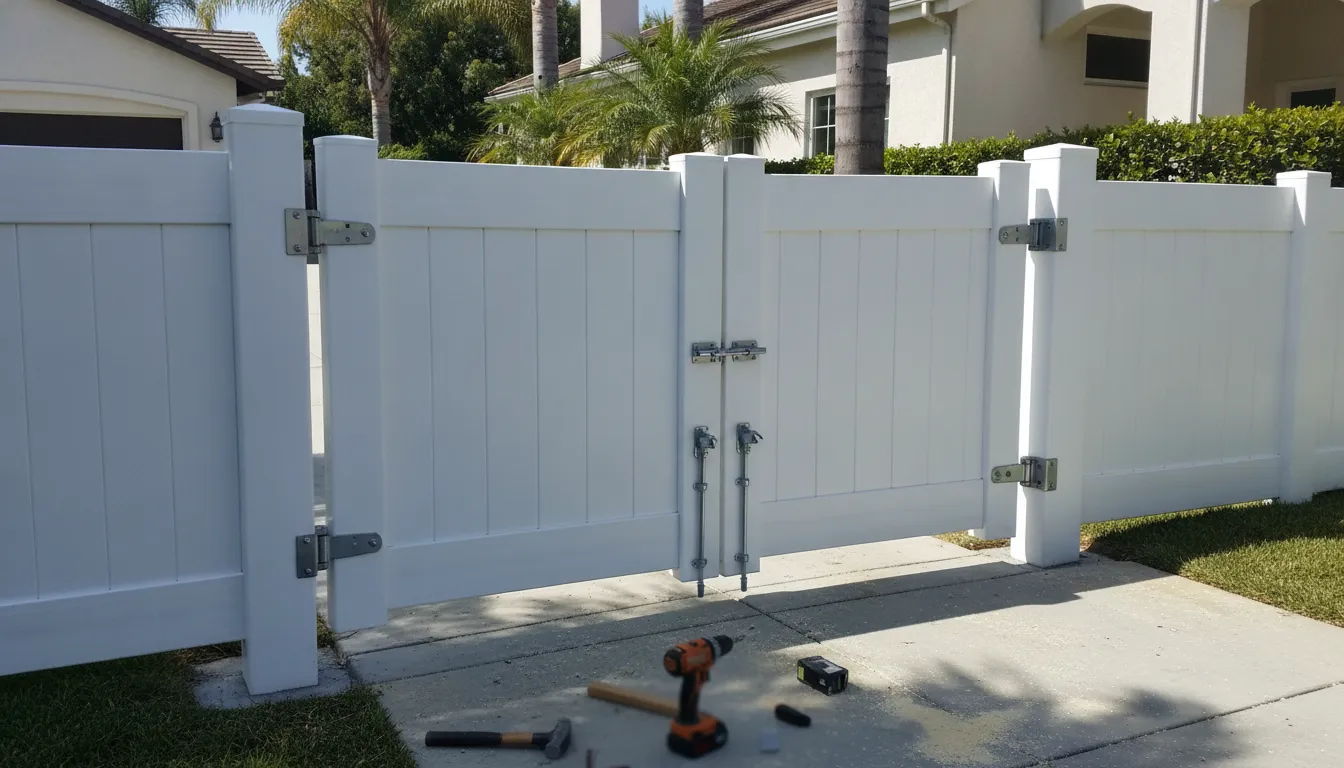
Automation should not be treated as an afterthought when it is part of the long-term plan. The installer can explain whether the chosen swing or sliding style, post structure, clearances, and power route are compatible with an operator. A future-ready layout is not the same as a guarantee that every property can be automated, so ask for the limitations and preparation requirements in writing.
For a closer look at components, review the vinyl fence gate hardware guide. The final hardware package should be tied to the specific gate style, opening, terrain, and intended use.
What Should Anaheim and Orange County Buyers Confirm?
Local planning can affect both the appearance and the installation process. Rules vary by city, parcel, neighborhood, and HOA, so an online article cannot confirm what applies to one address. Before ordering a gate, ask what approvals, setbacks, height limits, property-line questions, and utility checks may apply to the proposed work.
Confirm the site conditions
Ask for measurements of the finished opening, post locations, driveway grade, vehicle approach, swing or sliding path, drainage, and nearby structures. If an existing fence or gate is being changed, clarify what will be removed and what will remain. A proposal should distinguish site preparation from the gate materials and installation itself.
Check approvals and property boundaries
Confirm with the applicable local authority whether a permit or inspection is required for the proposed work. If the property is in an HOA, ask whether architectural review or written approval is needed. Property-line verification and 811 utility marking may also be appropriate when excavation is planned. These are planning checkpoints, not a substitute for confirming the requirements for the specific parcel.
Compare complete proposals
An itemized proposal should identify the chosen style, profile, color, posts, hardware, preparation, installation, and testing. It should also state any assumptions about access, permits, HOA review, automation, demolition, or unusual terrain. Comparing complete scopes helps prevent an attractive design from becoming an unclear project once work begins.
For more installation-planning context, review the Orange County gate installation resource and ask how its general guidance applies to your address.
How Much Do Vinyl Driveway Gate Styles Cost?
There is no responsible universal price for vinyl driveway gate styles because the estimate covers more than the visible panels. The opening, post structure, style, profile, hardware, terrain, access, preparation, and possible automation all influence the project scope. A site-specific estimate is more useful than a generic online number that may omit the work required at your property.
When comparing proposals, ask whether each one includes measurements, posts, gate leaves, hardware. Removal of an existing gate, surface or site preparation, installation, alignment, operation testing, and any approval-related support. A lower starting figure may not represent the same scope as a complete installed system.
The best time to discuss cost is after the design choices have been narrowed. Bring the preferred operating layout, privacy or visibility goals, color ideas, vehicle information, and any automation plans to the estimate conversation. A G Vinyl Fencing can evaluate the property and prepare a proposal based on the actual opening and site conditions.
Request an itemized gate estimate
Frequently Asked Questions About Vinyl Driveway Gate Styles
What are the most common vinyl driveway gate styles?
The main operating choices are single swing, double swing, and sliding or cantilever-style configurations where the property has enough side room and the structure can support that approach. Within those layouts, owners can compare privacy, open, decorative, color, and height treatments. The right combination depends on the opening, grade, vehicle path, and desired appearance.
Are double vinyl driveway gates better than single gates?
Not automatically. A double gate can divide a wider opening between two leaves and create a balanced frontage, but it adds a center meeting point and more alignment considerations. A single gate may be simpler when one leaf has enough support and swing clearance. The site layout should decide the configuration.
What vinyl gate style gives the most privacy?
A privacy-profile gate with a more enclosed panel treatment generally provides more screening than an open or decorative profile. The final privacy level also depends on height, adjoining fence sections, the street view, and any city or HOA restrictions. Confirm the allowed design for the specific property before ordering materials.
Can a vinyl driveway gate be automated later?
Some properties and gate layouts can be planned for future automation, but compatibility depends on the style, leaf size, posts, clearances, power access, latch operation, and site conditions. Tell the installer about future automation before the opening and support structure are finalized. Ask which preparations are included and which would be separate work.
How do I choose between privacy and curb appeal?
Start with the property’s primary need. Choose a more enclosed profile when screening and separation are most important. Choose an open or decorative treatment when visibility, landscaping, and a lighter street-facing appearance matter more. Compare the gate with the home and adjoining fence so the final choice supports both the boundary and the overall frontage.
Plan Your Vinyl Driveway Gate Style
The strongest gate design balances movement, privacy, curb appeal, access, hardware, and the physical conditions around the driveway. If you are comparing vinyl driveway gate styles for an Anaheim or Orange County property. A site-specific review can help turn those preferences into a workable opening and itemized proposal. Contact A G Vinyl Fencing to request an estimate and discuss the style, layout, and next steps for your property.

Gary Andreasyan is at the forefront of A G Vinyl Fencing, setting the standard for high-quality fencing solutions. His expertise in vinyl fencing has positioned the company as a go-to for durable, low-maintenance fencing options that enhance property value and security. Gary’s commitment to customer satisfaction and innovative fencing solutions drives A G Vinyl Fencing’s success, providing clients with a range of styles and designs that meet their specific needs and preferences.


0 Comments