


A double vinyl driveway gate uses two coordinated leaves that meet at the center of a vehicle opening. Dividing the swing path between both sides can suit some properties. For Anaheim and Orange County properties, the right layout depends on the finished opening, post locations, driveway slope, turning space, and operating needs. There is no universal opening size or hardware package for every property. Planning should begin with a site-specific assessment rather than a product dimension.
Before choosing hinges, a center stop, drop rod, or automation-ready hardware, it helps to understand what the two-leaf configuration is designed to do. That foundation makes it easier to evaluate swing clearance, alignment, terrain, and the questions an installer should answer during the design process.
What Is a Double Vinyl Driveway Gate?
A double vinyl driveway gate uses two separate panels, often called leaves, to close a vehicle entrance. The leaves meet at a center point when closed and swing from posts on opposite sides of the driveway. Instead of moving one wide panel, the design divides the opening into two sections. That can make the gate layout more adaptable to the property’s available space, grade, and preferred swing direction.
The important detail is that a double gate is a configuration, not a universal size or performance specification. The finished opening, post placement, panel proportions, swing clearance, terrain, and hardware all need to be evaluated for the particular property. A G Vinyl Fencing supports double-entry configurations as part of its access-system options, but a project proposal should establish the measurements and materials rather than relying on a standard width.
How the two leaves work
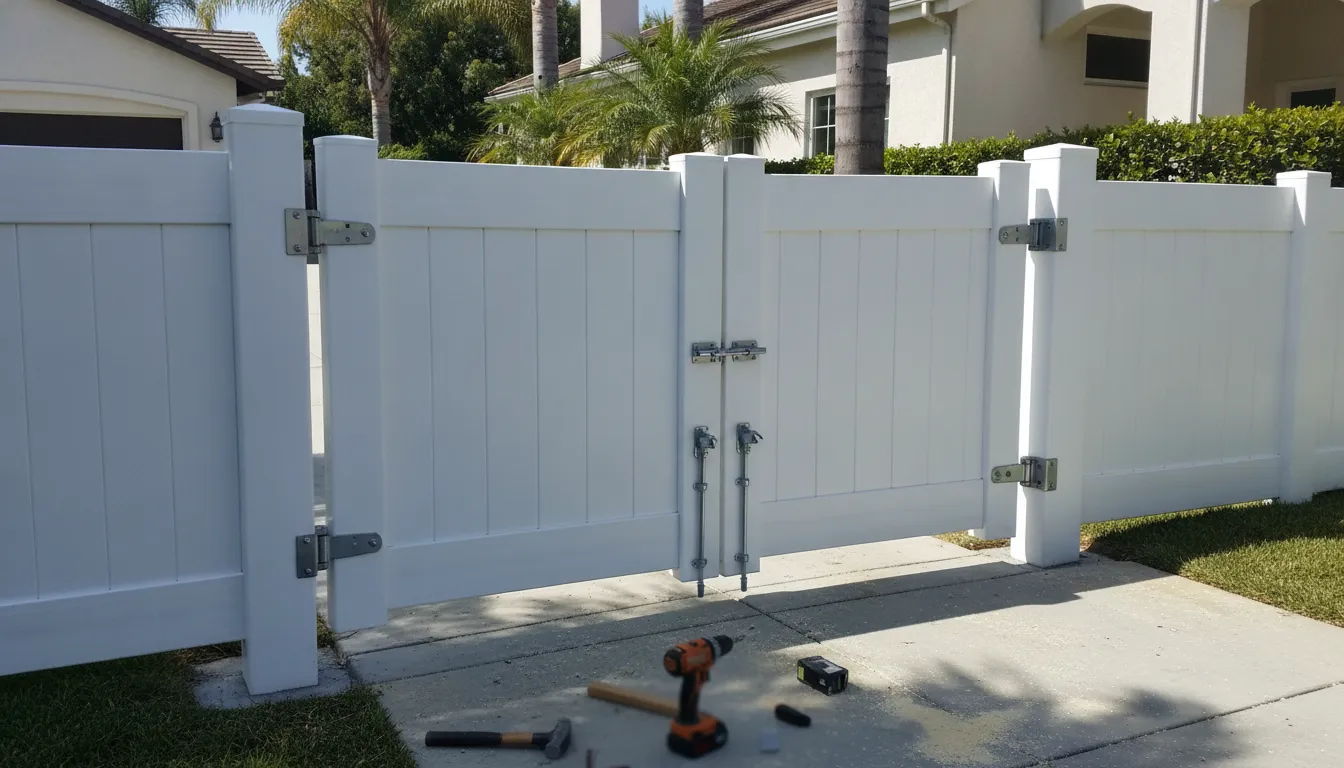
Each leaf is supported by its own hinges and post. The center meeting point needs to close cleanly and remain aligned during normal operation. Depending on the layout, the installation may also include a center stop, latch, or drop rod to help control how the leaves meet and stay in position. Those components should be selected as a coordinated system, especially if the gate may later be prepared for automation.
Before installation, an assessment should consider the driveway’s slope, the vehicle path, drainage, nearby structures, and the direction each leaf can swing. In Orange County, the project may also require checking property lines, municipal requirements, or HOA rules. These are planning questions for the specific parcel, not assumptions that apply to every double vinyl driveway gate.
Double gate versus single or pedestrian access
A pedestrian gate is sized and operated for people, pets, or routine walk-through access. A single driveway gate uses one leaf across the vehicle opening, while a double gate divides that opening between two leaves. The best choice depends on the opening and how the property will be used. A homeowner who regularly moves vehicles, trailers, or equipment may value the flexibility of a two-leaf arrangement, while a separate pedestrian gate may be more convenient for everyday foot traffic.
For broader selection considerations, see this vinyl driveway gate guide. A site-specific consultation can then confirm the opening, swing path, terrain, and hardware before a proposal is prepared.
How Do You Plan the Opening and Swing Clearance?
Start with the finished driveway opening, not a catalog dimension. A double gate has two leaves that meet at the center. Post placement, surface grade, and available swing space all affect operation. A G Vinyl Fencing’s planning process includes a property assessment, detailed measurements, and terrain evaluation so the proposed layout reflects the actual site.
Before requesting a proposal, consider the questions that shape the design:
- Where will the finished opening sit between the posts, walls, or existing fence sections?
- Will vehicles approach straight on, or will they need to turn from a narrow street, alley, or side drive?
- Which direction can each leaf swing without contacting a vehicle, wall, post, landscaping, walkway, or other structure?
- Does the driveway slope, crown, or change elevation near the opening?
- Will drainage flow toward the gate, and could runoff or standing water affect the surface or operation?
There is no single opening width or swing clearance that fits every property. A measurement that works for one driveway may not suit another because of the vehicle turning path, setbacks, terrain, or the location of nearby improvements. Ask the installer to document the finished opening, post locations, center meeting point, swing direction, and any areas that must remain clear during operation.
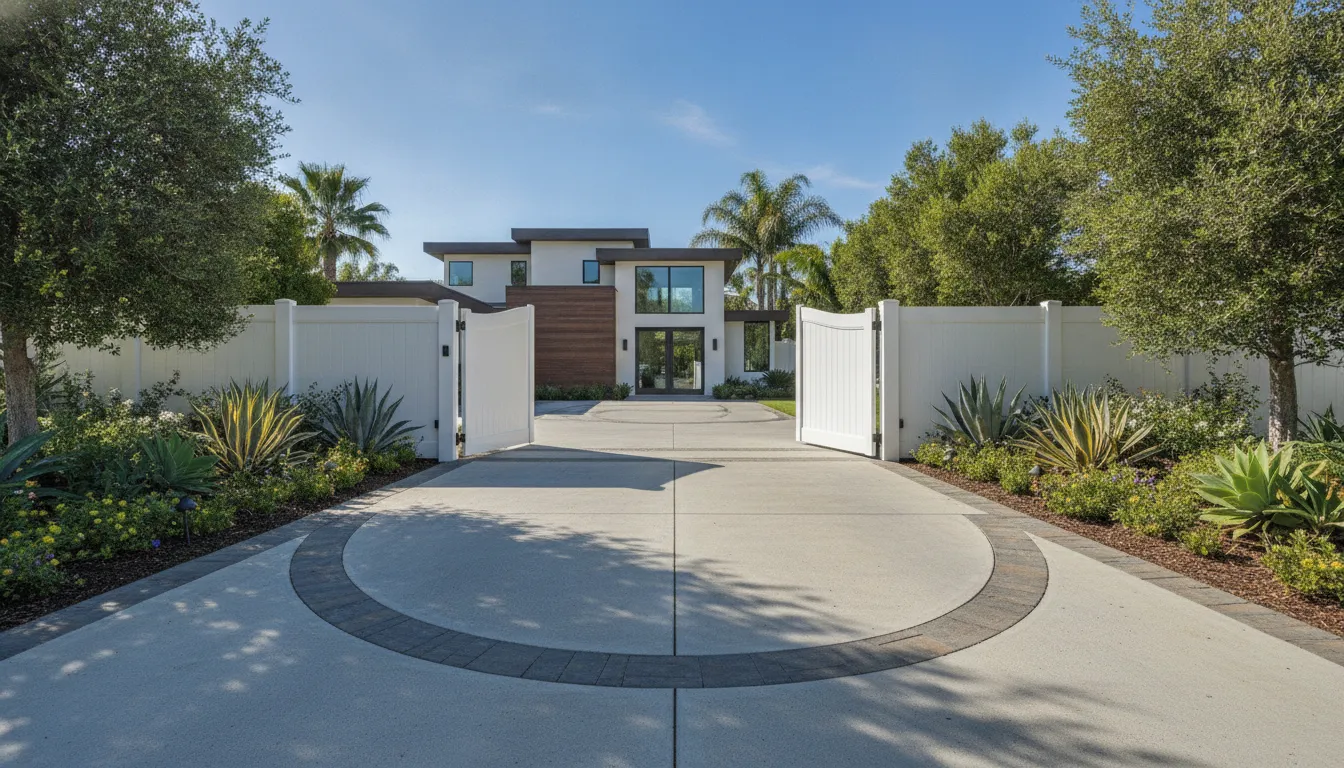
Property lines and underground utilities also belong in the planning conversation. Property-line verification helps prevent a layout from extending beyond the intended parcel, while 811 utility marking can help identify buried lines before digging. Municipal permitting or HOA review may apply depending on the property and proposed work, so confirm those requirements for the specific address rather than assuming a local rule is universal.
For an Orange County project, share photographs, a rough site sketch, vehicle types, and any concerns about slope or drainage during the design consultation. Then ask how the proposed Orange County gate installation guide applies to your site. Before the work is considered complete, operation testing and alignment verification should confirm that both leaves move as planned and meet correctly at the center.
Which Hardware Choices Matter for Two Gate Leaves?
Two gate leaves must work as one entry system even though each panel moves on its own. Hardware selection should account for the gate’s weight, post construction, swing direction, ground conditions, and whether the opening may later use an operator. A design consultation and site measurement help match these parts to the actual property rather than relying on a universal hardware package.
| Component | Planning question | Why it matters |
|---|---|---|
| Hinges | Can the hinges support each leaf and align with the posts and swing path? | Properly matched hinges help the panels open smoothly and meet correctly when closed. |
| Center meeting and latch area | Where will the leaves meet, and how will the closed position be secured? | The center connection affects alignment, day-to-day access, and how the two panels share the opening. |
| Drop rod | Does one leaf need a ground-anchoring rod when the gate is closed? | A drop rod can help hold a passive leaf in position, subject to the site surface and installation design. |
| Anti-sag support | What support method is appropriate for the leaf design and expected use? | Additional support can help manage alignment concerns over time without treating one solution as universal. |
| Gate stops | What will limit travel in the open and closed positions? | Stops help prevent unwanted movement and give the leaves a repeatable resting position. |
| Automation readiness | Should posts, clearances, power, and latch operation allow for a future operator? | Planning early may avoid rebuilding parts of the entry if automated operation is considered later. |
The center meeting point deserves particular attention. Both leaves need enough clearance to move without binding, while the latch and any drop rod must remain accessible for normal use. A gate stop can also provide a consistent closed position, but its placement depends on the paving, grade, and direction of travel.
For a broader overview, review the vinyl fence gate hardware guide, then ask the installer how the proposed parts work together at your property. If automation is possible, mention it before the posts and opening are finalized. A G Vinyl Fencing can evaluate the terrain, verify operation and alignment, and develop hardware specifications as part of the project proposal.
What Should Orange County Buyers Confirm Before Installation?
A successful gate installation starts with more than choosing a profile and color. Before approving a double-panel design, Anaheim and Orange County homeowners should confirm how the opening will work on their property, which approvals may apply, and what the proposal includes. Requirements can vary by city, parcel, neighborhood, and HOA, so use this checklist as a planning guide rather than legal advice.
Review the property and approvals
Ask the installer to assess the site and take detailed measurements before materials are ordered. The review should consider the finished opening, existing fence lines, post locations, swing path, slopes, drainage, and the space needed for vehicles to enter and exit. Uneven terrain or water movement can affect how the two leaves meet and how the gate operates.
Confirm whether your municipality requires a permit for the proposed work, and ask who will handle any application or inspection steps. If the property is in an HOA, verify whether architectural review or written approval is required before construction. It is also prudent to confirm the property line and arrange 811 utility marking when excavation could be near underground services. These steps help identify issues early, but the property owner should verify the requirements for the specific location.
Make the proposal specific
An itemized proposal should identify the gate layout, posts, material specifications, hardware, finish, installation work, and any preparation or access considerations. Ask how the installer will address the center meeting point, latch, drop rod, anti-sag support, and alignment. If automation may be added later, discuss compatibility before the posts and leaves are installed. A general Orange County gate installation guide can provide broader context, while the project proposal should address your actual opening.
Test operation before sign-off
At completion, operate both leaves through their full travel. Check that they align at the center, clear the intended swing path, latch correctly, and do not drag or bind. Confirm that any drop rod or other closing hardware works as intended. If the site assessment, approvals, specifications, or testing results leave questions, request a project estimate and discuss them before installation begins.
How Do You Maintain a Vinyl Driveway Gate Over Time?
Routine care helps you spot small operating issues before they make the gate difficult to use. Vinyl is considered a low-maintenance material, so its upkeep generally focuses on cleaning, observing the gate in operation, and checking the hardware that supports each leaf.
Clean the vinyl and inspect the surfaces
Remove ordinary dust, dirt, and outdoor buildup with soap and water. Pressure washing is also documented as a cleaning option, but use a controlled setting and avoid directing excessive force at hinges, latches, or other moving parts. While cleaning, look for cracks, loose components, unusual rubbing, or changes around the posts and the center meeting point.
Check alignment and operation
Open and close both leaves periodically and pay attention to whether they move smoothly through the intended swing path. The leaves should meet as designed without dragging, binding, or shifting noticeably. If one side begins to sag, the center meeting point no longer lines up, or the gate requires unusual force, stop treating it as a cosmetic issue. Alignment can affect the way the latch and drop rod engage.
Inspect hinges, latches, and the drop rod
Look over the hinges, latch, center stop, and drop rod for looseness, damage, corrosion on metal components, or dirt that interferes with movement. Test the drop rod and latch separately, then confirm that the gate closes securely without forcing the hardware. For a closer explanation of these components, see the vinyl fence gate hardware guide.
Request service when cleaning does not resolve a problem, the gate has been struck, alignment changes repeatedly, or hardware no longer operates reliably. A G Vinyl Fencing documents a one-year mechanical warranty for gates and hardware. That coverage should not be treated as a broader warranty for all vinyl materials, and the specific issue should be reviewed before assuming it qualifies.
How Much Does a Double Vinyl Driveway Gate Cost?
A double vinyl driveway gate is priced as a complete access system, not simply by counting two gate panels. The estimate depends on the property, the opening, the support structure, and the way the gate needs to operate. Because every driveway has different conditions, a reliable proposal starts with a site assessment and project-specific measurements rather than a universal price range.
The opening size and number of leaves are the first considerations. A two-leaf layout may suit a wider vehicle entrance, but the finished opening, center meeting point, post placement, and available swing path must be measured together. Slope, uneven terrain, drainage, and the distance from nearby structures can affect installation complexity and the support needed for reliable alignment.
What can change the project estimate?
- Posts and site preparation: New posts, removal of an existing gate, demolition, grading, or other preparation may add work before installation begins.
- Hardware: Hinges, the latch, a center stop, drop rod, and anti-sag support should be selected as a compatible set. The correct combination depends on the gate design and operating conditions.
- Automation readiness: If you may add an operator later, discuss that plan before installation. Post locations, clearances, power access, and hardware compatibility may influence the initial design.
- Access and approvals: Limited equipment access, long material paths, municipal permitting, HOA review, utility marking, or property-line verification may affect the scope. Requirements vary by city and property.
An itemized proposal helps you see what is included: measurements, posts, gate leaves, hardware, preparation, installation, operation testing, alignment verification, and any approval-related support. It also gives you a practical way to compare proposals without treating a low initial number as a complete project price. For broader planning context, review the vinyl driveway gate guide.
For an Orange County property, the final estimate should follow an on-site evaluation of the driveway, terrain, access, and intended operation. Project-specific measurement and a formal proposal determine the estimate.
Request a project estimate for your double vinyl driveway gate.
Frequently Asked Questions
How much does a double vinyl driveway gate cost?
There is no responsible universal price for a double vinyl driveway gate. A project quote depends on the finished opening, posts, terrain, access, hardware, and whether automation is included. An installer should assess the property and provide an itemized proposal so you can compare the actual scope rather than rely on a generic online figure.
What should I check before installation?
Confirm the finished opening, vehicle turning path, swing direction, slope, drainage, property lines, and the location of utilities. Anaheim and Orange County projects may also require municipal permitting, HOA approval, or 811 utility marking, depending on the property and jurisdiction. Ask the installer to review measurements, material specifications, terrain, alignment, and operation before work begins.
How long should a double vinyl driveway gate last?
There is no single lifespan that applies to every installation. Service life depends on exposure, frequency of use, site conditions, installation quality, and how the hardware is maintained. Regular cleaning, visual checks, hardware inspection, and operation testing can help identify alignment or wear concerns before they affect daily use.
What are the downsides or tradeoffs of a double vinyl driveway gate?
Two gate leaves create a center meeting point and add more moving hardware than a single-leaf design. They also require careful alignment and enough swing clearance for the site. A double configuration can be a practical access option, but slopes, limited turning space, drainage, automation plans, and maintenance needs should be evaluated before choosing it.
Ready to Plan Your Double Vinyl Driveway Gate?
A clear plan can help you evaluate the layout, swing clearance, hardware, and site conditions before installation begins. For an Anaheim or Orange County property, a project-specific review can account for the opening, terrain, access, and how the two gate leaves will operate together. Request a project estimate from A G Vinyl Fencing to discuss your double vinyl driveway gate layout and next steps. Bring any questions about clearance, hardware, property conditions, or operation so the estimate can reflect your actual project rather than a generic specification.

Gary Andreasyan is at the forefront of A G Vinyl Fencing, setting the standard for high-quality fencing solutions. His expertise in vinyl fencing has positioned the company as a go-to for durable, low-maintenance fencing options that enhance property value and security. Gary’s commitment to customer satisfaction and innovative fencing solutions drives A G Vinyl Fencing’s success, providing clients with a range of styles and designs that meet their specific needs and preferences.


0 Comments