


Metal vs Aluminum Fencing: Which Material Is Right for Your Property?
Choosing a metal fence sounds simple until you start comparing aluminum, steel, wrought iron, and chain link side by side. Each option can secure a property line, add curb appeal, and define outdoor space, but the right choice depends on your budget, maintenance expectations, security needs, HOA rules, and the look you want from the street.
Planning a fence project in Orange County? Explore aluminum fencing options from A G Vinyl Fencing or call (833) 248-4695 to discuss the best material for your property.
For many Southern California homes, aluminum is the most practical metal fencing choice because it offers the clean look of ornamental metal with much less corrosion risk and less upkeep than traditional iron. That does not mean aluminum is always the answer. Some properties need the strength of steel, the historic character of wrought iron, the budget value of chain link, or the privacy of a non-metal option such as vinyl fencing.
This guide compares the major metal fencing options, explains where aluminum fits, and gives you a clear decision framework before you request quotes.
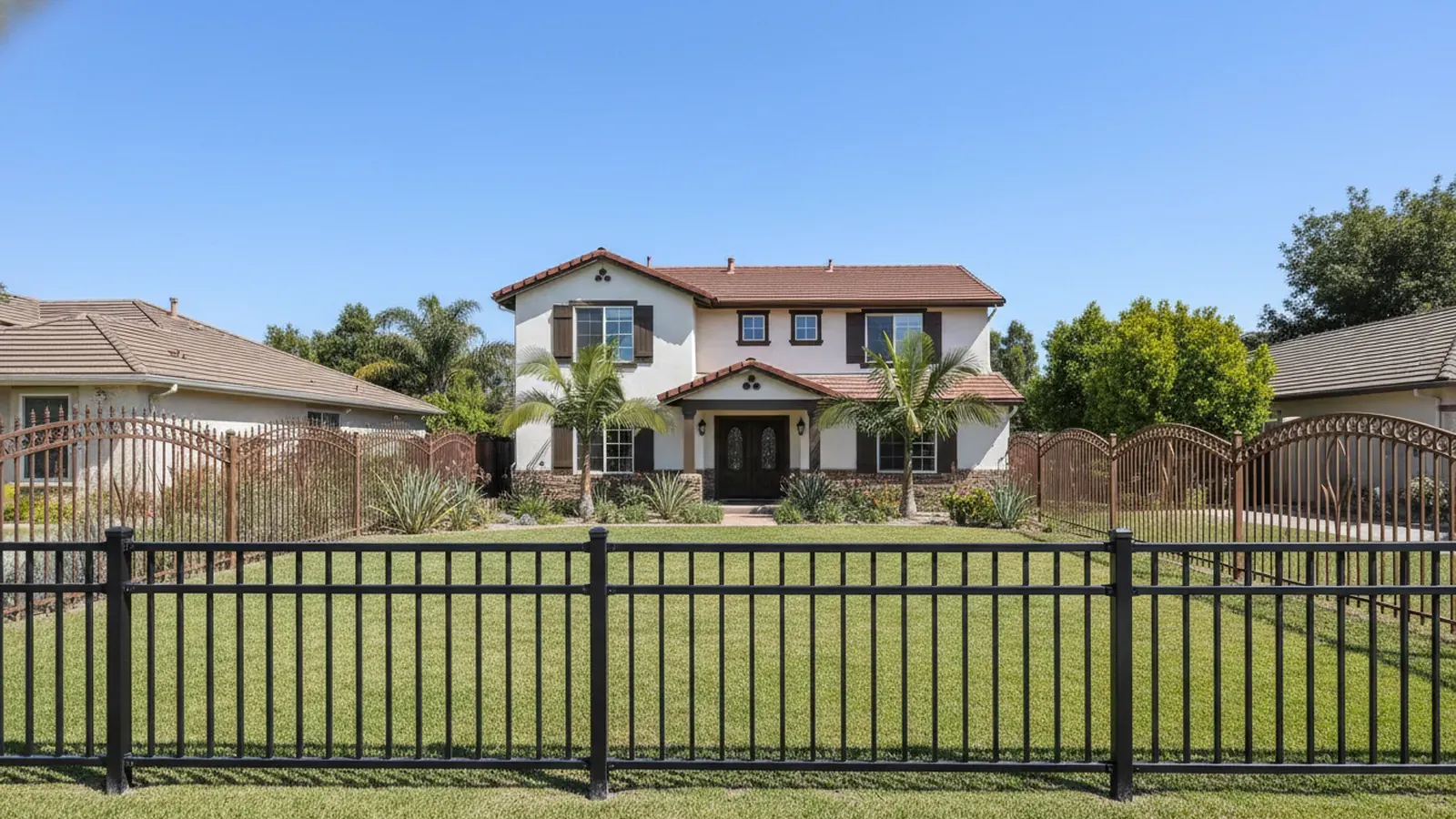
Quick Answer: Which Metal Fence Is Best?
The best metal fencing material depends on your top priority:
- Best all-around residential choice: Aluminum fencing, especially for front yards, pools, decorative perimeters, and Orange County homes that need low maintenance.
- Best for high security: Steel fencing, especially for commercial properties, utility areas, and places where impact resistance matters more than maintenance.
- Best for historic or luxury character: Wrought iron, especially for custom gates, estates, and traditional architecture.
- Best budget metal fence: Chain link, especially for utility areas, temporary boundaries, large back lots, and commercial storage areas.
- Best for privacy: Metal is usually not the first choice unless paired with panels. Homeowners who need full privacy often compare aluminum with vinyl or wood fencing.
If you want a fence that looks upscale, resists rust, and does not need repainting every few years, aluminum is usually the safest starting point.
Metal Fencing Comparison Table
Use this table as a first-pass comparison before looking at style, installation details, and long-term ownership costs.
| Material | Best For | Durability | Maintenance | Privacy | Typical Cost Position |
|---|---|---|---|---|---|
| Aluminum | Residential yards, pools, decorative front fencing, coastal or humid areas | High corrosion resistance, moderate impact strength | Low | Low unless paired with privacy panels | Mid-range |
| Steel | Security, commercial spaces, high-impact areas | Very strong, but can rust if coating fails | Moderate to high | Low to moderate depending on design | Mid to high |
| Wrought Iron | Estate-style properties, historic homes, custom gates | Very strong, long lasting with care | High | Low unless modified | High |
| Chain Link | Budget boundaries, utility yards, pet containment, large areas | Good functional durability | Low to moderate | Low unless privacy slats are added | Low |
| Vinyl | Privacy, low maintenance, clean residential style | High weather resistance, not metal | Low | High | Mid-range |
What Counts as a Metal Fence?
A metal fence is any fence system made primarily from metal posts, rails, panels, mesh, pickets, or ornamental components. Most homeowners use the phrase broadly, so it can refer to decorative aluminum fencing, steel security fencing, wrought iron gates, chain link enclosures, or mixed-material systems.
The confusion happens because people often say “metal fencing” when they really mean one of two very different goals:
- Decorative metal fencing: A polished fence that improves curb appeal while marking the property line.
- Security metal fencing: A stronger barrier designed to prevent access, protect assets, or stand up to heavier wear.
Aluminum usually belongs in the first category. Steel and wrought iron can serve both categories, depending on the design. Chain link is usually a practical boundary fence rather than an architectural feature.
Aluminum Fencing: The Low-Maintenance Metal Option
Aluminum fencing is popular because it gives homeowners the look of ornamental metal without the upkeep that comes with many iron and steel fences. It is naturally corrosion resistant, lightweight, and commonly finished with a powder-coated surface that holds color well in outdoor conditions.
For Orange County homes, aluminum is especially attractive because it handles sun exposure, irrigation overspray, and coastal air better than many ferrous metals. It also works well with modern, traditional, and Mediterranean-style homes, which makes it a flexible choice for neighborhoods with mixed architecture.
Where aluminum fencing performs best
- Front yard fencing where curb appeal matters
- Pool fencing where visibility and code-compliant layouts are important
- Side yards and garden boundaries
- Decorative perimeter fencing for homes and small commercial properties
- Properties where homeowners want a black metal fence look without constant repainting
Aluminum is also a good choice when you want the fence to frame landscaping instead of block it. The open picket design lets light through and keeps a yard feeling spacious.
Where aluminum may not be the best fit
Aluminum is strong enough for most residential applications, but it is not as impact resistant as heavy steel. If the fence will be exposed to vehicle contact, industrial equipment, frequent vandalism, or high-force security needs, steel may be a better fit.
Aluminum also does not create full privacy on its own. If your goal is to block views from neighbors, a street, or a pool area, compare it with vinyl fence styles or ask whether a mixed-material layout makes sense.
Steel Fencing: Strong, Secure, and Heavier Duty
Steel fencing is the stronger cousin in the metal fencing family. It is heavier than aluminum and can provide more resistance against bending, impact, and forced entry. That makes it a common choice for commercial properties, gated utility areas, schools, warehouses, and locations where security is a major concern.
The tradeoff is maintenance. Steel can rust when protective coatings fail, especially at scratches, welds, cut points, and areas where moisture sits. Galvanized and powder-coated steel systems reduce that risk, but they do not eliminate it forever.
When steel is worth considering
- You need a higher-security fence than standard residential aluminum.
- The fence may take more physical abuse than a typical yard fence.
- You want a commercial-grade perimeter or controlled access area.
- You are comfortable with periodic inspections and touch-up maintenance.
Steel can be an excellent material when strength is the deciding factor. For many homeowners, though, that extra strength is more than they need, while the added maintenance can become a long-term burden.
Wrought Iron Fencing: Classic Character With More Upkeep
Wrought iron has a traditional, custom look that many homeowners associate with estate gates, historic properties, and high-end architecture. It can be shaped into ornate details that are difficult to match with standard aluminum systems.
That beauty comes with responsibility. Iron can rust, especially when paint or coating breaks down. To keep a wrought iron fence looking its best, owners should plan for cleaning, rust treatment, priming, and repainting as needed. In coastal or sprinkler-heavy environments, that maintenance can matter even more.
When wrought iron makes sense
- The property has a traditional, historic, or estate-style design.
- You want a custom ornamental gate or distinctive architectural detail.
- You value craftsmanship and visual weight over low maintenance.
- You are prepared for the care required to prevent rust and finish failure.
If you love the look but not the maintenance, aluminum can often create a similar black ornamental appearance with a simpler ownership experience. That is why many homeowners start with aluminum fence installation before pricing custom iron.
Chain Link Fencing: Practical, Affordable, and Functional
Chain link is still a metal fence, but it serves a different purpose than aluminum, steel, or wrought iron. It is usually chosen for function and budget rather than curb appeal. It can define a property boundary, contain pets, protect equipment, or fence a large area without the cost of ornamental metal.
Galvanized chain link resists rust better than untreated metal, and vinyl-coated chain link can look cleaner than standard silver mesh. Privacy slats can help block some visibility, but chain link is rarely the best choice when appearance is the main goal.
When chain link works well
- Large yards or utility areas where cost control matters
- Dog runs, side areas, and practical containment zones
- Commercial storage or equipment areas
- Temporary or secondary fencing where appearance is not the top priority
For a visible front yard or premium residential property, most homeowners prefer aluminum, vinyl, composite, or glass because those materials create a more finished look.
Not sure which material fits your home, HOA, or budget? Browse A G Vinyl Fencing project examples, then call (833) 248-4695 to talk through your options.
Aluminum vs Other Metal Fencing: Key Decision Factors
Once you understand the basic material differences, the best choice usually comes down to five practical questions.
1. How much maintenance do you want?
If your goal is a clean fence that does not require regular sanding, rust treatment, or repainting, aluminum has a clear advantage. It is one of the lowest-maintenance metal fencing options because it does not rust the way steel and iron can.
Steel and wrought iron can last a long time, but they need more attention when finishes chip or moisture reaches the metal. Chain link is fairly low maintenance, but it may not deliver the appearance many homeowners want.
2. Do you need security or style first?
For decorative residential fencing, aluminum usually checks the right boxes. It creates an attractive boundary, improves curb appeal, and keeps the yard open and visible.
For security-first applications, steel may be more appropriate. A heavy steel fence with the right post spacing, gates, latches, and height can provide a stronger barrier. The key is to match the material to the actual risk. A residential front yard rarely needs the same fence as a commercial storage lot.
3. Is privacy important?
Most metal fencing is open by design. That is part of its appeal, but it also means it does not block views. If you need privacy around a pool, backyard, side yard, or patio, consider vinyl or a mixed solution.
A common approach is to use aluminum in the front where appearance and visibility matter, then use vinyl in the back where privacy matters. A G Vinyl Fencing installs multiple outdoor materials, so homeowners can choose a layout that fits each section of the property instead of forcing one material everywhere.
4. What does your neighborhood or HOA allow?
Many Orange County neighborhoods have style, height, color, and placement rules. Some HOAs prefer black ornamental fencing in visible areas. Others may require privacy fencing in side or rear yards. Pool areas may also need specific height, spacing, gate, and latch details.
Before finalizing a design, confirm the rules that apply to your property. A local fence contractor can help you think through code requirements, HOA expectations, slope conditions, and gate placement.
5. What is the lifetime cost, not just the starting price?
The cheapest fence on day one is not always the best value. A lower quote can become expensive if the material needs repainting, rust repair, premature replacement, or major upkeep. Aluminum often wins on lifetime value because it balances appearance, durability, and low maintenance.
If upfront budget is the main concern, ask about project phasing, style adjustments, and fence financing options before assuming you have to choose the lowest-grade material.
Cost: What Affects Metal Fencing Prices?
Metal fencing prices vary widely because the material is only one part of the project. The final quote depends on site conditions, fence height, total linear footage, gate count, finish, hardware, slope, demolition, access, and design complexity.
In general, chain link is usually the lowest-cost metal option. Aluminum is commonly mid-range and offers a strong balance of appearance and low maintenance. Steel can range from mid-range to premium depending on the system. Wrought iron is often the most expensive because of material weight, labor, and custom fabrication.
Cost factors to review in every quote
- Linear footage: More fence means more panels, posts, footings, and labor.
- Height: Taller fences use more material and may trigger additional requirements.
- Gates: Walk gates, double gates, and driveway gates add hardware and labor.
- Terrain: Slopes, retaining walls, roots, and hardscape can complicate installation.
- Removal: Taking out an old wood, chain link, or iron fence may add cost.
- Finish and style: Decorative tops, premium colors, and custom details can increase price.
- Permits or HOA submittals: Some properties require extra planning before installation.
The best way to compare quotes is to make sure each contractor is pricing the same scope. One quote may look cheaper because it leaves out demolition, gates, concrete work, or finish details.
Durability in Southern California Conditions
Orange County properties face a combination of strong sun, irrigation overspray, coastal air in some communities, hardscape transitions, and active outdoor living. A fence material should be selected with those conditions in mind.
Aluminum handles corrosion well, which makes it a strong choice near sprinklers and in many coastal-adjacent environments. Steel and wrought iron can perform well too, but they depend more heavily on protective finishes and ongoing maintenance. Chain link durability depends on coating quality and whether posts, rails, and fasteners are protected from corrosion.
For pool areas, aluminum is often attractive because it provides visibility, resists rust, and can be configured for safety requirements. For backyards where privacy and pool screening are more important, vinyl may be more appropriate.
Design and Curb Appeal
A fence is one of the first exterior features people notice from the street. The material should match the home rather than fight it.
Black aluminum fencing works well with many Southern California homes because it creates a crisp outline without feeling bulky. It can complement stucco, stone, modern landscaping, traditional architecture, and drought-tolerant yards. Wrought iron creates a heavier, more classic look. Steel can look sleek or industrial depending on the design. Chain link is practical, but it usually does not add the same curb appeal.
If you are improving a front yard, compare fence samples against the house color, roofline, driveway, gates, and landscaping. A fence that looks good in isolation may feel too heavy, too plain, or too busy once installed across the full property line.
Best Use Cases by Property Type
Single-family homes
Aluminum is often the best choice for front yards, side yards, pools, and decorative boundaries. Vinyl may be better for private backyards. A mixed layout can give the home both curb appeal and seclusion.
HOA communities
Aluminum can satisfy many HOA style requirements because it looks neat, uniform, and high-end. Always verify color, height, spacing, and placement rules before approving the final layout.
Commercial properties
Steel or chain link may be better for high-security or utility areas. Aluminum can still be useful for customer-facing perimeters where appearance matters.
Pool areas
Aluminum is a strong option because it keeps sightlines open and can be designed around pool safety requirements. Gate hardware, latch placement, and spacing details are especially important.
High-visibility front yards
Aluminum or wrought iron usually looks more polished than chain link. Aluminum gives a similar ornamental feel with less maintenance.
Common Mistakes to Avoid When Choosing Metal Fencing
- Choosing only by price: Low upfront cost can lead to higher maintenance or a shorter useful life.
- Ignoring privacy needs: Most metal fences are open, so plan carefully for backyards and pools.
- Overbuilding for residential use: Heavy steel may be unnecessary for a decorative home fence.
- Underbuilding for security: Lightweight decorative fencing is not the same as a high-security barrier.
- Forgetting gates: Gate design affects daily convenience, safety, and cost.
- Skipping HOA review: Approval issues can delay installation or force changes.
- Not checking slope and drainage: Site conditions can affect layout, post placement, and finished appearance.
How to Choose the Right Metal Fence Contractor
The contractor matters as much as the material. A premium fence can still fail visually or functionally if the layout is rushed, posts are poorly aligned, gates sag, or the wrong material is used for the site.
Look for a contractor who can explain material tradeoffs clearly, review the property in person, understand local expectations, and install the type of fence you are considering. A G Vinyl Fencing brings 35+ years of outdoor living experience, in-house installation crews, and a broad product mix that includes aluminum, vinyl, glass, composite, patio covers, gates, railings, and decking. That matters because the recommendation is not limited to one material.
When comparing contractors, ask these questions:
- Which material do you recommend for this exact property, and why?
- What maintenance should I expect over the next 10 years?
- How will the fence handle slope, drainage, irrigation, and gates?
- Are demolition, haul-away, hardware, and gate adjustments included?
- What styles and colors are available?
- Do you have examples of similar projects?
Ready to compare aluminum, vinyl, and other fencing options for your property? Request guidance from A G Vinyl Fencing or call (833) 248-4695 for a material recommendation.
Final Recommendation: Start With Aluminum, Then Compare by Need
If you are choosing a metal fence for a residential property, aluminum should usually be your first comparison point. It is attractive, corrosion resistant, low maintenance, and versatile enough for many Orange County homes. It gives you the ornamental metal look without the upkeep that often comes with wrought iron or steel.
Choose steel when security and impact resistance matter most. Choose wrought iron when custom character is worth the extra care. Choose chain link when function and budget are the top priorities. Choose vinyl when privacy matters more than an open metal look.
The right answer may also be a combination. Aluminum in the front yard, vinyl in the backyard, and custom gates at key access points can create a fence plan that looks good, works well, and fits the way you use your property.
{“@context”:”https://schema.org”,”@type”:”Table”,”name”:”Metal vs Aluminum Fencing ComparisonTable”,”about”:”Comparison of aluminum, steel, wrought iron, chain link, and vinyl fencing by best use, durability, maintenance, privacy, and cost position.”,”mainEntityOfPage”:”https://agvinylfencing.com/metal-vs-aluminum-fencing/”}

Gary Andreasyan is at the forefront of A G Vinyl Fencing, setting the standard for high-quality fencing solutions. His expertise in vinyl fencing has positioned the company as a go-to for durable, low-maintenance fencing options that enhance property value and security. Gary’s commitment to customer satisfaction and innovative fencing solutions drives A G Vinyl Fencing’s success, providing clients with a range of styles and designs that meet their specific needs and preferences.


0 Comments