


In Orange County, a fence has to do more than mark a property line. It may frame a front yard, guide children or pets, or work around a slope. It can preserve a view and complement an existing home without creating a heavy visual barrier. That makes panel, post, gate, finish, and layout decisions worth considering together before installation.
Request an estimate for your Orange County fence project
Aluminum picket fence panels can suit Southern California homes that need open sightlines and an ornamental appearance. They also offer a lightweight, rust-resistant system with minimal maintenance needs. The right choice depends on your property’s grade, desired visibility, gate locations, finish, and any city or HOA requirements for the address.
Start by matching the fence’s purpose to the conditions around your home. The sections below explain how to evaluate the material, plan a layout for corners and slopes, prepare for installation, and keep the finished fence looking its best.
What Makes Aluminum Picket Fence Panels a Good Fit in Southern California?
Aluminum picket fence panels are a practical option when you want a defined property edge without closing off the view. They typically use vertical pickets and horizontal rails to create an ornamental fence appearance. From the street, the result can feel structured and finished while still allowing light, landscaping, and surrounding architecture to remain visible.
That open design is useful in many Southern California settings. A homeowner may want to frame a front yard, separate a driveway, outline a garden, or define a side yard without creating the solid visual barrier associated with a privacy fence. It can also suit properties where curb appeal matters, including neighborhoods with a consistent architectural character or a carefully maintained landscape.
Open sightlines with an ornamental appearance
The picket layout gives aluminum fencing a classic ornamental look rather than a heavy, enclosed appearance. It can complement stucco exteriors, masonry columns, concrete walkways, and drought-tolerant planting. Because the panels remain visually open, the design can help preserve a sense of space around a smaller lot or a front-facing outdoor area.
That same visibility is a decision to make deliberately. Aluminum picket panels are better suited to boundaries where you want definition and visual connection than to locations where blocking views is the primary goal. Gate placement, panel proportions, and the relationship to existing walls or landscaping should be reviewed as part of the complete layout.
Lightweight, rust-resistant, and easier to maintain
A G Vinyl Fencing positions aluminum as a lightweight, rust-resistant, low-maintenance ornamental fencing material. Those characteristics can be helpful for Orange County homeowners who want a finished fence without treating routine upkeep as a major project. The material can work in both inland and coastal communities, although the property’s exposure, irrigation patterns, hardware, and selected finish still deserve attention during planning.
Color and finish also affect how the fence fits the property. A dark finish can emphasize the lines of a contemporary landscape, while a lighter or earth-toned option may blend more quietly with stucco, stone, or planting. The available finish and panel details should be confirmed in the project scope rather than assumed from a photograph or a general product description.
For homeowners in Anaheim and throughout Orange County, the best fit depends on the boundary’s purpose, desired visibility, site layout, and appearance. A project review can clarify whether aluminum picket panels suit the property and how the panels, posts, corners, and gates should work together.
How to Choose Aluminum Picket Fence Panels for Your Property
Choosing aluminum picket fence panels starts with how the finished fence should work on your property, not with a catalog image. In Orange County, a front-yard boundary may need to frame landscaping and preserve an open view, while a side or backyard fence may need closer spacing for a clearer boundary around children or pets. The right design balances sightlines, daily use, the shape of the lot, and the appearance you want from the street.
Start with height and picket spacing
Height affects the visual weight of the fence and the sense of separation it creates. Picket spacing affects visibility, access, and how easily a small pet might pass through. For a home with children or animals, discuss the actual use of each enclosed area rather than assuming one spacing works everywhere. Pool projects deserve a separate review because the fence may serve as part of a safety barrier. Applicable requirements depend on the property and jurisdiction, so confirm the design for the address before ordering materials.
Review the rail and post profile
Rails and posts provide much of the fence’s visual character. A simpler profile can keep attention on a home’s architecture and landscaping, while a more substantial profile may suit a larger property or a boundary that needs a stronger visual presence. Look at how rails meet posts at corners, gates, and changes in grade. These details matter when the fence is viewed from both sides, and they should be included in the project scope rather than left to assumption.
Match finish, visibility, and neighborhood expectations
Aluminum fencing may be available in several powder-coated finishes, but the current colors and finish options should be confirmed for the specific project. Consider the home’s exterior, roof and trim colors, landscaping, and how much contrast you want against the background. Open pickets preserve sightlines and an ornamental appearance, but they do not provide the same privacy as a solid fence. If visibility is a priority, review the spacing and layout together with the finish. You can compare visual directions in this guide to residential aluminum fence styles.
Finally, allow time for HOA review when an association is involved. An HOA may have its own submittal process, approved colors, or design preferences, and those decisions are not universal from one community to another. Gather the proposed height, spacing, rail and post details, finish, gates, and a simple property layout for review. Confirming those choices before installation helps avoid selecting panels that look right in isolation but do not fit the property’s use or approval process.
Which Panel Layout Works for Slopes, Gates, and Corners?
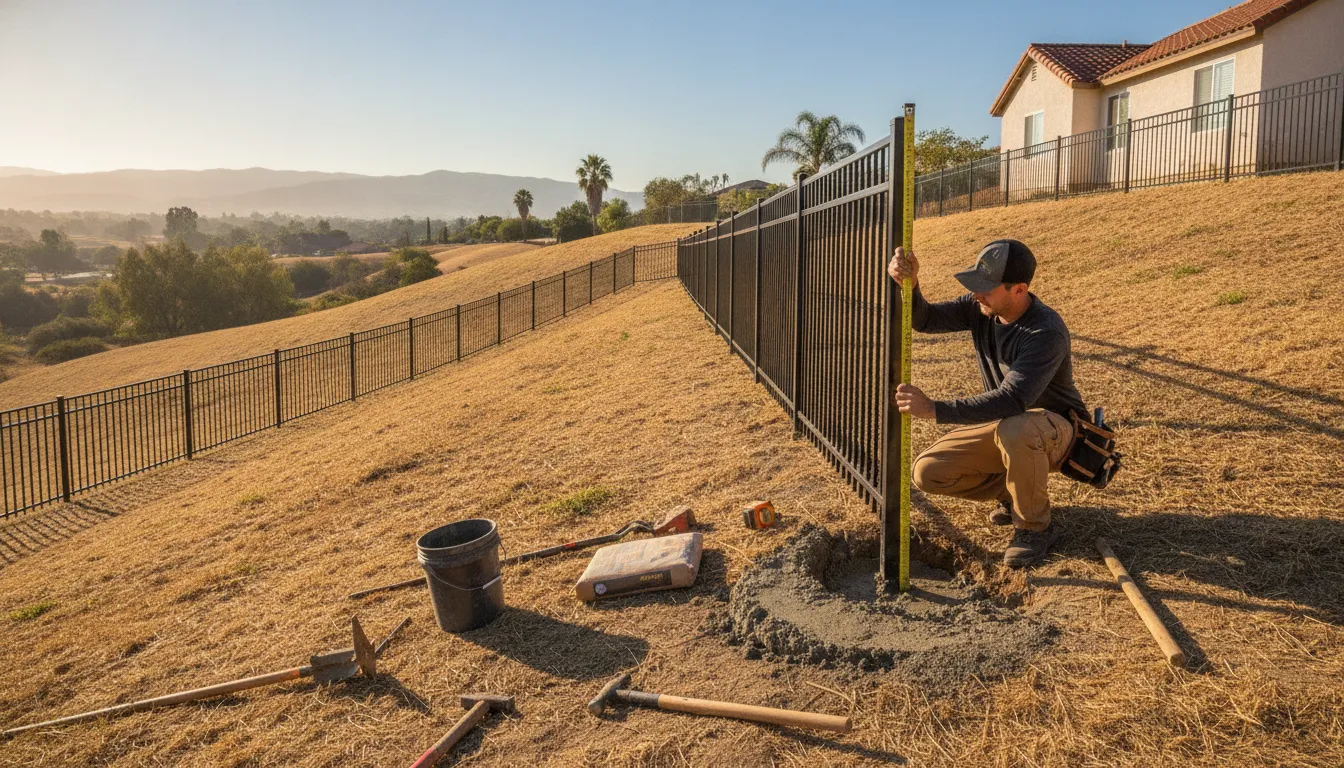
A fence line rarely stays perfectly straight and level from one end to the other. In Orange County, a property may have a gradual grade change, a short rise near a driveway, or transitions between a yard and a walkway. The right layout begins with measuring those changes in the field rather than assuming every run can use the same panel position.
Level, stepped, or racked along a slope
A level layout keeps the top rail at a consistent elevation, while the posts and panel sections follow a carefully planned line. A stepped layout uses level sections that rise or fall in small increments. This can create visible gaps beneath sections on a slope, which may need to be addressed during design. A racked or angled layout follows the grade more closely, allowing the panel to track the terrain. Whether that approach is suitable depends on the selected aluminum picket fence panels, the slope, the post locations, and the desired appearance.
These are design concepts, not universal product specifications. A panel that can accommodate one grade may not suit another. The installer should confirm the available system, measure the elevation change, and decide where transitions will look most natural. That review is especially useful when the fence borders a sidewalk, retaining feature, landscaping, or a neighboring property.
Plan gates and corners as part of the layout
Gates need more than an opening in the fence line. Their width, swing direction, nearby grade, latch position, and clearance should be considered before the adjoining panels and posts are set. A gate on a slope may require a different transition than a straight run, and a driveway gate has different clearance needs from a pedestrian gate. Review aluminum gate installation details before finalizing the access points.
End posts and corner posts also affect the finished appearance. Corners should be located from actual property geometry, not estimated from a sketch. Field measurements can identify where a run ends, where two directions change, and whether a shorter section is needed at a gate or corner. For an Anaheim or broader Orange County project, a site-specific layout helps keep the fence aligned with the property while preserving practical access and clean sightlines.
What Should Orange County Homeowners Check Before Installation?
A smooth aluminum fence project starts with site details, not just a panel selection. Requirements and approvals can vary by address, city, unincorporated area, HOA, and project conditions. Use this checklist to identify questions early and make sure the final plan reflects your property.
- Confirm the property line. Review your survey, parcel information, or other reliable property records before placing a fence. If the proposed line is uncertain, resolve it before measurements or installation. A fence can look correctly positioned and still create a problem if it crosses onto a neighboring property or a shared area.
- Check city or county requirements for the address. Contact the applicable local planning or building department and ask whether the project needs approval, a permit, or specific site documentation. Do not assume that a rule from one Orange County municipality applies in another. Height, location, corner conditions, and other requirements may depend on the address and project.
- Ask the HOA for its review process. If the property is governed by an HOA or community association, request its current fence guidelines and approval steps. Confirm the acceptable design, finish, placement, and submission materials before ordering. HOA review is separate from city or county approval, so one does not automatically replace the other.
- Plan for underground utilities. Identify irrigation, electrical, gas, water, and other lines that could affect post locations. DigAlert is a neutral starting point for utility-location planning at DigAlert. Also point out private lines and systems on the property to the installation team, since not every line is handled in the same way.
- Separate pool-related questions from the general fence plan. If the fence will be near a pool or spa, review the applicable local requirements and the project’s intended barrier function separately. Pool conditions can introduce additional planning questions. See the guide to aluminum pool fence code requirements, then verify the requirements for your address rather than relying on a universal rule.
- Walk the access route. Identify gates, narrow passages, landscaping, slopes, walls, driveway edges, and other conditions that may affect material delivery or installation. Share photos or site notes before the visit when possible. Early access planning helps the crew understand where panels, posts, and gate components need to move.
- Review drainage and ground conditions. Note areas where water collects, irrigation regularly reaches the fence line, or soil changes across the yard. Discuss how the proposed line meets hardscape, grade changes, and existing drainage. These details can influence post locations and the transition between sections.
- Put the complete scope in writing. Before work begins, confirm the layout, panel and picket style, finish, gates, hardware, corners, end points, removal work, approvals, and any site-specific exclusions. A written scope gives everyone the same reference point and makes it easier to identify an open decision. For a property-specific review, you can discuss Orange County aluminum fence installation with the installation team.
How Does Aluminum Fence Maintenance Work in Coastal and Inland Orange County?
Aluminum fencing is a low-maintenance choice, but low maintenance does not mean no maintenance. In coastal Orange County, salt carried by ocean air can settle on exposed surfaces. Inland properties may see more dust, hard-water residue, or repeated contact with irrigation spray. A simple visual check and occasional gentle cleaning can help you notice small issues before they affect a gate, fastener, or finished surface.
Start with a visual inspection
Walk the fence line periodically and look for loose or displaced panels, bent pickets, damaged posts, missing hardware, and areas where the finish appears scraped. Pay particular attention to corners, end posts, transitions, and sections near driveways or walkways. Check whether gates remain aligned and close without dragging. A change in gate movement can point to a hinge, latch, post, or grade issue that deserves attention rather than repeated force.
Rinse away salt, dust, and irrigation residue
When the fence has visible buildup, rinse it with clean water and use a soft cloth or non-abrasive brush for spots that need more attention. Mild soap can help with ordinary dirt, followed by a thorough rinse. Avoid harsh chemicals, abrasive pads, and aggressive pressure that could mark the finish or drive debris into hardware. If sprinklers repeatedly wet the fence, adjust the spray pattern when practical. Keeping mineral-heavy irrigation water from striking the same area every day can reduce residue and make cleaning easier.
Check gates and hardware as part of routine care
Fence panels may remain in good condition while a high-use gate needs adjustment. Test the latch, hinges, and clearance, and make sure the gate does not sag or strike the ground. Do not force a sticking gate or modify a panel without confirming the correct repair approach. The appropriate fix depends on the installed system, site conditions, and the part that has moved or worn.
For a more detailed care reference, review these aluminum fence maintenance tips. Request professional help when damage, corrosion-like discoloration, loose posts, persistent gate problems, or impact damage is beyond simple cleaning. A G Vinyl Fencing supports maintenance and repair as part of its broader fencing service, so the project can be assessed before a small concern becomes a larger one.
Aluminum Picket Fence Panels vs. Vinyl for Visibility, Upkeep, and Style
The better panel material depends on how you want the fence to function at your property. Aluminum picket fence panels are usually considered when the goal is an open boundary with an ornamental appearance. Vinyl can be a better fit when you want a more solid visual separation or a simpler, privacy-oriented enclosure. Comparing the materials by use rather than by appearance alone helps keep the decision practical.
Aluminum and vinyl panel comparison
| Consideration | Aluminum picket fence panels | Vinyl fence panels |
|---|---|---|
| Visibility | Open picket spacing preserves sightlines across the property and can define a boundary without fully closing off the view. | Panel layouts can provide more visual separation, depending on the selected design and spacing. |
| Ornamental look | Works well for a classic ornamental effect, especially where the fence should complement landscaping, architecture, or an entry area. | Creates a cleaner, more substantial enclosure with a different visual character from ornamental metal. |
| Privacy | Open pickets are suited to boundary definition and curb appeal, not full privacy. The exact level of screening depends on the layout. | Solid or closely arranged vinyl designs can be considered when limiting views is a primary goal. |
| Maintenance | Aluminum is a low-upkeep option. Periodic inspection and cleaning still help keep panels, posts, and hardware in good condition. | Vinyl is also selected for relatively simple care, with attention to surface cleaning and the condition of gates and connections. |
| Finishes and design | Available finish choices depend on the selected product line and should be confirmed for the project. Picket, rail, post, and gate details should be confirmed for the project. | Offers its own range of panel profiles and colors. The appropriate selection depends on the desired privacy, appearance, and property use. |
| Best-fit use cases | A strong candidate for visible boundaries, front-yard appeal, pool-area planning, and properties where an ornamental line is preferred. | Often considered for privacy-focused side yards, backyards, and areas where a more enclosed visual boundary is wanted. |
For a closer look at available ornamental directions, review these residential aluminum fence styles. A site review can then account for visibility, gates, property layout, and the finish that best suits the home.
What Does Professional Aluminum Fence Installation Include?
Professional installation is more than setting aluminum picket fence panels along a property line. It is a coordinated process that connects the design you want with the conditions at your Orange County property. A G Vinyl Fencing can support the project from design and material selection through installation, maintenance, and repairs, with the final scope shaped around your site and intended use.
Design review and site measurement
The process begins by reviewing the purpose of the fence, the desired sightlines, access points, corners, slopes, and areas that may need gates. A site measurement then helps identify the actual run, transitions, property features, and installation conditions. This step matters because the panel layout, post locations, and gate placement need to work together rather than being selected independently.
Panel, gate, and finish planning
With the site information in hand, the project can address the details that affect both appearance and use. That may include the selected aluminum panel style, open visibility, gate locations, corner and end conditions, and the finish specified for the project. Panel details and finish choices should be confirmed in the written scope so the planned system matches the property’s appearance and daily needs. Gate planning also considers how people, pets, vehicles, or equipment will move through the space. For more detail on access points, review these aluminum gate installation details.
Coordination before work begins
Property-line questions, HOA review, permits, and local requirements can vary by address and project. A professional planning conversation helps identify which items need verification before installation begins. Homeowners should not assume that one approval path or height requirement applies throughout Orange County. The written scope should also clarify access, site preparation, the planned layout, and the selected materials.
Installation and final walkthrough
Once the plan is confirmed, the installation team places posts, panels, gates, and related components according to the project layout. A final walkthrough provides an opportunity to review the finished alignment, gate operation, access, and basic care considerations. For a closer look at the local process, see Orange County aluminum fence installation.
Plan your aluminum fence installation with a project estimate
Frequently Asked Questions
Can aluminum picket fence panels be used on sloped terrain?
Often, but the layout depends on the slope, panel system, posts, and transitions at gates or corners. A project may use a stepped or slope-following arrangement. Confirm the field measurements and selected system before ordering rather than assuming every panel can rack to the same degree.
Are aluminum picket fence panels rust-resistant?
Aluminum is a rust-resistant material and is generally suited to low-maintenance ornamental fencing. Finish condition still matters, especially where irrigation, coastal air, or physical damage affects the surface. Inspect the fence periodically and follow the care recommendations for the selected finish.
Do aluminum picket fence panels meet pool safety regulations?
Not automatically. Pool-fence requirements can depend on the property, jurisdiction, pool type, gate, access points, and the selected system. If the fence will surround or separate a pool, verify the applicable requirements for the address and include the pool branch in the project scope before installation.
Can aluminum picket fence panels be cut to fit a specific space?
Some systems can be adjusted or trimmed during installation, but the correct method depends on the panel and its connection details. Cuts should be planned around posts, rails, corners, and gates so the finished section remains properly supported and aligned. Confirm the approach with the installer before modifying a panel.
What warranty is offered with aluminum picket fence panels?
Warranty coverage varies by manufacturer, finish, product line, and installation terms. Review the written warranty for the specific panels and confirm what it covers, excludes, and requires for maintenance. Do not assume that a general aluminum-fence statement applies to every product or project.
Plan Your Aluminum Fence Project in Orange County
A clear project discussion can help you compare panel details, layout considerations, and the right next steps for your property. Contact A G Vinyl Fencing to request a project estimate.

Gary Andreasyan is at the forefront of A G Vinyl Fencing, setting the standard for high-quality fencing solutions. His expertise in vinyl fencing has positioned the company as a go-to for durable, low-maintenance fencing options that enhance property value and security. Gary’s commitment to customer satisfaction and innovative fencing solutions drives A G Vinyl Fencing’s success, providing clients with a range of styles and designs that meet their specific needs and preferences.


0 Comments