


If you are considering a 6 ft black aluminum fence for an Orange County property, the most important decision is not simply the color or height. You also need to decide how much openness you want. Consider where gates should sit, how the fence will follow the property, and which approvals apply to your address.
Request a project estimate for your fence
A 6 ft black aluminum fence can create a defined residential boundary with an ornamental, open appearance. It is a practical fit when you want height, a dark powder-coated finish, and low routine upkeep. It is not automatically a privacy fence. Picket spacing, terrain, gates, local review, HOA rules, and installation details should be evaluated together before the design is finalized.
This guide explains the decisions that matter before you order materials or schedule work. It focuses on residential planning in Anaheim and surrounding Orange County communities, where fence requirements can vary by city and property.
What Makes a 6 Ft Black Aluminum Fence a Practical Choice?
A six-foot fence can be a useful middle ground for an Orange County property when the goal is a clearly defined boundary. It can provide added security and a finished ornamental appearance without making the yard feel completely closed in. A G Vinyl Fencing documents common residential aluminum fence heights from 4 to 6 feet, Six feet is within the range the company regularly considers for residential projects. The right fit still depends on the property’s layout, local requirements, and any HOA review.
The first question is what you want the fence to do. Six feet can create a more substantial perimeter around a side yard, rear yard, corner lot, or outdoor area than a shorter fence. It may also help establish a boundary for children, pets, or guests. However, height alone does not create privacy. Ornamental aluminum fencing uses open picket and rail patterns, so people may still see through it. Picket spacing, the selected configuration, neighboring elevations, and the location of the fence all affect the final sightlines.
Why choose a black powder-coated finish?
Black is one of A G Vinyl Fencing’s listed powder-coated aluminum finishes. It provides a strong contrast against light-colored walls, landscaping, concrete, and many exterior materials. The simple color can also support a traditional or more contemporary design without competing with the rest of the property. Appearance is highly visible from the street and inside the yard. Compare the proposed finish with gates, existing railings, exterior trim, and the surrounding landscape before approving the layout.
Where aluminum fits the maintenance plan
Aluminum is positioned as lightweight, rust-resistant, and low maintenance. Those characteristics can make it practical for homeowners who want an ornamental boundary without committing to a high-upkeep routine. Low maintenance does not mean no care. Notice surface dirt, salt exposure, vegetation contact, loose hardware, or a shifting gate during ordinary property upkeep. Ask the installer which routine care is appropriate for the selected finish and site conditions.
A six-foot black aluminum fence is therefore most practical when you want a defined, open-looking perimeter rather than a solid privacy barrier. Before choosing it, review the intended level of openness, the property grade, access points, municipal requirements, and HOA rules for the specific address. For a shorter comparison point, see the 4-foot black aluminum fence guide.
Which Style and Gate Details Matter Most?
Once you know that a six-foot aluminum fence is meant to create an open boundary, decide how the system should look and function. A G Vinyl Fencing documents flat-top, spear-top, and decorative aluminum configurations. The best option fits the home’s architecture, the street view, and the way people will use each entrance.
Choose the top profile for the setting
A flat-top design can support a simple, modern line. A spear-top or decorative profile can create a more traditional ornamental appearance. The choice is visual, but it also affects how the fence relates to nearby railings, gates, landscape walls, and exterior trim. View a sample or rendering from both sides before approving the final profile.
Keep sightlines realistic. Open aluminum pickets can define a boundary while preserving visibility, but they do not provide the same screening as a solid fence. If privacy is the goal, discuss this limitation early. Do not assume that six feet of height will block views. A black aluminum privacy fence may be a useful related reference, but the appropriate system depends on the property’s goals and the available design.
Plan gates as part of the fence
Gate decisions should be made before the fence line is finalized. Identify the primary walking route, vehicle access if applicable, delivery access, and any path needed for future maintenance. Check the available clearance, swing direction, grade changes, and compatible hardware. A gate that looks correct on a plan can be inconvenient if it opens into a narrow path or conflicts with landscaping.
Also consider daily traffic. A side-yard gate used several times a day may need a different access arrangement than a rarely used rear entry. Families with children or pets should discuss latch location and supervision needs with the installer. Commercial and HOA properties may need a more consistent access plan across multiple entrances.
A G Vinyl Fencing provides design and material-selection guidance based on the property. Reviewing the company’s aluminum fencing options can help you prepare questions about style, finish, gates, and installation scope.
Discuss your fence style and gate plan
What Should You Confirm Before Installation in Orange County?
Planning is where many fence problems can be prevented. Before materials are ordered, confirm the property line, the proposed height, the fence route, gate locations, grade changes, and the approvals that apply to the address. A G Vinyl Fencing’s planning process includes an on-site assessment, measurements, terrain evaluation, property-line verification, site preparation, and permit or HOA coordination when required.
- Confirm the fence purpose and route. Mark the areas that need a boundary, identify corners and ends, and note walls, slopes, landscaping, pool areas, driveways, and utility equipment. Do not assume a visually convenient line is the legal property line.
- Measure the site and access points. Record the total run, changes in direction, gate openings, and any narrow areas. The height of the fence is only one measurement. The finished layout must also account for posts, gates, grade, and the system selected.
- Check city and county requirements. Anaheim’s fence and wall zoning guidance says fences and walls seven feet or less do not need a building permit but do require Planning Division approval. The division verifies location and height, and an application site plan must show existing structures, the proposed location, height, and total length. This is Anaheim-specific guidance, not a universal Orange County rule.
- Review zoning, setbacks, easements, and rights-of-way. The Orange County residential permit process guide advises confirming zoning requirements before extensive preparation, including property-line setbacks and distances from rights-of-way or easements. It also notes that permitted fence heights and locations depend on zoning regulations.
- Ask about HOA review and utilities. If the property is in an HOA, confirm the submission requirements for color, height, profile, location, and gate design. Locate underground utilities before digging. The installer can help identify which approvals and site checks belong in the project schedule.
- Confirm the installation scope. Ask who handles layout, material coordination, site preparation, inspections, gate adjustment, and the final walkthrough. Requirements and timing can change with terrain, existing structures, access, and the city involved.
For a broader local planning reference, review the site’s California fence permit requirements article and its Orange County fence installation planning coverage. Treat both as starting points, then verify the rules for the specific address.
How Does Professional Installation Usually Work?
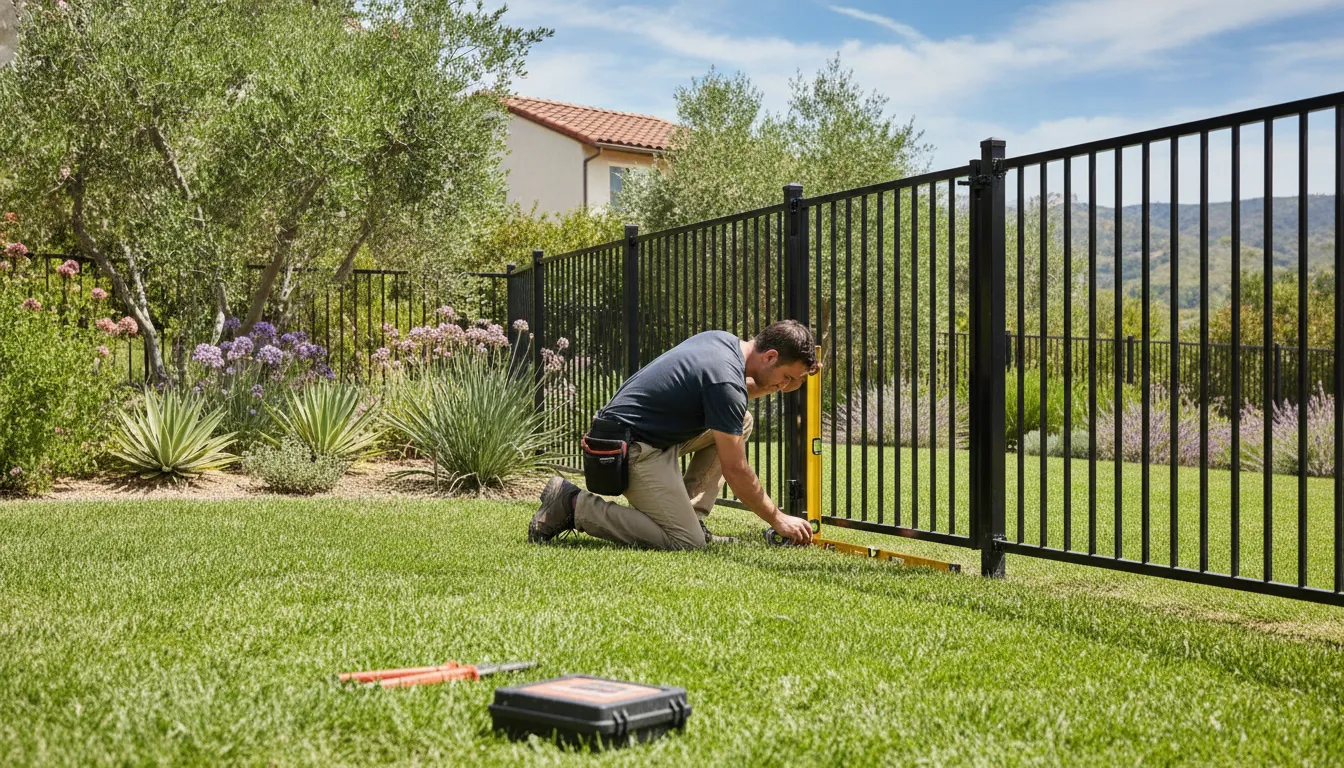
Professional installation is more than placing panels along a measured line. The crew must translate the design into a fence that follows the property, handles changes in grade, aligns with gates, and finishes cleanly at corners and ends. A G Vinyl Fencing documents a typical two- to four-day timeline for a standard residential aluminum project, but the actual schedule depends on the scope, access, approvals, terrain, and site conditions.
The usual project sequence
- Assessment and layout: Measurements, property conditions, proposed fence lines, corners, ends, gates, and grade changes are reviewed before work begins.
- Site preparation: The route is marked, existing obstacles are addressed, and the crew prepares the areas where posts and gates will be installed.
- Post and panel work: Posts are set and aligned, then panels or rails are installed according to the selected system and site layout.
- Gate installation: Gates are fitted and checked for clearance, swing, latch operation, and alignment with adjoining sections.
- Final inspection: The finished run is reviewed for alignment, appearance, operation, and outstanding site details. The homeowner should receive care and use guidance before the project is considered complete.
Slopes, retaining walls, narrow side yards, old fence removal, landscaping, and limited equipment access can change the work sequence. These conditions should be discussed during the site assessment rather than treated as surprises after materials arrive. A detailed proposal should also identify what is included in preparation, installation, cleanup, gates, and any required coordination.
For a local overview of the planning process, see Orange County fence installation planning. Although material systems differ, the questions about layout, access, approvals, and site conditions remain useful.
What Maintenance Does Black Aluminum Fencing Need?
Black aluminum is positioned as a rust-resistant, low-maintenance fencing material, but low maintenance is not the same as no maintenance. A simple inspection routine can help you notice dirt, salt residue, vegetation contact, finish damage, or gate movement before a small issue becomes an inconvenience.
Use a practical care routine
- Rinse surface dirt and coastal residue with clean water when buildup is visible. Use only cleaning methods recommended for the selected finish and system.
- Look along the rails, pickets, posts, and gate areas for unusual movement, impact, or finish changes.
- Keep vines, branches, and dense planting from pressing against the fence or interfering with gate travel.
- Open and close gates periodically to check alignment, clearance, latch operation, and any change in the way the gate moves.
- Ask the installer which fasteners, touch-up products, and cleaning methods are appropriate. Manufacturer instructions take priority over general maintenance suggestions.
Coastal exposure, irrigation overspray, construction dust, and landscaping can create different care needs from one property to another. A fence near the ocean or a frequently watered planting bed may deserve closer visual attention than a fence in a sheltered yard. Avoid making a repair or coating change without confirming compatibility with the finish.
Maintenance is also a good time to confirm that the fence still serves its original purpose. A growing hedge may change sightlines, a shifted gate may affect access, and a new outdoor project may require a different entry path. If the property or use has changed, ask a qualified installer whether the existing layout remains appropriate.
How Can You Compare Options Before Requesting an Estimate?
The best comparison is not simply black versus another color. It is a review of the job the fence must do, the appearance you want, and the site conditions that will shape installation. Use the questions below to organize the conversation with an installer.
| Decision | What to compare | Question to ask |
|---|---|---|
| Height | Six feet versus a shorter boundary | Does the proposed height fit the front, side, or rear yard and local review? |
| Openness | Open ornamental sightlines versus more screening | Will the selected configuration meet the actual privacy goal? |
| Top profile | Flat top, spear top, or decorative design | Which profile works with the home, landscape, and existing exterior details? |
| Gates | Walking routes, clearance, swing, and latch use | Where should each gate go, and how will people use it every day? |
| Site conditions | Slopes, walls, utilities, planting, and access | What preparation or layout adjustments will the property require? |
| Approvals | City review, zoning, permits, and HOA rules | Which agency or association should review the design before work begins? |
Bring a simple site sketch, photos of the proposed fence line, gate priorities, and any HOA documents to the estimate conversation. A G Vinyl Fencing can use the property details to discuss material selection, design, installation scope, and the questions that need to be resolved before scheduling.
Request an Orange County fence estimate
Frequently Asked Questions
How much does a 6-foot aluminum fence cost?
There is no useful one-size-fits-all answer without the property measurements and installation scope. The estimate can change with the total fence run, gates, terrain, site preparation, finish and style selection, access, and local approval requirements. Ask for an itemized project discussion rather than relying on a generic online number.
Is a 6 ft black aluminum fence a privacy fence?
Usually, an ornamental aluminum fence has open pickets, so height alone does not block views. The final sightline depends on picket spacing, the configuration, the landscape, neighboring elevations, and the fence location. If privacy is the primary goal, discuss whether an open aluminum design is suitable before approving the material.
What are the downsides of aluminum fencing?
An open design may not provide the screening that a homeowner expects from a six-foot boundary. Aluminum also requires careful layout around gates, slopes, walls, landscaping, and property lines. The finish and hardware still deserve periodic attention. A site assessment helps determine whether the material and configuration fit the property’s priorities.
Do I need approval for a six-foot fence in Orange County?
Approval depends on the city, address, zoning, HOA, and project conditions. Anaheim’s guidance says fences and walls seven feet or less require Planning Division approval even when a building permit is not required. Other Orange County jurisdictions may follow different processes, so verify the requirements for the specific property before construction.
Plan Your Fence With Local Guidance
A 6 ft black aluminum fence can be a strong fit when you want a defined boundary, an ornamental appearance, and a lower-upkeep material. The right result depends on matching the height and style to the property, planning gates carefully, checking local and HOA requirements, and addressing terrain before installation.
A G Vinyl Fencing serves homeowners and commercial customers throughout Orange County and Southern California. The team can help review the proposed fence line, material and finish options, gate access, site conditions, and installation scope.
Contact A G Vinyl Fencing to discuss your project and request an estimate.

Gary Andreasyan is at the forefront of A G Vinyl Fencing, setting the standard for high-quality fencing solutions. His expertise in vinyl fencing has positioned the company as a go-to for durable, low-maintenance fencing options that enhance property value and security. Gary’s commitment to customer satisfaction and innovative fencing solutions drives A G Vinyl Fencing’s success, providing clients with a range of styles and designs that meet their specific needs and preferences.


0 Comments